Hairballs: common, but not always harmless
An occasional hairball can occur, but frequent vomiting, repeated unproductive retching or breathing changes should not be dismissed as normal. Coughing is often mistaken for a hairball.
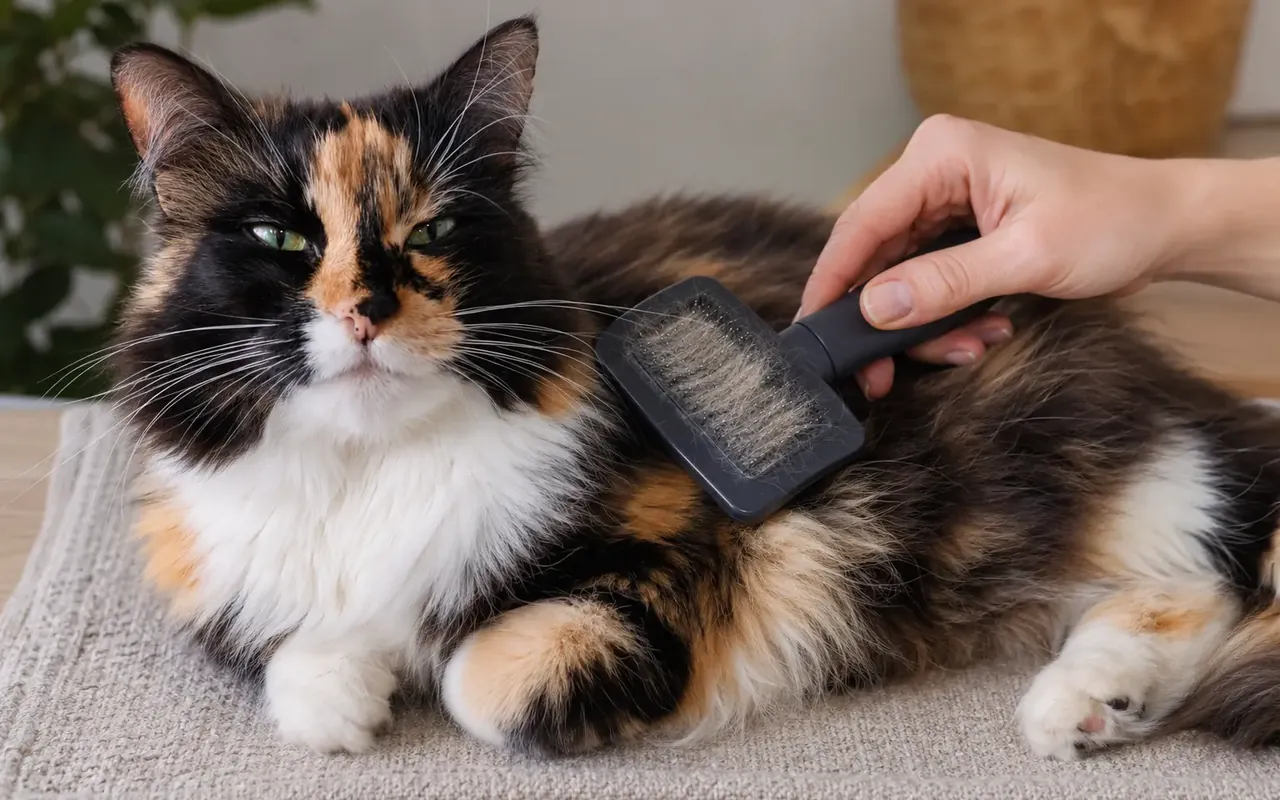 Topic illustration selected for this guide. Some learning images may be AI-assisted.
Hairballs: common, but not always harmless — the quick answer
✓ Regular brushing reduces swallowed loose fur
✓ Frequent vomiting is not normal
✓ Coughing can be mistaken for a hairball
Cats swallow loose hair while grooming. Some hair may form a compact mass that is vomited, but frequent episodes should not simply be dismissed.
Reduce loose hair
Gentle brushing suited to the coat type can reduce shedding and help prevent mats, especially in long-haired cats.
Watch the frequency
Repeated vomiting, reduced appetite, constipation, lethargy or unsuccessful retching require veterinary advice.
Hairball or cough?
Respiratory coughing can look similar to retching. A short video of an episode can help your veterinarian assess it.
Describe the episode before naming it
Record whether the cat coughs, retches, vomits food or produces a compact tube of hair. Film from a safe distance when possible. Breathing posture, wheezing and repeated coughing need veterinary assessment rather than hairball treatment by assumption.
Reduce loose hair without hiding a medical problem
Use coat-appropriate gentle brushing, prevent mats and discuss nutrition or hairball products with the veterinary team before adding them. Repeated vomiting, poor appetite, weight loss, constipation, pain or lethargy needs investigation for causes beyond swallowed hair.
Your quick checklist
Your progress is saved on this device.
Three simple things you can do
You do not have to change everything today. Pick one step that feels realistic, try it and see how your cat responds.
- 1Brush loose coat with a tool suited to its length.
- 2Record how often vomiting or retching occurs.
- 3Take a video when you are unsure whether the episode is coughing.
Common mistakes
×Waiting for a dramatic symptom instead of noticing smaller changes from the cat’s normal routine.
×Changing several things at once, making it difficult to learn what actually helped.
×Treating general guidance as a substitute for advice from a veterinarian who knows the individual cat.
Questions cat people ask
How many hairballs are normal?+
There is no useful universal number. Frequent episodes, distress or any accompanying health change warrant veterinary advice.
Can a hairball cause a blockage?+
Swallowed material can contribute to gastrointestinal problems. Repeated unproductive retching, appetite loss, pain or lethargy need prompt assessment.
Still looking for the right answer?
Search the full EverYes Cats encyclopedia with your own words — a symptom, food, behaviour, breed or everyday question.
Checked, dated and transparent
- Prepared by
- EverYes Cats editorial team
- Last updated
- 13 August 2026
- Source checked
- 13 August 2026
- Primary reference
- Cornell Feline Health Center ↗
We begin with the named reference, rewrite the information in plain language and add practical cat-parent steps. Urgent health statements are checked against veterinary sources. This guide has not been individually reviewed by a veterinarian unless explicitly stated. It provides education, not diagnosis or treatment.
Spotted something unclear or outdated? Tell us so we can review it.
Your answer helps us improve the cat encyclopedia.
Measure actual intake and weight, and note thirst, stool, vomiting, activity and food competition.