Why a cat’s tongue feels rough
A cat’s tongue feels rough because backward-facing keratin structures called papillae help move food and work saliva through the coat. New tongue, mouth or eating changes need attention.
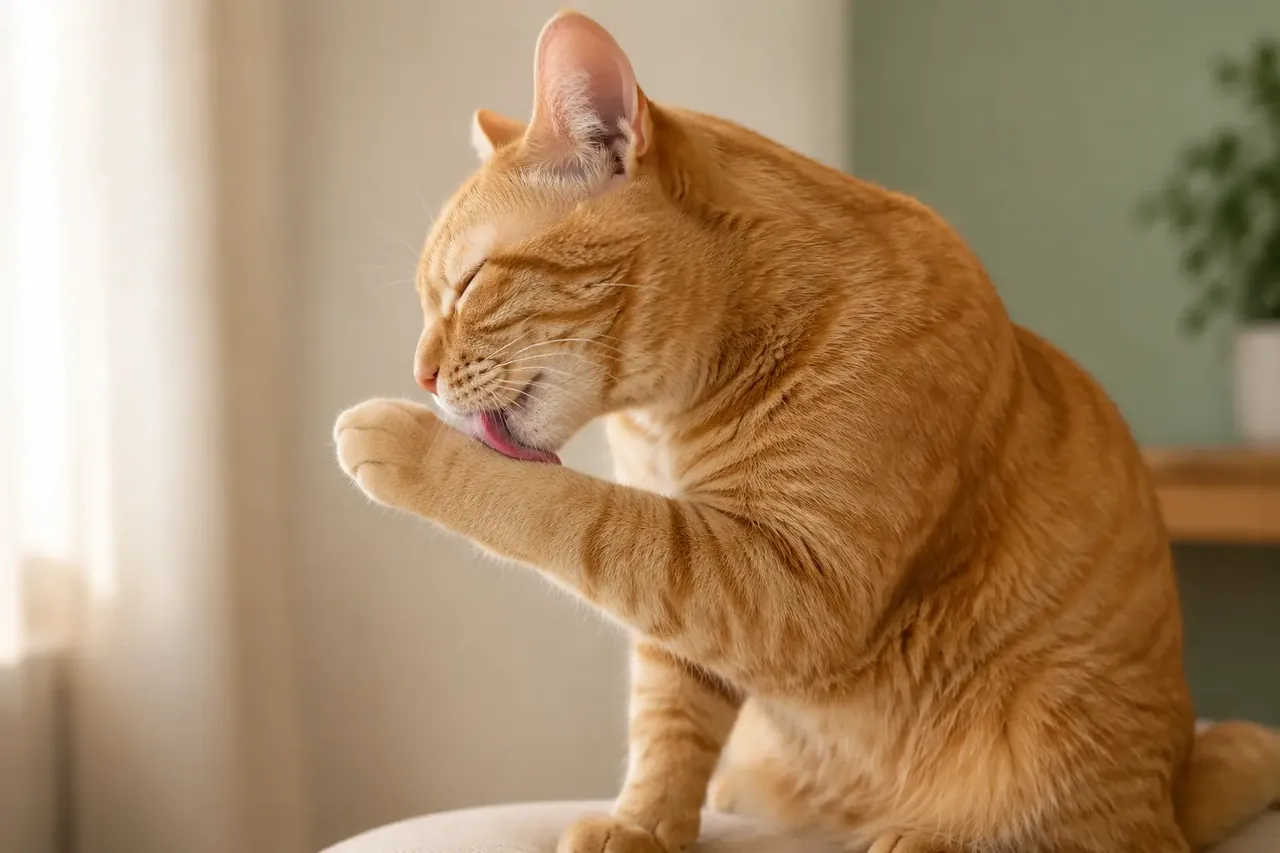 Topic illustration selected for this guide. Some learning images may be AI-assisted.
Why a cat’s tongue feels rough — the quick answer
✓ The rough surface supports grooming
✓ Swallowed loose hair can contribute to hairballs
✓ Tongue or eating changes deserve attention
A cat’s tongue is covered with small backward-facing structures called papillae. They help move food and work through the coat during grooming.
A built-in comb
The direction and shape of the papillae help separate fur and distribute saliva through the coat.
The hair has to go somewhere
Loose fur removed by the tongue is swallowed. Regular brushing can reduce the amount, especially in long-haired cats.
Notice discomfort
Drooling, difficulty eating, mouth odor or a tongue held unusually can signal oral pain and needs veterinary assessment.
How the built-in comb works
Papillae point toward the back of the mouth and help separate fur during grooming. Loose hair is swallowed, which is why gentle coat care can be useful for cats that shed heavily or develop mats.
A rough tongue should not mean a painful mouth
Drooling, blood, strong mouth odour, difficulty eating, dropping food, facial swelling or a tongue held unusually may indicate oral disease or injury. Do not pull thread from the mouth or use human mouth products; contact a veterinarian.
Your quick checklist
Your progress is saved on this device.
Three simple things you can do
You do not have to change everything today. Pick one step that feels realistic, try it and see how your cat responds.
- 1Use regular brushing to reduce the loose fur a cat must swallow.
- 2Watch for grooming changes, mouth pain or repeated vomiting rather than focusing only on texture.
- 3Provide safe food and water surfaces that do not scrape an irritated mouth.
Common mistakes
×Assuming a rough tongue can clean every mat without human help.
×Treating repeated hairballs or overgrooming as automatically normal.
×Ignoring drooling, bad breath or difficulty eating.
Questions cat people ask
Why does a cat's tongue feel like sandpaper?+
Backward-facing keratin structures called papillae help move food and groom the coat, creating the familiar rough texture.
Can a cat's tongue get hair stuck on it?+
The papillae direct loose fur toward the throat, so much is swallowed. Regular brushing can reduce loose hair, especially in long-haired cats.
Still looking for the right answer?
Search the full EverYes Cats encyclopedia with your own words — a symptom, food, behaviour, breed or everyday question.
Checked, dated and transparent
- Prepared by
- EverYes Cats editorial team
- Last updated
- 13 August 2026
- Source checked
- 13 August 2026
- Primary reference
- Cornell Feline Health Center ↗
We begin with the named reference, rewrite the information in plain language and add practical cat-parent steps. Urgent health statements are checked against veterinary sources. This guide has not been individually reviewed by a veterinarian unless explicitly stated. It provides education, not diagnosis or treatment.
Spotted something unclear or outdated? Tell us so we can review it.
Your answer helps us improve the cat encyclopedia.
Long-haired cats usually need more combing to prevent mats, while short-haired cats can still shed heavily and develop skin or coat problems. Coat density, health and individual tolerance matter as much as length.