Long-haired and short-haired cats
Long-haired cats usually need more combing to prevent mats, while short-haired cats can still shed heavily and develop skin or coat problems. Coat density, health and individual tolerance matter as much as length.
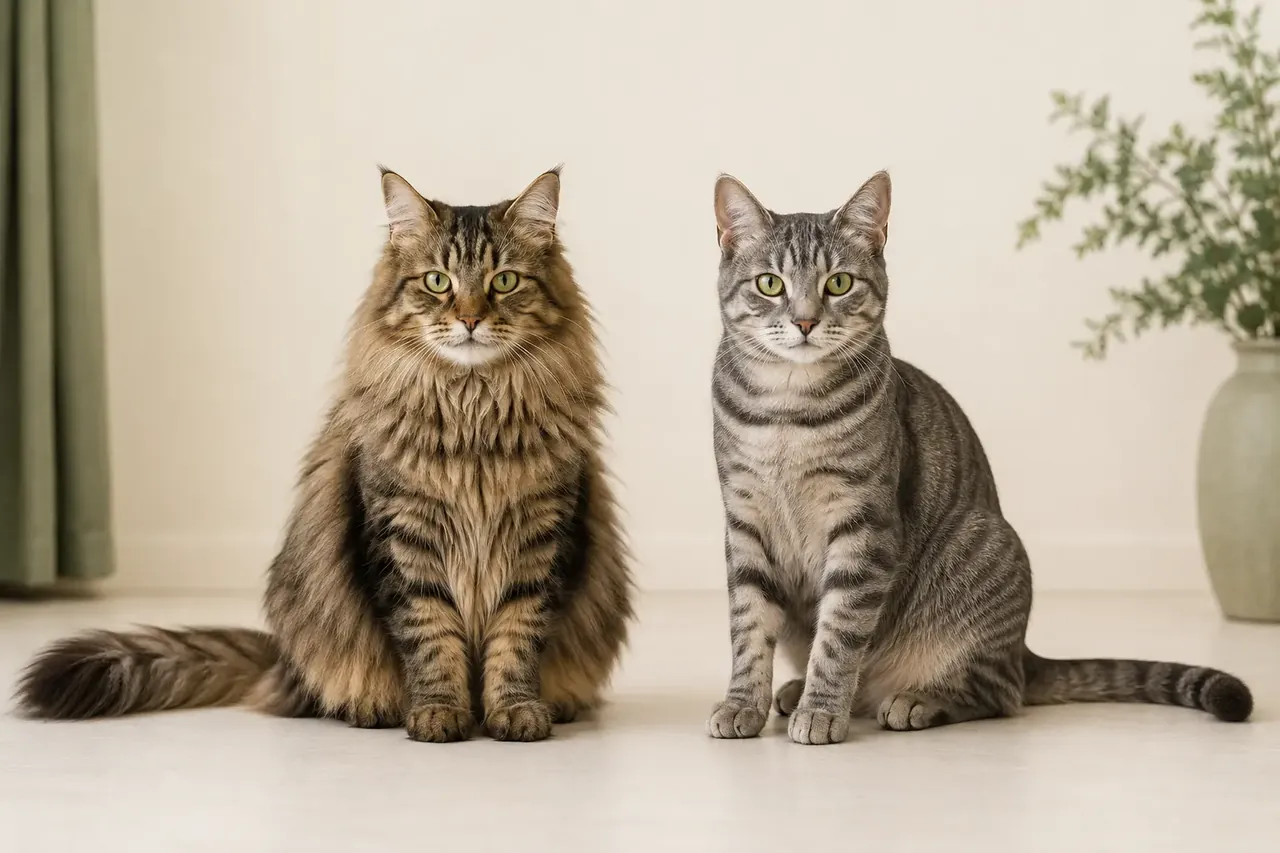 Topic illustration selected for this guide. Some learning images may be AI-assisted.
Long-haired and short-haired cats — the quick answer
✓ Long coats usually need more frequent combing
✓ Short coats can still shed heavily
✓ A changing coat can reflect health or nutrition
Coat type affects tangles, shedding and home grooming, while individual density and health matter just as much as length.
Long-haired care
Comb high-friction areas before small tangles become painful mats. Some cats need professional help with the coat.
Short-haired care
A weekly gentle brush can remove loose fur, support skin checks and become positive handling practice.
Look beneath the coat
Part the fur occasionally to check skin and body condition. Greasiness, dandruff, bald patches or sudden shedding need attention.
Compare the weekly care load
Long coats need frequent checks behind the ears, under the legs and around the trousers, where friction creates tangles. Short coats often benefit from a gentle weekly brush and skin check. Both need claw, dental and body-condition care.
Choose the cat, not only the coat
Grooming needs can change with age, weight, pain and illness. Before adopting, ask who will comb, clean shedding and arrange professional help if the cat will not tolerate essential coat care. Never cut a tight mat close to moving skin with scissors.
Your quick checklist
Your progress is saved on this device.
Three simple things you can do
You do not have to change everything today. Pick one step that feels realistic, try it and see how your cat responds.
- 1Choose a cat based on individual needs and temperament, not coat length alone.
- 2Budget time for coat checks, nail care and cleaning appropriate to the individual.
- 3Introduce grooming gradually before tangles or resistance develop.
Common mistakes
×Assuming short-haired cats never need brushing.
×Choosing a long-haired cat for appearance without planning coat maintenance.
×Attributing personality or allergy risk solely to hair length.
Questions cat people ask
Are long-haired cats harder to care for?+
They often need more frequent grooming and mat prevention, but the workload varies with coat texture, health and the cat's cooperation.
Are short-haired cats better for allergies?+
Not necessarily. Cat allergens come mainly from proteins in saliva and skin secretions, not simply hair length.
Still looking for the right answer?
Search the full EverYes Cats encyclopedia with your own words — a symptom, food, behaviour, breed or everyday question.
Checked, dated and transparent
- Prepared by
- EverYes Cats editorial team
- Last updated
- 13 August 2026
- Source checked
- 13 August 2026
- Primary reference
- Cornell Feline Health Center ↗
We begin with the named reference, rewrite the information in plain language and add practical cat-parent steps. Urgent health statements are checked against veterinary sources. This guide has not been individually reviewed by a veterinarian unless explicitly stated. It provides education, not diagnosis or treatment.
Spotted something unclear or outdated? Tell us so we can review it.
Your answer helps us improve the cat encyclopedia.
A cat’s tongue feels rough because backward-facing keratin structures called papillae help move food and work saliva through the coat. New tongue, mouth or eating changes need attention.