What cat paw pads do
Paw pads provide cushioning, grip, sensory information and scent communication. Check them gently for cuts, burns, swelling, cracks and trapped debris, especially after outdoor or hot-surface exposure.
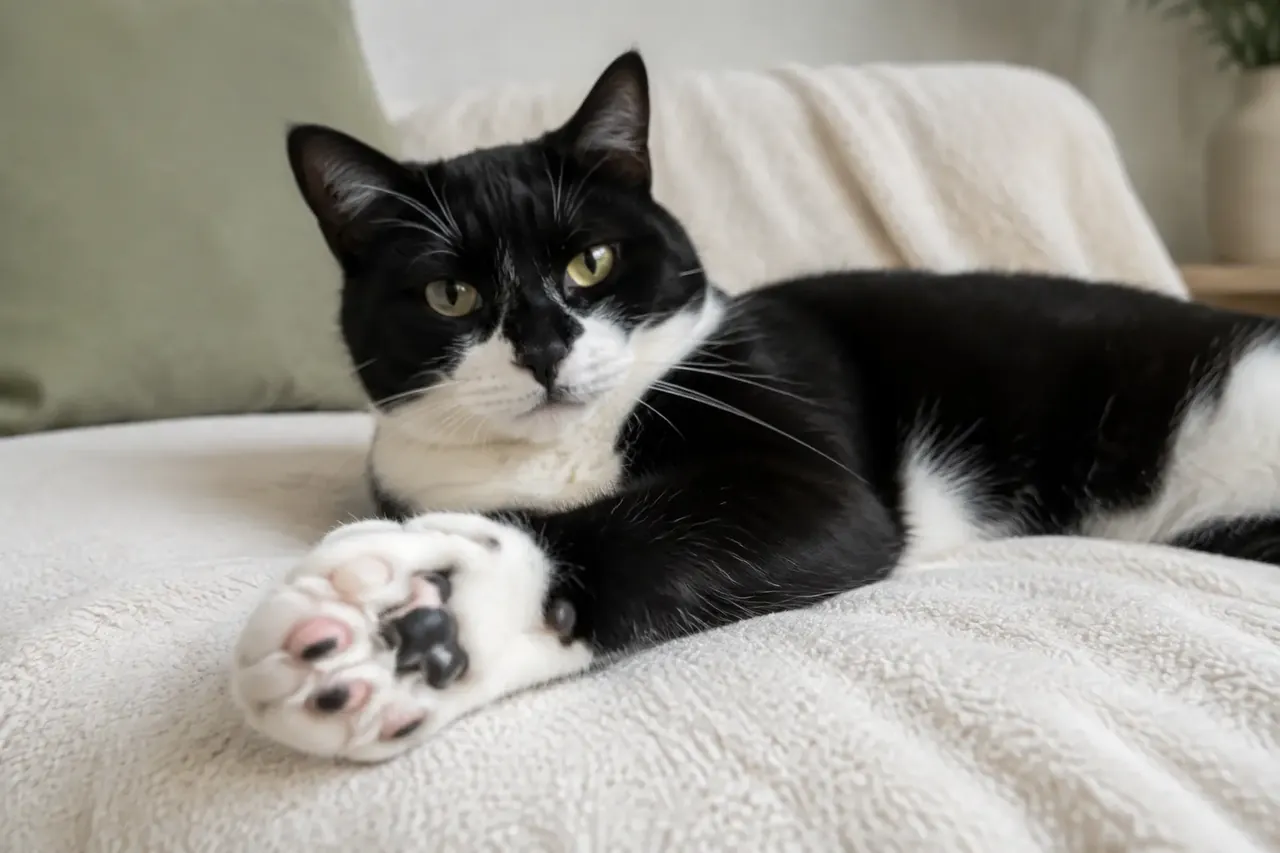 Topic illustration selected for this guide. Some learning images may be AI-assisted.
What cat paw pads do — the quick answer
✓ Paw pads are sensitive tissue
✓ Check for cracks, swelling and stuck debris
✓ Cats also leave scent information through their paws
Paw pads help cats move quietly, absorb impact and gather information about the surface beneath them.
Built for movement
The pads cushion steps and help provide grip while flexible toes adjust to different surfaces.
A sensory surface
Cats can notice texture, pressure and vibration through their paws, which is one reason unfamiliar floors can change movement.
Check gently
Inspect pads when your cat is comfortable. Bleeding, burns, swelling or persistent licking need veterinary advice.
Inspect without forcing the paw
When the cat is relaxed, look between the toes and across each pad for redness, foreign material or unequal temperature and swelling. Compare with the opposite paw and stop if handling causes pain or fear.
Respond safely to a paw injury
Move the cat away from heat, chemicals or sharp material and prevent further licking when possible. Do not apply human creams, disinfectants or essential oils. Bleeding, burns, limping, deep cracks, embedded objects or persistent licking needs veterinary advice.
Your quick checklist
Your progress is saved on this device.
Three simple things you can do
You do not have to change everything today. Pick one step that feels realistic, try it and see how your cat responds.
- 1Check pads gently for cuts, swelling, heat, cracks and material between the toes.
- 2Keep hot surfaces, ice chemicals and harsh cleaners away from paws.
- 3Call a veterinarian for limping, bleeding, burns or persistent licking.
Common mistakes
×Applying human moisturiser or essential oils to paw pads.
×Pulling an embedded object or treating a deep wound at home.
×Assuming a cat that hides pain has only a minor injury.
Questions cat people ask
Why are some cat paw pads different colours?+
Pad pigmentation often follows coat and skin genetics, so pink, black or mixed pads can all be normal.
Should I moisturise dry cat paw pads?+
Do not use human products without veterinary advice because ingredients may be unsafe when licked. Persistent cracking or soreness needs assessment.
Still looking for the right answer?
Search the full EverYes Cats encyclopedia with your own words — a symptom, food, behaviour, breed or everyday question.
Checked, dated and transparent
- Prepared by
- EverYes Cats editorial team
- Last updated
- 13 August 2026
- Source checked
- 13 August 2026
- Primary reference
- Cornell Feline Health Center ↗
We begin with the named reference, rewrite the information in plain language and add practical cat-parent steps. Urgent health statements are checked against veterinary sources. This guide has not been individually reviewed by a veterinarian unless explicitly stated. It provides education, not diagnosis or treatment.
Spotted something unclear or outdated? Tell us so we can review it.
Your answer helps us improve the cat encyclopedia.
Long-haired cats usually need more combing to prevent mats, while short-haired cats can still shed heavily and develop skin or coat problems. Coat density, health and individual tolerance matter as much as length.