How calico coat colors happen
Calico is a coat pattern, not a breed. Orange and black patches usually arise through X-linked colour genetics, while a separate white-spotting pattern creates the white areas.
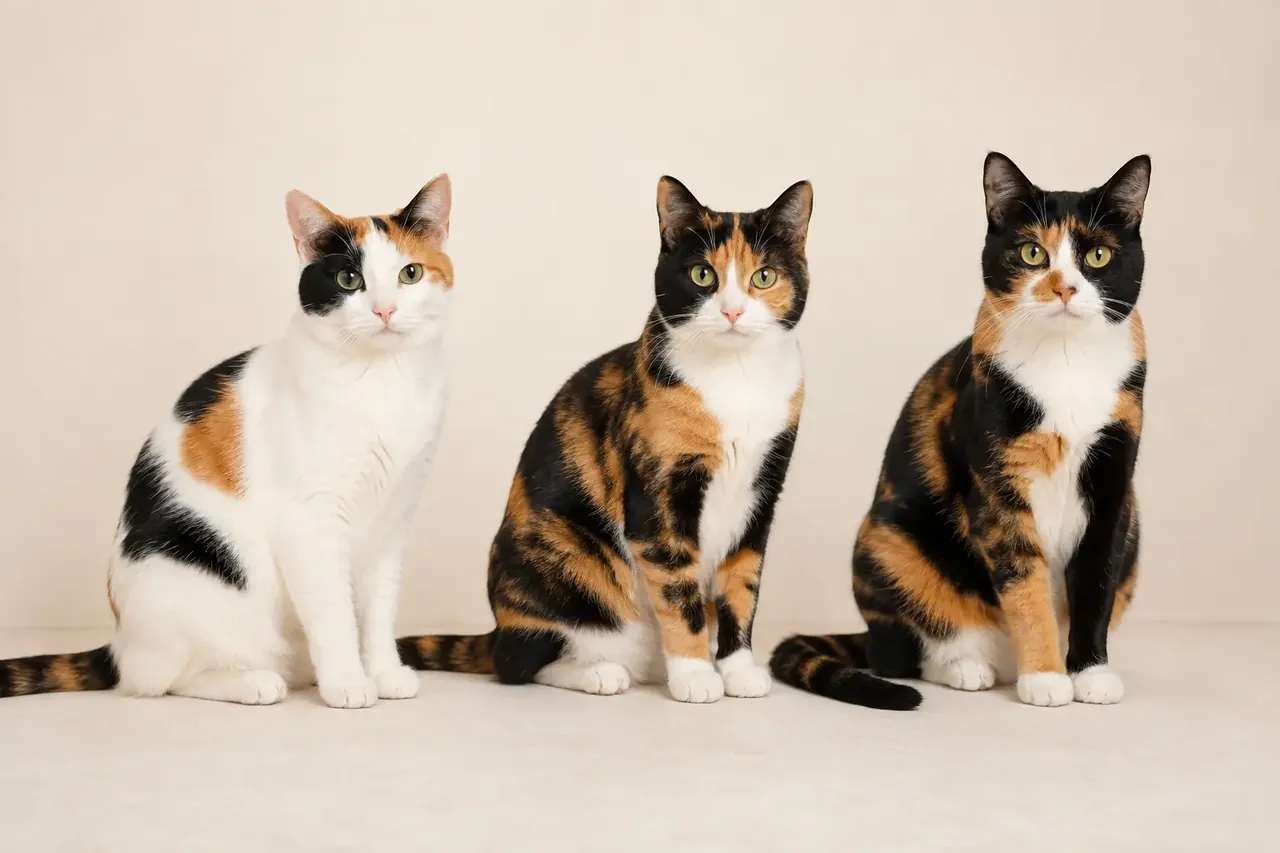 Topic illustration selected for this guide. Some learning images may be AI-assisted.
How calico coat colors happen — the quick answer
✓ Calico is a color pattern, not a breed
✓ Most calico cats are female
✓ Coat color does not determine personality
Calico describes a coat pattern rather than a breed. The orange-and-black color pattern is connected to genes carried on the X chromosome.
The color mosaic
Different cells can express different color instructions, creating patches of orange and black. White spotting is controlled separately.
Why males are rare
The chromosome combination needed for both orange and black is far more common in female cats. Rare male calicos usually have an unusual chromosome pattern.
Personality is individual
Stories about calico attitude are fun, but socialization, experience, health and the individual cat matter more than coat color.
Understand the patchwork without oversimplifying
Early in development, cells switch off one X chromosome, so groups of cells can express different colour instructions and form orange or black patches. Patch size and distribution vary, and white spotting is controlled separately.
Why a male calico is unusual
Most calico cats are genetically female because two X-linked colour versions are usually needed. A male calico can occur through uncommon chromosome patterns or other rare biological events and may have health or fertility implications worth discussing with a veterinarian.
Your quick checklist
Your progress is saved on this device.
Three simple things you can do
You do not have to change everything today. Pick one step that feels realistic, try it and see how your cat responds.
- 1Describe calico as a coat pattern rather than a breed.
- 2Use sex-linked colour as an example of genetics without predicting personality.
- 3Seek veterinary advice rather than assumptions if a male calico has health or fertility questions.
Common mistakes
×Calling every calico a tortoiseshell or treating the terms as identical.
×Claiming coat colour guarantees a specific temperament.
×Assuming male calicos cannot exist.
Questions cat people ask
Why are most calico cats female?+
Orange and non-orange colour variants are carried on the X chromosome. Two X chromosomes usually allow the patchwork expression associated with calico coats.
Are male calico cats possible?+
Yes, but they are uncommon and often have an unusual chromosome pattern or other rare genetic explanation. A veterinarian can advise on individual health.
Still looking for the right answer?
Search the full EverYes Cats encyclopedia with your own words — a symptom, food, behaviour, breed or everyday question.
Checked, dated and transparent
- Prepared by
- EverYes Cats editorial team
- Last updated
- 13 August 2026
- Source checked
- 13 August 2026
- Primary reference
- Cornell Feline Health Center ↗
We begin with the named reference, rewrite the information in plain language and add practical cat-parent steps. Urgent health statements are checked against veterinary sources. This guide has not been individually reviewed by a veterinarian unless explicitly stated. It provides education, not diagnosis or treatment.
Spotted something unclear or outdated? Tell us so we can review it.
Your answer helps us improve the cat encyclopedia.
Long-haired cats usually need more combing to prevent mats, while short-haired cats can still shed heavily and develop skin or coat problems. Coat density, health and individual tolerance matter as much as length.