What cat whiskers actually do
Cat whiskers are specialised sensory hairs that detect nearby surfaces and air movement. Never trim or pull them, and read their position together with the rest of the face and body.
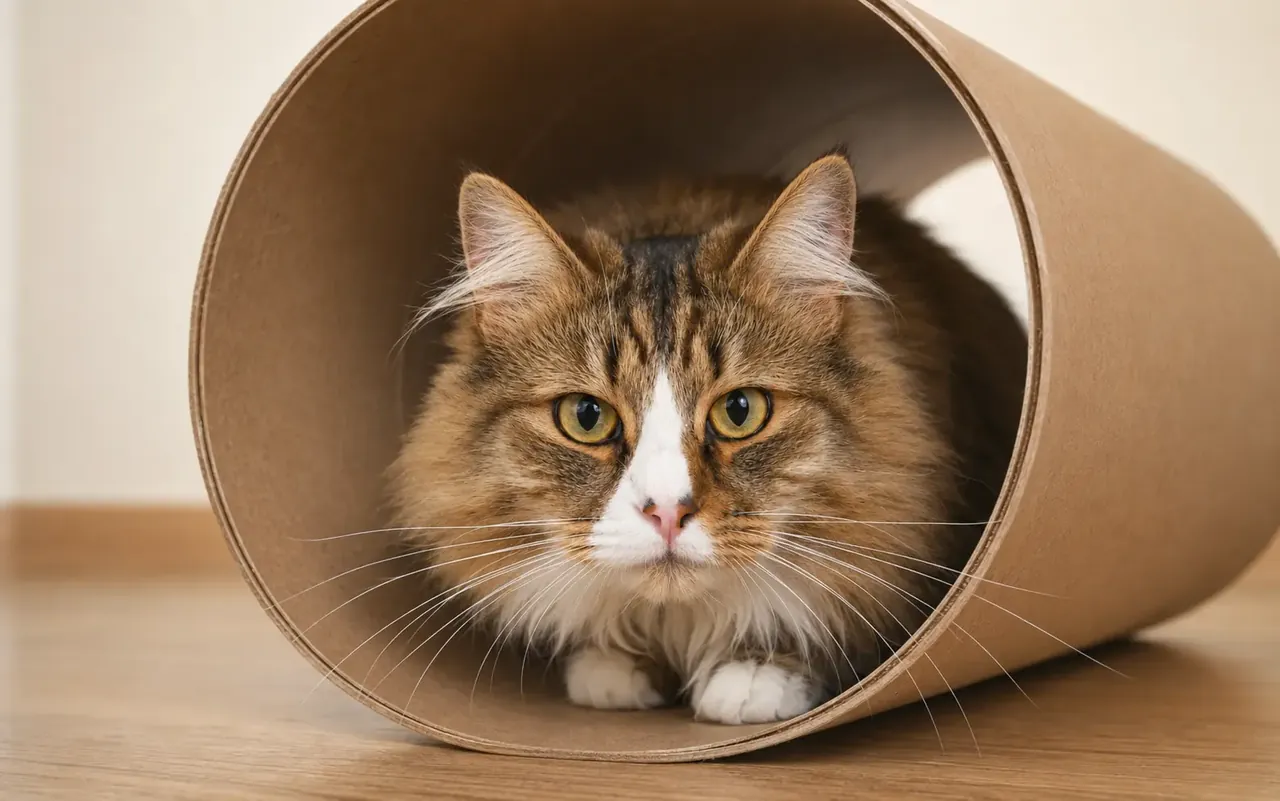 Topic illustration selected for this guide. Some learning images may be AI-assisted.
What cat whiskers actually do — the quick answer
✓ Never trim a cat's whiskers
✓ Wide bowls may feel more comfortable
✓ Whisker position is only one body-language clue
Whiskers are specialized sensory hairs that detect nearby objects and air movement. Their position can also add context to facial expression.
A close-range map
Whiskers help cats gather information near the face, including in low light and narrow spaces.
Mood information
Relaxed side-facing whiskers fit many calm moments; whiskers pulled tightly back can accompany fear or defensiveness.
Protect the sensors
Whiskers shed naturally and grow back. Cutting them removes useful sensory input and should be avoided.
Protect whiskers during everyday care
Whiskers shed naturally, but cutting them removes useful close-range information. Choose bowls that let the cat eat and drink comfortably, and avoid repeatedly touching or bending whiskers during grooming or play.
Use position as context, not a code
Loosely side-facing whiskers often appear in relaxed moments, forward whiskers may accompany interest and whiskers held tightly back may occur with fear or defensiveness. Ears, eyes, posture, distance and the situation are needed before interpreting the signal.
Your quick checklist
Your progress is saved on this device.
Three simple things you can do
You do not have to change everything today. Pick one step that feels realistic, try it and see how your cat responds.
- 1Use bowls wide enough that the cat can choose a comfortable position.
- 2Observe whiskers as one part of the complete facial expression.
- 3Leave fallen whiskers alone or save them as harmless keepsakes.
Common mistakes
×Trimming whiskers for appearance.
×Assuming every bowl preference is caused by whisker contact.
×Reading whiskers without considering ears, eyes and posture.
Questions cat people ask
Do whiskers grow back?+
Usually yes, but they should never be intentionally cut. Natural shedding of an occasional whisker is expected.
Are whiskers the width of the cat?+
Whisker span can provide spatial information, but body size, coat and individual anatomy vary, so it is not a perfect measuring rule.
Still looking for the right answer?
Search the full EverYes Cats encyclopedia with your own words — a symptom, food, behaviour, breed or everyday question.
Checked, dated and transparent
- Prepared by
- EverYes Cats editorial team
- Last updated
- 13 August 2026
- Source checked
- 13 August 2026
- Primary reference
- Cornell Feline Health Center ↗
We begin with the named reference, rewrite the information in plain language and add practical cat-parent steps. Urgent health statements are checked against veterinary sources. This guide has not been individually reviewed by a veterinarian unless explicitly stated. It provides education, not diagnosis or treatment.
Spotted something unclear or outdated? Tell us so we can review it.
Your answer helps us improve the cat encyclopedia.
Long-haired cats usually need more combing to prevent mats, while short-haired cats can still shed heavily and develop skin or coat problems. Coat density, health and individual tolerance matter as much as length.