Moving house with a cat
Move a cat between two secure base rooms: one behind a closed door on moving day and one prepared at the new home. Update identification, secure the carrier and expand territory gradually.
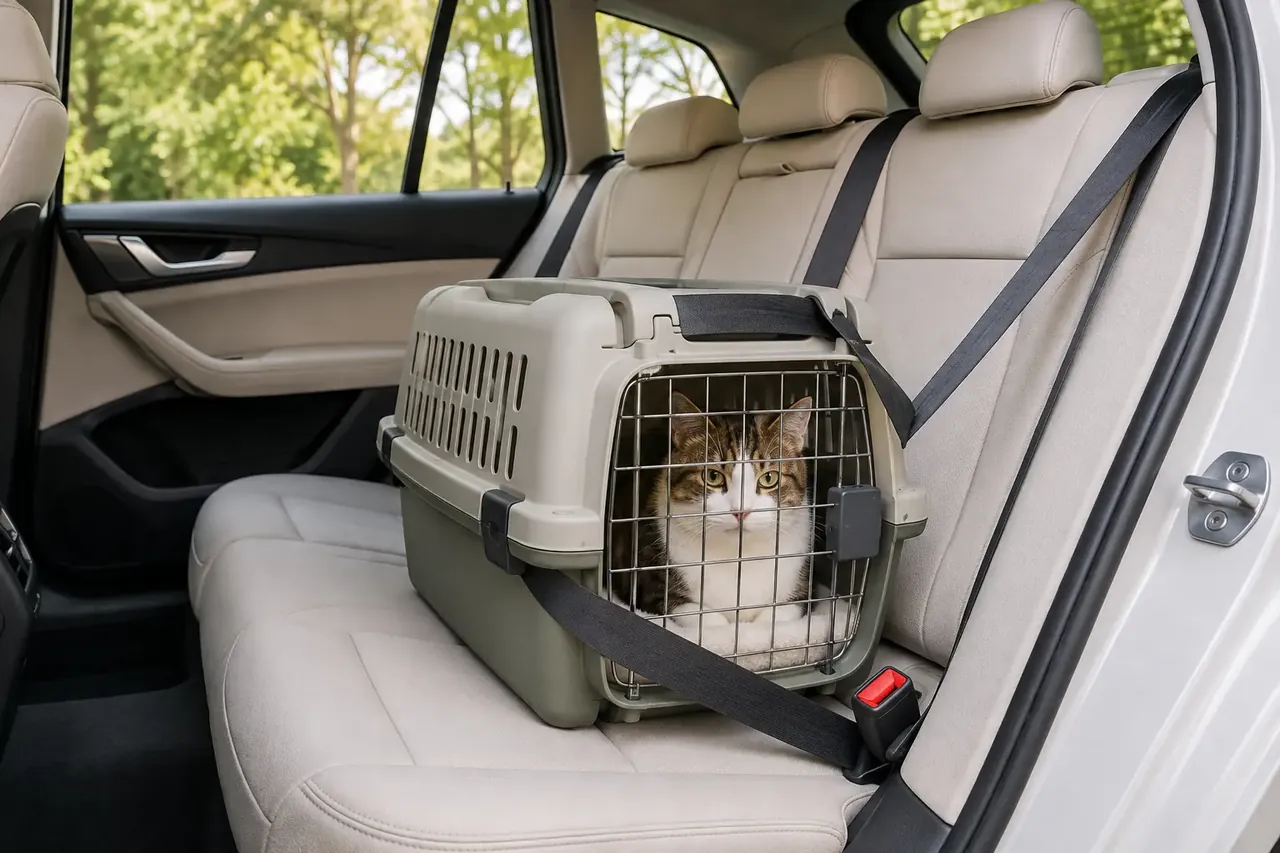 Topic illustration selected for this guide. Some learning images may be AI-assisted.
Moving house with a cat — the quick answer
✓ Use one closed safe room on moving day
✓ Update microchip details before the move
✓ Open the new home gradually
Moving changes the sounds, smells and safe places your cat knows. A simple plan can prevent escapes and make the new home feel manageable.
Plan the move around escape prevention
The safest move keeps your cat contained, identifiable and surrounded by familiar scent.
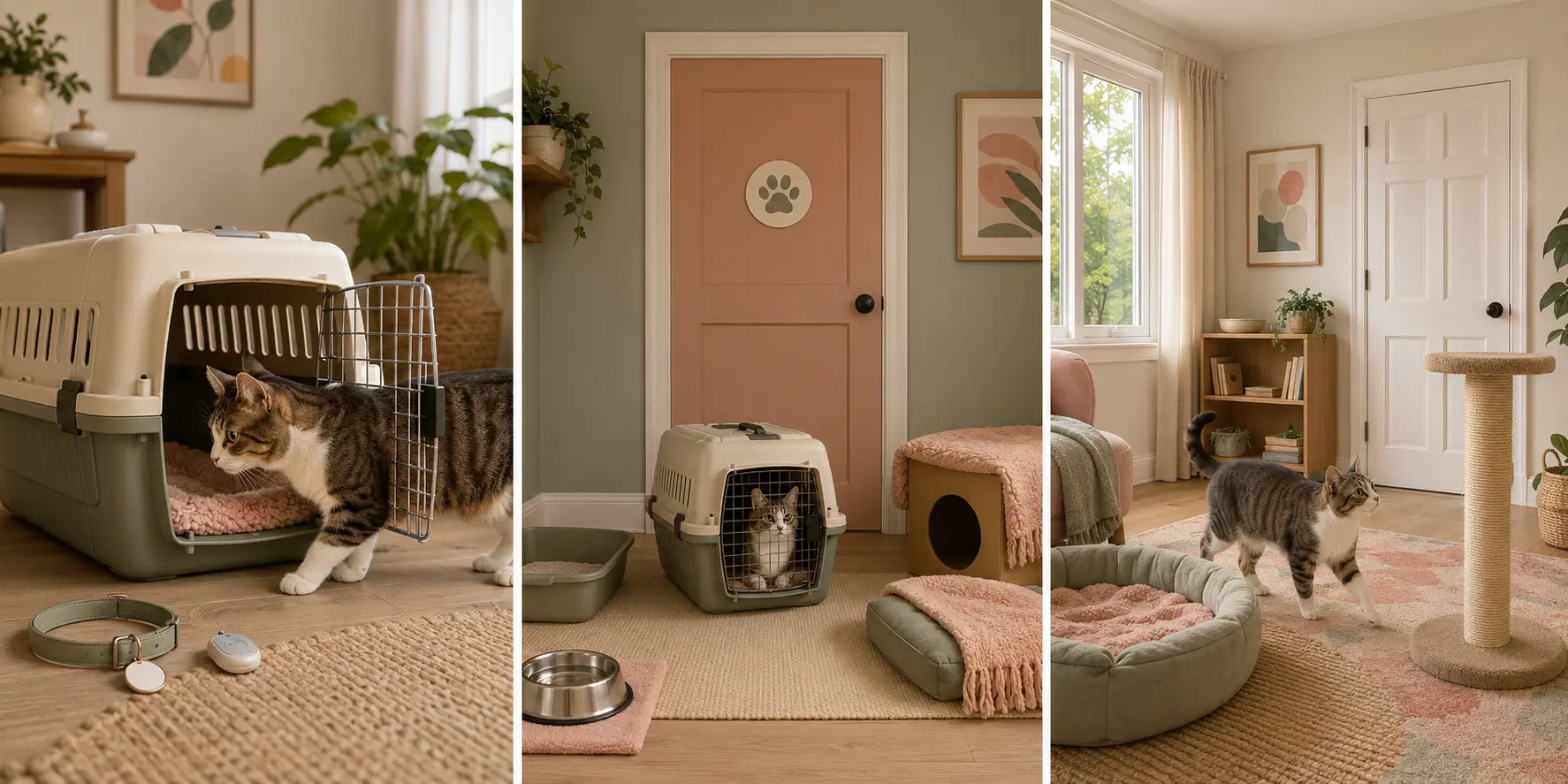
- 1Prepare before moving day
Update identification, leave the carrier available and pack familiar bedding and essential supplies.
- 2Protect one closed room
Keep your cat in a clearly marked quiet base room while doors open and furniture moves.
- 3Start small in the new home
Set up one safe room first and expand access only when eating, toileting and confidence are steady.
Before moving day
Keep the carrier familiar, maintain ordinary feeding times and update identification details. Pack the cat's bedding and daily supplies in a clearly marked bag.
During the move
Place the cat in a secure closed room away from open doors and movers. Add a sign so nobody enters by mistake. Move the cat in a secured carrier.
At the new home
Begin with one quiet room containing familiar bedding, litter, water, food and hiding places. Expand access only when the cat is eating, toileting and exploring confidently.
Remove escape risk before the first box moves
Choose a quiet room that movers will not enter, add a clear door notice and place food, water, litter, hiding and the carrier inside before external doors begin opening. Confirm microchip and contact details before travel.
Let scent and routine rebuild the new map
Begin in one furnished room with familiar bedding and the usual food and litter. Keep feeding and play times predictable, then open one additional area when the cat is eating, toileting and exploring with a relaxed body. Keep outdoor access closed during settling and follow local veterinary guidance.
Your quick checklist
Your progress is saved on this device.
Three simple things you can do
You do not have to change everything today. Pick one step that feels realistic, try it and see how your cat responds.
- 1Create a moving-day safe room with a door sign.
- 2Pack familiar bedding and supplies separately.
- 3Begin the new home with one quiet base room.
Common mistakes
×Letting the cat roam while doors are open.
×Washing every familiar-smelling blanket before the move.
×Opening the entire new home immediately for a frightened cat.
Questions cat people ask
How long should my cat stay in one room?+
Let behavior guide you. Expand when the cat is eating, using the litter box and exploring the base room confidently.
When can an outdoor cat go outside?+
Ask a veterinarian or local welfare organization for guidance. Identification must be updated, and cats need time to establish the new home before outdoor access.
Still looking for the right answer?
Search the full EverYes Cats encyclopedia with your own words — a symptom, food, behaviour, breed or everyday question.
Checked, dated and transparent
- Prepared by
- EverYes Cats editorial team
- Last updated
- 13 August 2026
- Source checked
- 13 August 2026
- Primary reference
- AAHA/AAFP Feline Life Stage Guidelines ↗
We begin with the named reference, rewrite the information in plain language and add practical cat-parent steps. Urgent health statements are checked against veterinary sources. This guide has not been individually reviewed by a veterinarian unless explicitly stated. It provides education, not diagnosis or treatment.
Spotted something unclear or outdated? Tell us so we can review it.
Your answer helps us improve the cat encyclopedia.
A cat should stand, turn and lie naturally without being thrown around in excess space. A calm, practical guide to what it means and what to do next.