Car travel with a cat
The safest car trip keeps the cat inside a sturdy secured carrier from door to door. Practise before travel, control temperature and plan every transfer in a closed space.
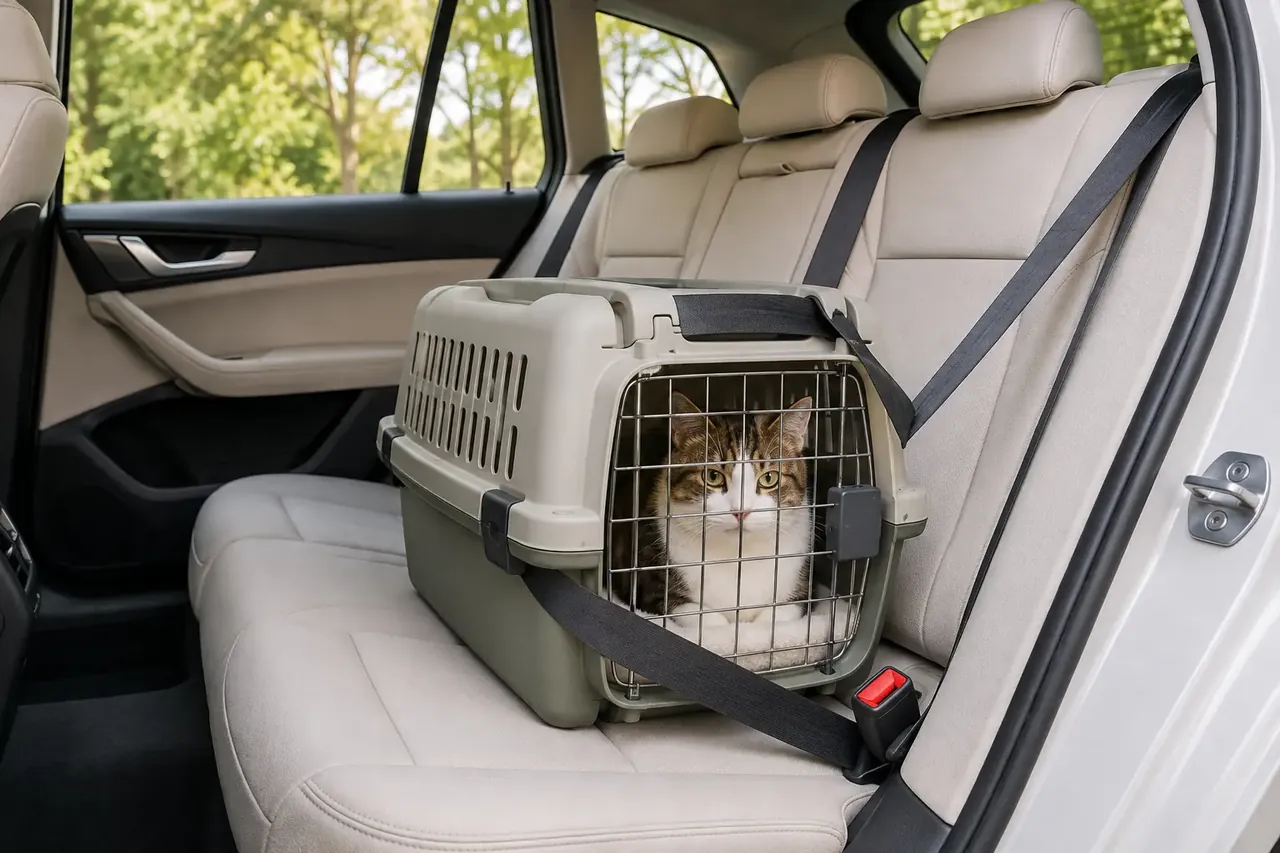 Topic illustration selected for this guide. Some learning images may be AI-assisted.
Car travel with a cat — the quick answer
✓ Secure the carrier so it cannot slide
✓ Never open it beside an unsecured door
✓ Ask a veterinarian about severe travel stress
Car travel is safest when the cat remains inside a secured carrier. Practice can make the sounds and movement more predictable before a necessary trip.
Practice before the trip
Begin with the carrier in the home, then brief sessions in a parked car before adding short drives.
Control the environment
Keep the car comfortably cool and quiet. Use familiar bedding and avoid feeding a large meal immediately before travel.
Plan every transfer
Open the carrier only inside a closed secure space. Keep identification details current.
Prepare the carrier and the car
Label the carrier, add an absorbent layer and familiar bedding, and secure it so it cannot slide or become a projectile. Keep airflow clear and the car quiet. Never leave a cat unattended in a parked vehicle, even for a short stop.
Ask for help before severe travel stress
Drooling, vomiting, panting, frantic escape attempts or repeated toileting may need a veterinary travel plan. Discuss medication before the journey and trial it exactly as directed; never give human sedatives or open the carrier beside an unsecured door.
Your quick checklist
Your progress is saved on this device.
Three simple things you can do
You do not have to change everything today. Pick one step that feels realistic, try it and see how your cat responds.
- 1Condition the carrier at home before practising a parked car and then very short drives.
- 2Line the carrier with an absorbent pad and secure it so it cannot slide or become a projectile.
- 3Keep the cat enclosed from door to door and ask the veterinarian ahead of time about severe fear or nausea.
Common mistakes
×Letting the cat roam loose in the vehicle.
×Opening the carrier beside an unsecured car door or at a service stop.
×Making the first practice trip a long journey after the cat is already distressed.
Questions cat people ask
Where should a cat carrier go in the car?+
Secure it according to the carrier and vehicle instructions so it stays stable and well ventilated. Avoid direct sun, airbags and loose placement.
Why does my cat pant in the car?+
Panting may reflect severe stress, overheating or illness. Stop in a safe place, check temperature and breathing, and seek veterinary advice—urgent help if breathing is difficult or the cat is weak.
Still looking for the right answer?
Search the full EverYes Cats encyclopedia with your own words — a symptom, food, behaviour, breed or everyday question.
Checked, dated and transparent
- Prepared by
- EverYes Cats editorial team
- Last updated
- 13 August 2026
- Source checked
- 13 August 2026
- Primary reference
- AAHA/AAFP Feline Life Stage Guidelines ↗
We begin with the named reference, rewrite the information in plain language and add practical cat-parent steps. Urgent health statements are checked against veterinary sources. This guide has not been individually reviewed by a veterinarian unless explicitly stated. It provides education, not diagnosis or treatment.
Spotted something unclear or outdated? Tell us so we can review it.
Your answer helps us improve the cat encyclopedia.
Carrier bedding should provide grip, absorb small accidents and smell familiar without becoming bulky or hot. A washable towel over a non-slip layer often works well.