What bedding should go in a cat carrier?
Carrier bedding should provide grip, absorb small accidents and smell familiar without becoming bulky or hot. A washable towel over a non-slip layer often works well.
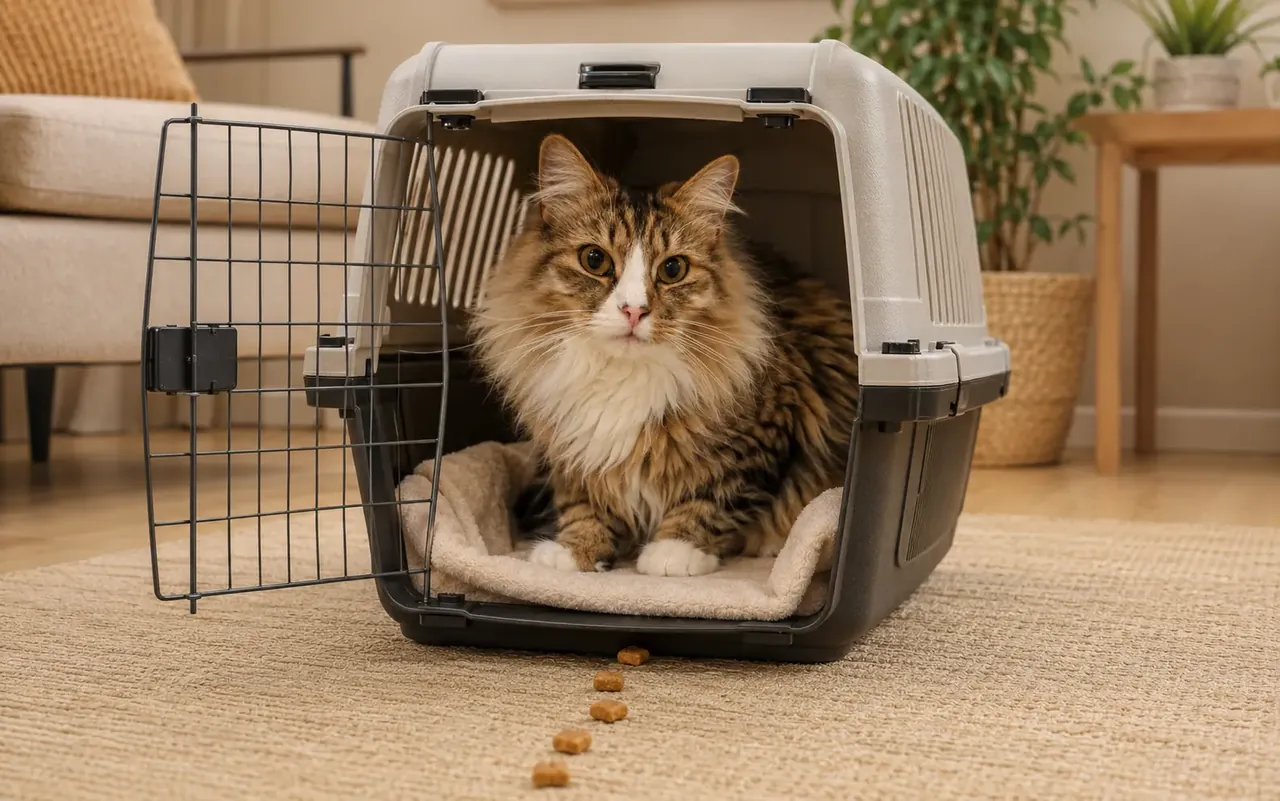 Topic illustration selected for this guide. Some learning images may be AI-assisted.
What bedding should go in a cat carrier — the quick answer
✓ Familiar, absorbent and non-slip layers improve comfort and cleanup
✓ Use a washable familiar layer over an absorbent pad and pack a spare.
✓ Avoid fragranced products and anything the cat may shred and swallow.
Familiar, absorbent and non-slip layers improve comfort and cleanup. Loose thick bedding can slide, overheat or hide urine during a journey. This guide separates the useful observation from guesswork and gives you one safe next step.
Build a flat, familiar carrier floor
The best layer is absorbent, washable and stable without creating a thick sliding pile.
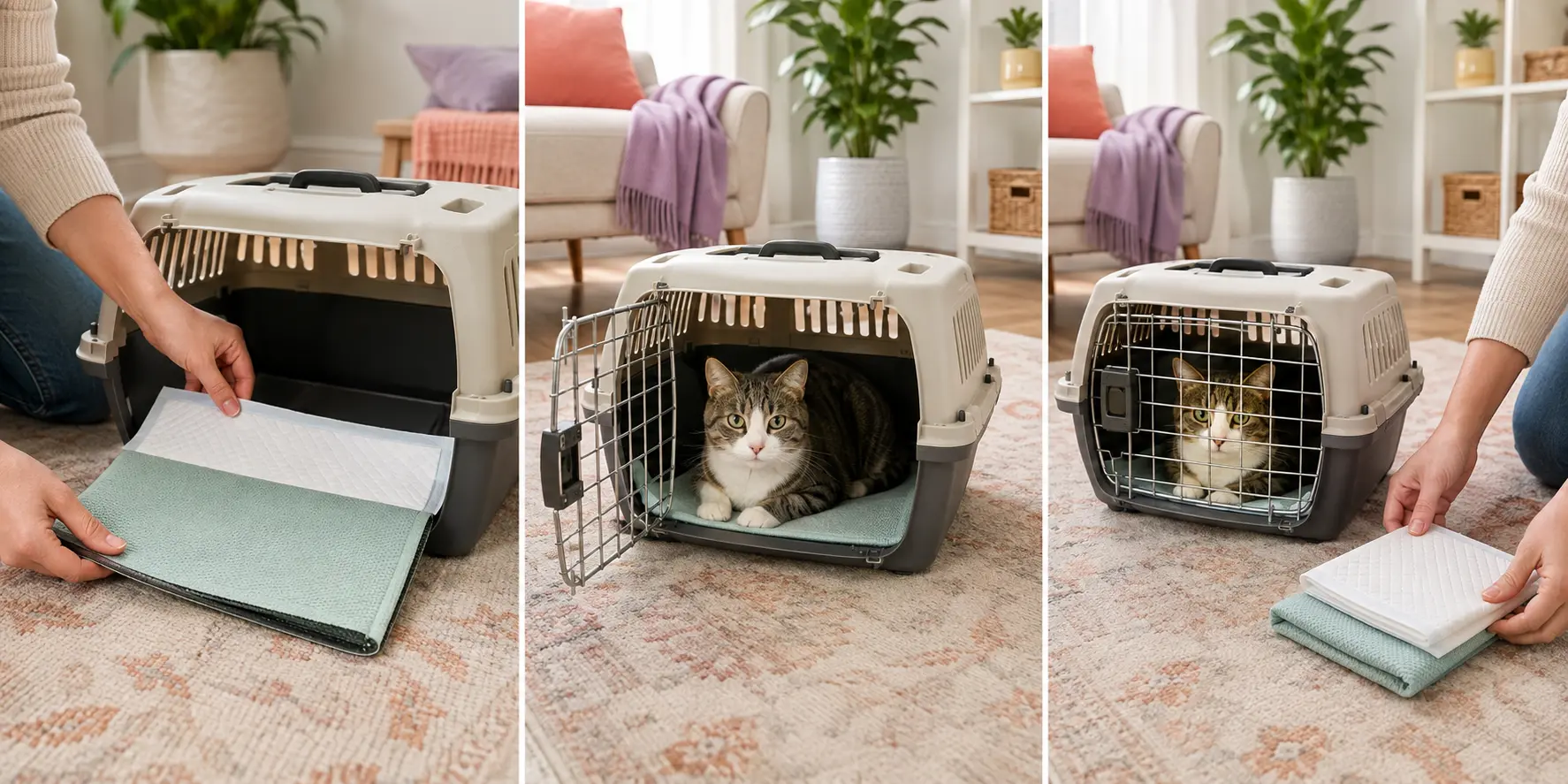
- 1Start with absorption
Place a flat absorbent pad across the carrier base so moisture can be managed without loose edges.
- 2Add familiar non-slip comfort
Cover it with a thin washable familiar layer that stays flat and does not block ventilation.
- 3Pack one complete spare
Bring a replacement pad and blanket so wet or soiled bedding can be changed in a secure enclosed place.
The clear answer
Familiar, absorbent and non-slip layers improve comfort and cleanup. Loose thick bedding can slide, overheat or hide urine during a journey.
What to observe in your own cat
Check identification, carrier security, temperature, water, litter, medication and every door before the journey changes. Familiar, absorbent and non-slip layers improve comfort and cleanup.
Why two cats may look different
Age, health, body shape, early experience, confidence and the immediate environment all affect what owners see. A common pattern can still deserve attention when it is new or different for this individual cat.
Make the home support the answer
Practise the carrier and care routine before the real trip. Keep written feeding, medication and emergency instructions with the cat, and never open containment beside an unsecured exit.
A practical next step
Use a washable familiar layer over an absorbent pad and pack a spare. Keep the change small and easy to reverse, then compare the same facts again rather than relying on memory.
What not to do
Do not punish, frighten, force handling or remove every familiar option at once. Avoid using a general explanation to dismiss a sudden change in health or behaviour.
Warning signs and veterinary help
Avoid fragranced products and anything the cat may shred and swallow.
Source and limits
This educational guide is informed by Cats Protection. It can help you observe and prepare useful information, but it cannot examine your cat, diagnose a condition or replace individual veterinary advice.
DEEPER GUIDE2 more detailed sectionsOpen +
What to check first
Check journey length, temperature, motion sickness, toileting risk and whether claws catch in loops or loose threads.
What to do next
Use a flat washable layer, carry a spare and test the setup at home. Avoid deep cushions that reduce headroom or slide under braking. Open-mouth breathing, collapse, repeated vomiting or overheating during travel is urgent.
Your quick checklist
Your progress is saved on this device.
Three simple things you can do
You do not have to change everything today. Pick one step that feels realistic, try it and see how your cat responds.
- 1Line the base with a non-slip absorbent pad.
- 2Add a thin familiar-smelling blanket if it does not overheat the cat.
- 3Carry a spare liner and sealable bag for accidents.
Common mistakes
×Using a thick loose bed that reduces headroom.
×Adding strongly scented laundry products.
×Leaving wet bedding under the cat.
Questions cat people ask
What should I put in a cat carrier?+
A flat absorbent, non-slip liner is the safest foundation. A light familiar cloth may add comfort when temperature and space permit.
Should I put food or toys inside during travel?+
Loose objects can move or spill. For ordinary short trips, secure bedding and calm handling matter more; follow veterinary advice for food before procedures.
Still looking for the right answer?
Search the full EverYes Cats encyclopedia with your own words — a symptom, food, behaviour, breed or everyday question.
Checked, dated and transparent
- Prepared by
- EverYes Cats editorial team
- Last updated
- 14 August 2026
- Source checked
- 14 August 2026
- Primary reference
- Cats Protection ↗
We begin with the named reference, rewrite the information in plain language and add practical cat-parent steps. Urgent health statements are checked against veterinary sources. This guide has not been individually reviewed by a veterinarian unless explicitly stated. It provides education, not diagnosis or treatment.
Spotted something unclear or outdated? Tell us so we can review it.
Your answer helps us improve the cat encyclopedia.
Road-trip breaks are for checking temperature, breathing and carrier security—not for letting a cat roam inside the car or at a roadside stop.