Moving home with an indoor cat
A room-by-room plan for packing day, travel and the first quiet week.
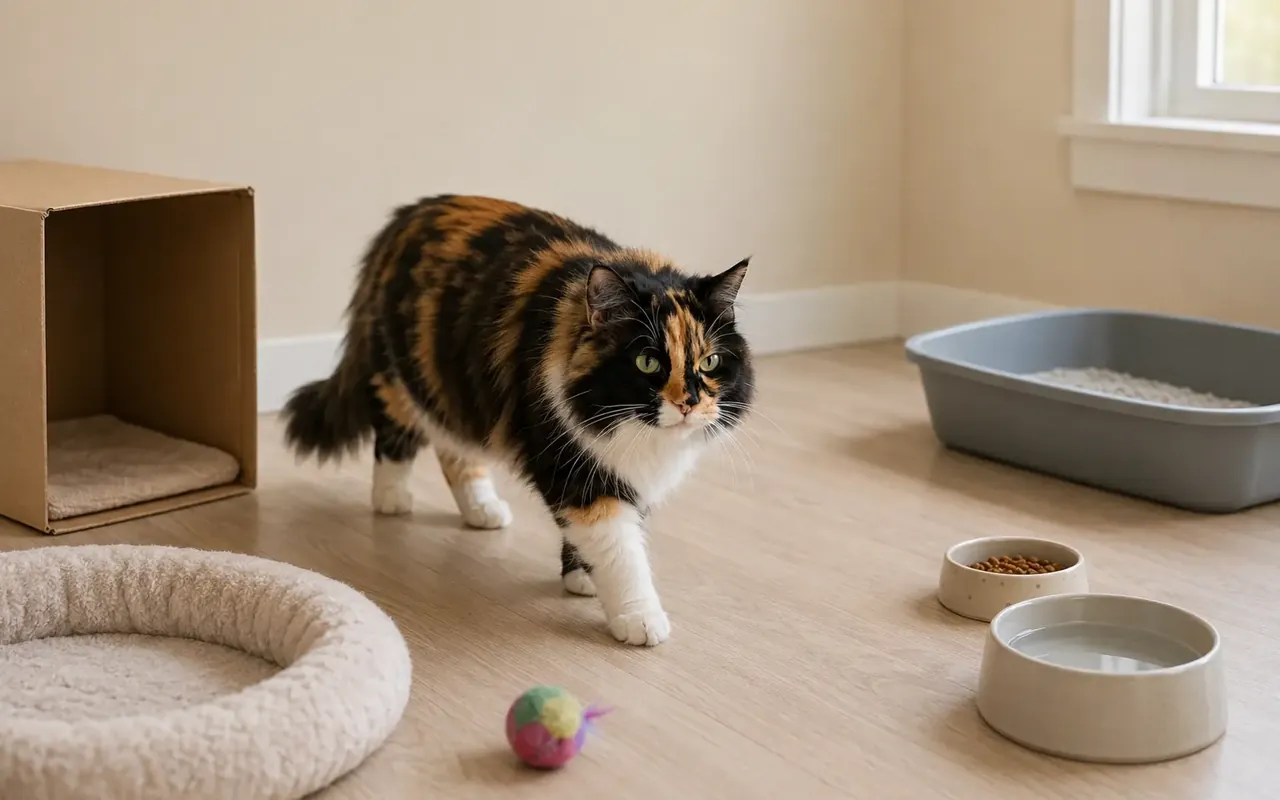 Topic illustration selected for this guide. Some learning images may be AI-assisted.
Moving home with an indoor cat — the quick answer
✓ Use a closed safe room on moving day
✓ Update microchip and contact details
✓ Open the new home gradually
✓ Keep familiar scents and routines
Moving changes scent, sound, territory and routine at once. A secure base room at both ends protects against escape and gives the cat a smaller, understandable place to settle.
Before the move
Leave the carrier out, update identification and choose one room that can be emptied early. Pack food, litter, medication, records and familiar bedding in a clearly marked cat bag.
Moving day
Place the cat in the closed safe room before doors begin opening. Add a sign so helpers do not enter. Move the cat last in a secured carrier.
The new base room
Set up litter, water, food, hiding, scratching, a perch and familiar bedding before arrival. Keep windows and external doors secured.
Expand by confidence
When the cat is eating, toileting, grooming and exploring comfortably, open one additional area. Shy cats may need longer; there is no fixed deadline.
Your quick checklist
Your progress is saved on this device.
Three simple things you can do
You do not have to change everything today. Pick one step that feels realistic, try it and see how your cat responds.
- 1Prepare a closed safe room before helpers begin opening doors.
- 2Update microchip details and pack food, litter, medication and records in a dedicated cat bag.
- 3At the new home, expand from one equipped base room only as confidence returns.
Common mistakes
×Allowing the cat to roam while doors and windows are open.
×Washing every familiar-smelling bed before the move.
×Giving a frightened cat access to the whole new home immediately.
Questions cat people ask
How long should my cat stay in the base room?+
There is no fixed number of days. Expand when your cat is eating, toileting, grooming and exploring comfortably.
When can a formerly outdoor cat go outside after moving?+
Identification must be updated and the cat needs time to establish the new home. Ask your veterinarian or local welfare organisation for an individual plan before outdoor access.
Still looking for the right answer?
Search the full EverYes Cats encyclopedia with your own words — a symptom, food, behaviour, breed or everyday question.
Checked, dated and transparent
- Prepared by
- EverYes Cats editorial team
- Last updated
- 7 August 2026
- Source checked
- 7 August 2026
- Primary reference
- FelineVMA Healthy Feline Environment ↗
We begin with the named reference, rewrite the information in plain language and add practical cat-parent steps. Urgent health statements are checked against veterinary sources. This guide has not been individually reviewed by a veterinarian unless explicitly stated. It provides education, not diagnosis or treatment.
Spotted something unclear or outdated? Tell us so we can review it.
Your answer helps us improve the cat encyclopedia.
Move a cat between two secure base rooms: one behind a closed door on moving day and one prepared at the new home. Update identification, secure the carrier and expand territory gradually.