Why Does My Kitten Sit on the Older Cat's Tail?
A moving adult-cat tail can become an irresistible kitten toy, but the older cat still needs uninterrupted rest and control over distance. Redirect early and protect separate resting places.
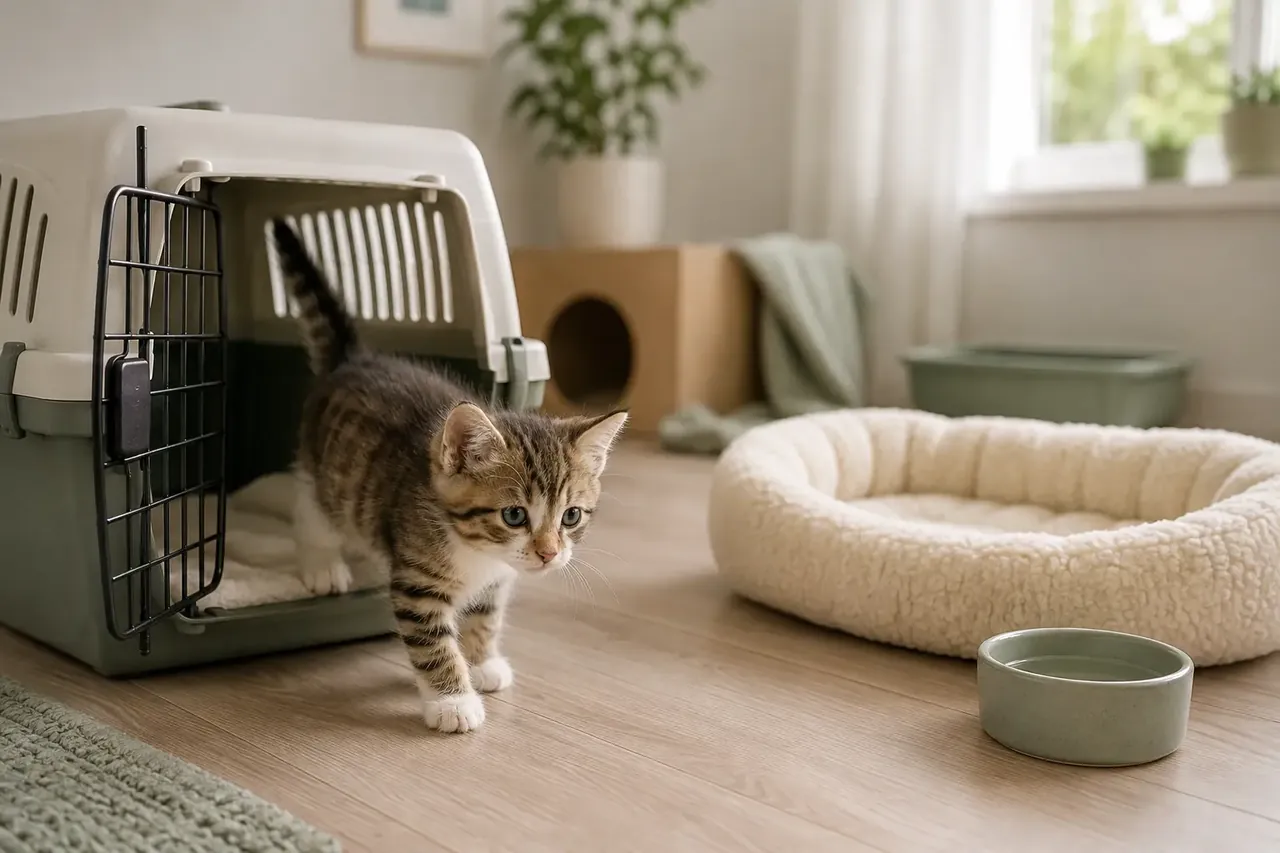
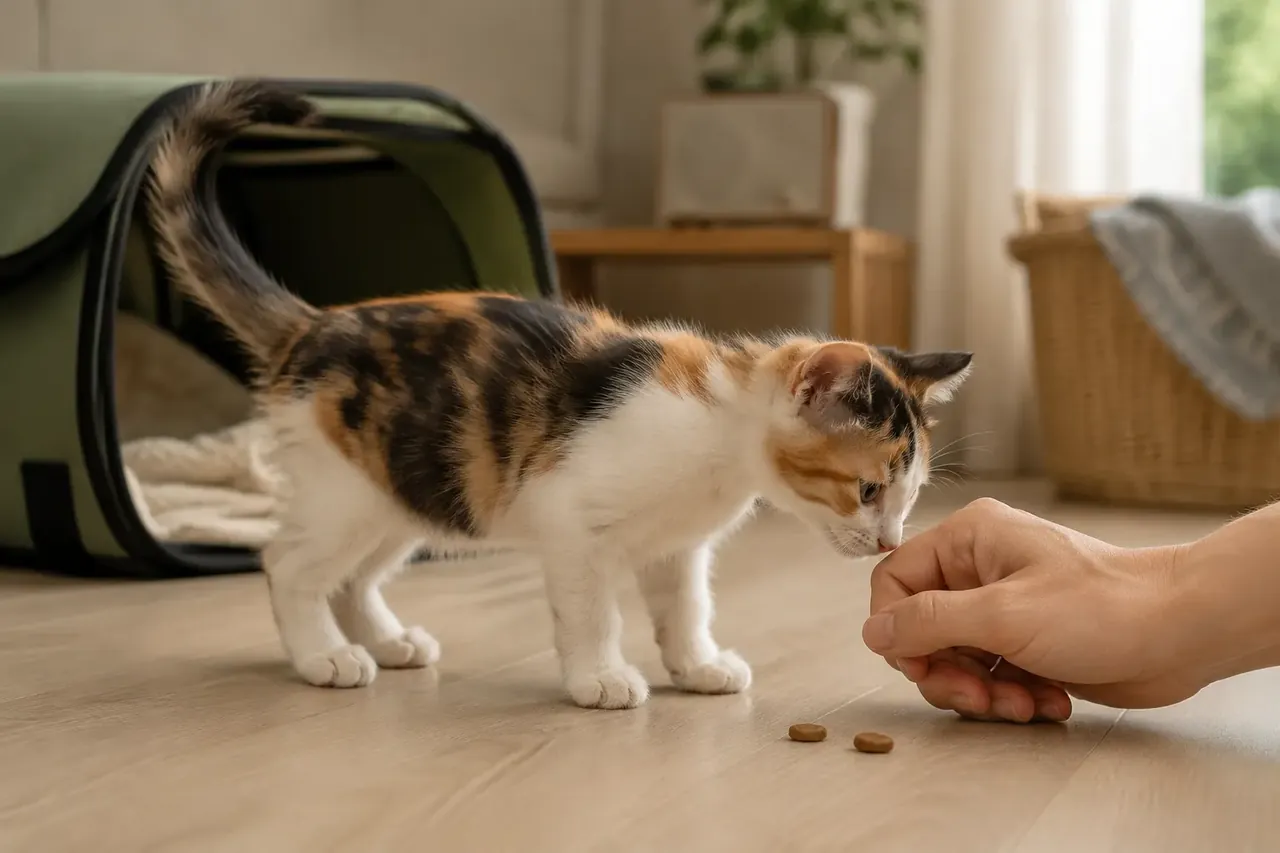 Topic illustration selected for this guide. Some learning images may be AI-assisted.
Why Does My Kitten Sit on the Older Cat's Tail — the quick answer
✓ A moving tail can become an irresistible play target, while the kitten may not yet respect the older cat's rest signals.
✓ Redirect the kitten before pouncing, add separate play sessions and protect the older cat's resting places.
✓ Bites, wounds, relentless pursuit, hiding or appetite change needs professional support.
A moving tail can become an irresistible play target, while the kitten may not yet respect the older cat's rest signals. Start by comparing the moment with your cat's usual pattern.
Read both cats, not the kitten alone
Watch whether the older cat stays loose, moves away easily or begins to flick the tail, turn sharply, flatten ears, hiss or leave. Brief curiosity can be normal. Repeated sitting, grabbing or pouncing after the adult disengages creates social pressure even when no fight occurs.
Interrupt before contact escalates
When the kitten focuses on the tail, lure play away with a wand toy and reward movement to another area. Do not wait for the older cat to deliver a stronger warning. End the session with capture and a small portion of food or a settling activity so the kitten has a complete alternative sequence.
Protect adult rest and escape
Provide high and low resting places the kitten cannot easily rush, plus more than one route to food, water and litter. Separate naps or short room rotations can give the adult reliable rest when every cat has complete resources. Never hold the cats together or punish a hiss or brief warning.
What to record
Note frequency, who approaches, whether the adult can leave, recovery time and changes in sleep, appetite, grooming or litter use. Map narrow routes and favourite beds where the kitten repeatedly catches the tail. These details help distinguish ordinary learning from relentless pursuit.
When to contact a veterinarian
Arrange veterinary care for bites, punctures, swelling, limping, tail pain, sudden irritability or an older cat that hides or eats less. Qualified behaviour support is appropriate when pursuit or conflict persists despite separate resources, play and protected rest.
Your quick checklist
Loading saved progress…
Three simple things you can do
You do not have to change everything today. Pick one step that feels realistic, try it and see how your cat responds.
- 1Observe your cat’s individual baseline.
- 2Make one gentle change at a time.
- 3Ask a qualified professional when health or safety is involved.
Common mistakes
×Waiting for a dramatic symptom instead of noticing smaller changes from the cat’s normal routine.
×Changing several things at once, making it difficult to learn what actually helped.
×Treating general guidance as a substitute for advice from a veterinarian who knows the individual cat.
Questions cat people ask
Does every cat follow the same rule?+
No. Age, health, history, temperament and environment all change what works for an individual.
When should I seek professional help?+
Seek veterinary advice for sudden, persistent or concerning changes and urgent help for breathing difficulty, collapse, seizures, poisoning or urinary obstruction signs.
Still looking for the right answer?
Search the full EverYes Cats encyclopedia with your own words — a symptom, food, behaviour, breed or everyday question.
Checked, dated and transparent
- Prepared by
- EverYes Cats editorial team
- Last updated
- Source checked
- Primary reference
- FelineVMA: Feline Environmental Needs Guidelines ↗
We begin with the named reference, rewrite the information in plain language and add practical cat-parent steps. Urgent health statements are checked against veterinary sources. This guide has not been individually reviewed by a veterinarian unless explicitly stated. It provides education, not diagnosis or treatment.
How we choose and use sources →
Spotted something unclear or outdated? Tell us so we can review it.
Loading your saved choice…
Most healthy kittens can eat comfortably from a stable shallow dish at floor level. Easy access, clean placement and freedom from competition matter more than a fashionable raised-bowl rule.
 01
 03
 04
 06