Kitten biting: teach the right target
Protect hands while keeping normal hunting play healthy.
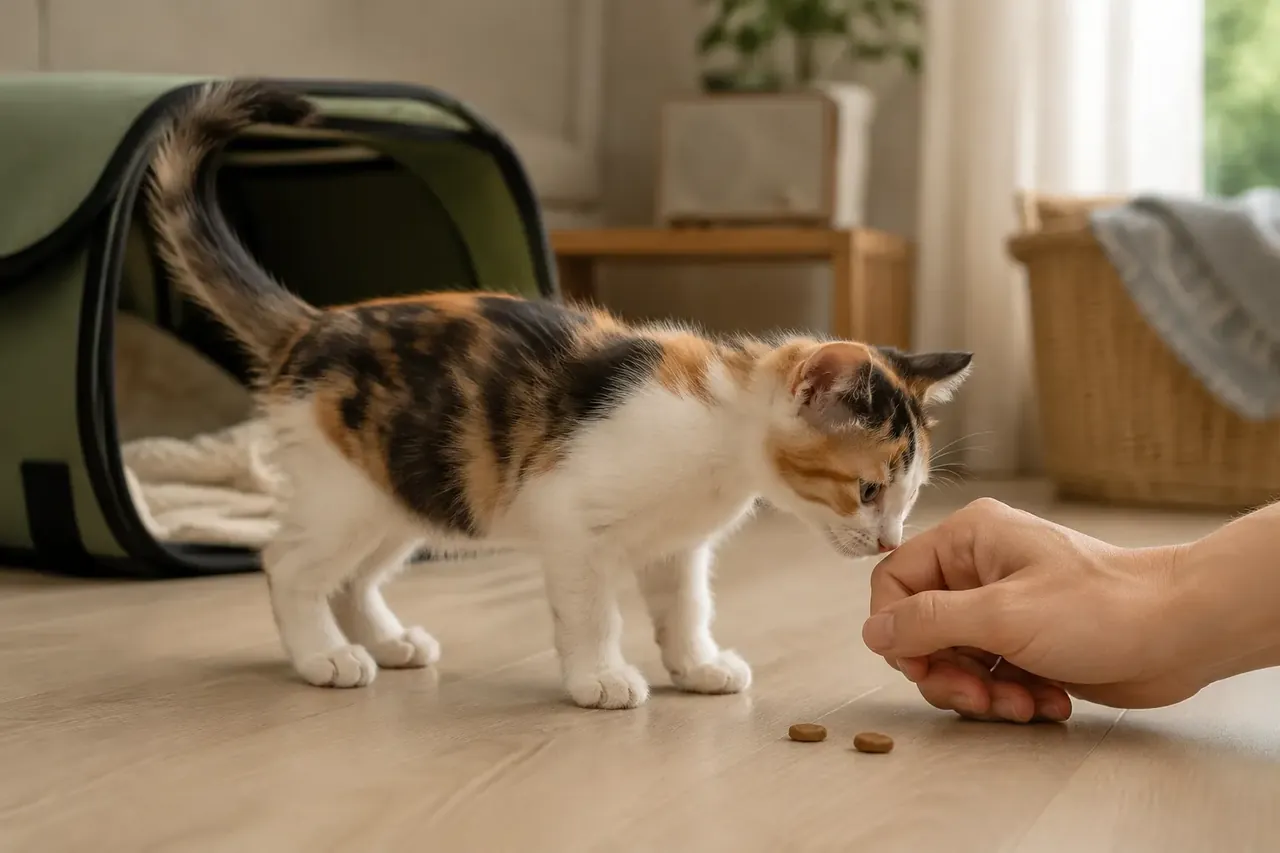 Topic illustration selected for this guide. Some learning images may be AI-assisted.
Kitten biting: teach the right target — the quick answer
✓ Never use hands as prey
✓ Redirect before the kitten launches
✓ Briefly pause play after painful contact
✓ Punishment can create fear and harder biting
Kittens practise stalking, grabbing and biting through play. The goal is not to stop hunting behaviour but to direct it toward toys while hands remain calm and predictable.
Choose distance toys
Use wand toys, tossed mice and kicker toys that let the kitten chase and grab away from skin. Store strings securely after supervised play.
Spot the launch
Large pupils, a crouch, tail movement and fixation on feet often come before pouncing. Move an appropriate toy away from the kitten before contact occurs.
Respond consistently
If teeth touch skin, freeze rather than yank away, end interaction briefly and offer a toy after the pause. Avoid shouting, spraying or physical correction.
Meet the whole need
Provide several short play sessions, climbing, scratching, rest and regular meals. Sudden aggression, pain on touch or behaviour outside play needs veterinary assessment.
Your quick checklist
Your progress is saved on this device.
Three simple things you can do
You do not have to change everything today. Pick one step that feels realistic, try it and see how your cat responds.
- 1Use wand, tossed and kicker toys so hunting happens away from skin.
- 2Redirect when you notice the crouch and fixation that come before a pounce.
- 3If teeth touch skin, freeze, pause interaction briefly and offer a suitable toy after the pause.
Common mistakes
×Wrestling with hands and teaching that fingers are prey.
×Pulling the hand away rapidly and making the chase more exciting.
×Shouting, spraying or physically punishing normal play behaviour.
Questions cat people ask
Is kitten biting caused by teething?+
Mouth discomfort may contribute, but stalking, pouncing and grabbing are also normal hunting play. Provide safe targets and consistent responses rather than using hands.
Will my kitten grow out of biting?+
Some intensity changes with age, but habits become stronger through practice. Teach appropriate targets now and seek veterinary advice for sudden aggression or pain on touch.
Still looking for the right answer?
Search the full EverYes Cats encyclopedia with your own words — a symptom, food, behaviour, breed or everyday question.
Checked, dated and transparent
- Prepared by
- EverYes Cats editorial team
- Last updated
- 7 August 2026
- Source checked
- 7 August 2026
- Primary reference
- FelineVMA Healthy Feline Environment ↗
We begin with the named reference, rewrite the information in plain language and add practical cat-parent steps. Urgent health statements are checked against veterinary sources. This guide has not been individually reviewed by a veterinarian unless explicitly stated. It provides education, not diagnosis or treatment.
Spotted something unclear or outdated? Tell us so we can review it.
Your answer helps us improve the cat encyclopedia.
Kittens naturally alternate long sleep with intense bursts of activity. Several short play–catch–meal cycles and protected rest create a workable routine without expecting adult calm.