Kind kitten socialisation
Kind kitten socialisation pairs new people, sounds, surfaces and handling with safety and choice. The aim is calm curiosity, not exposure at any cost.
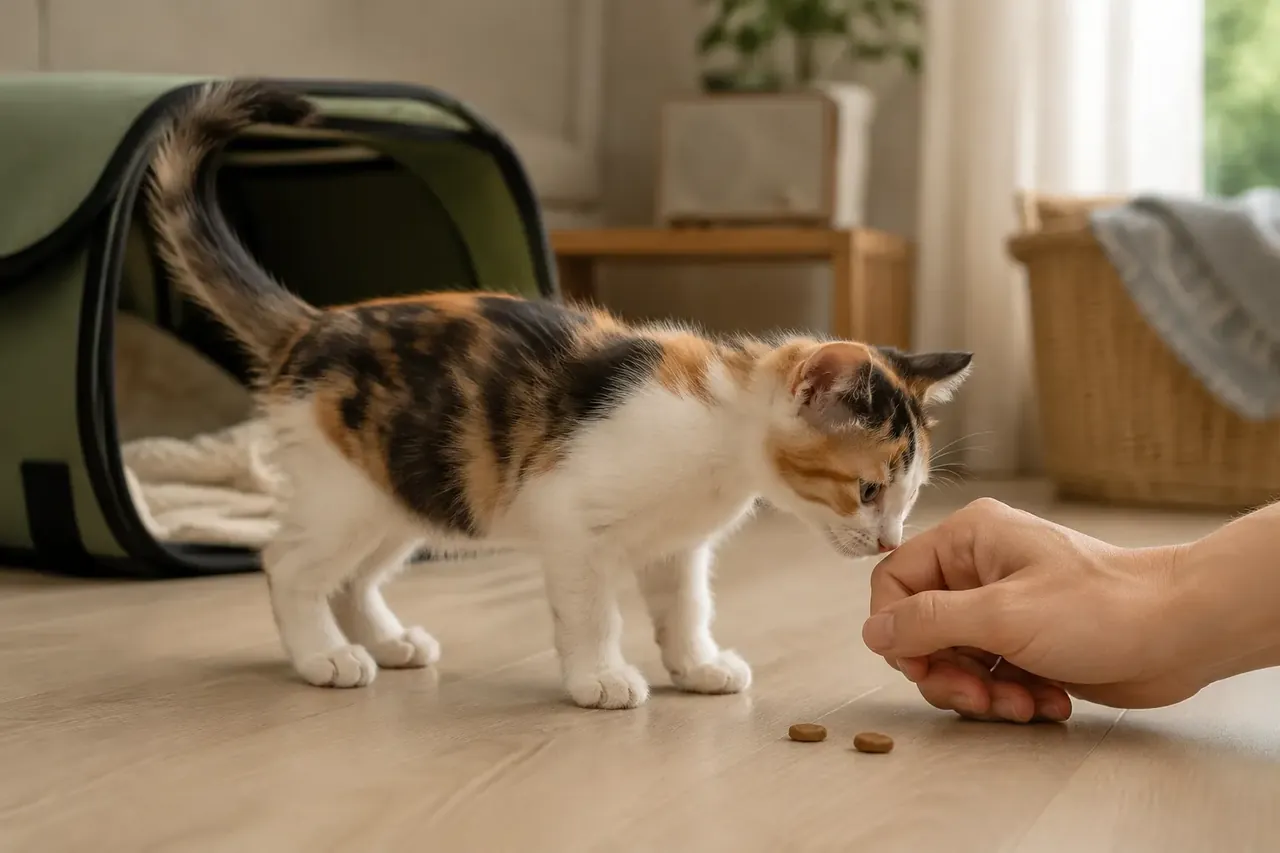 Topic illustration selected for this guide. Some learning images may be AI-assisted.
Kind kitten socialisation — the quick answer
✓ Positive, choice-based exposure helps kittens learn what is safe.
✓ Pair gentle sounds, people and handling with food or play.
✓ Never flood a frightened kitten; short successful sessions are better.
Positive, choice-based exposure helps kittens learn what is safe. This guide turns the idea into small practical steps while keeping health, choice and individual temperament in view.
Build confidence through tiny voluntary experiences
Socialisation is not exposure at any cost. The kitten needs choice, a safe retreat and enough distance to remain curious rather than frightened.
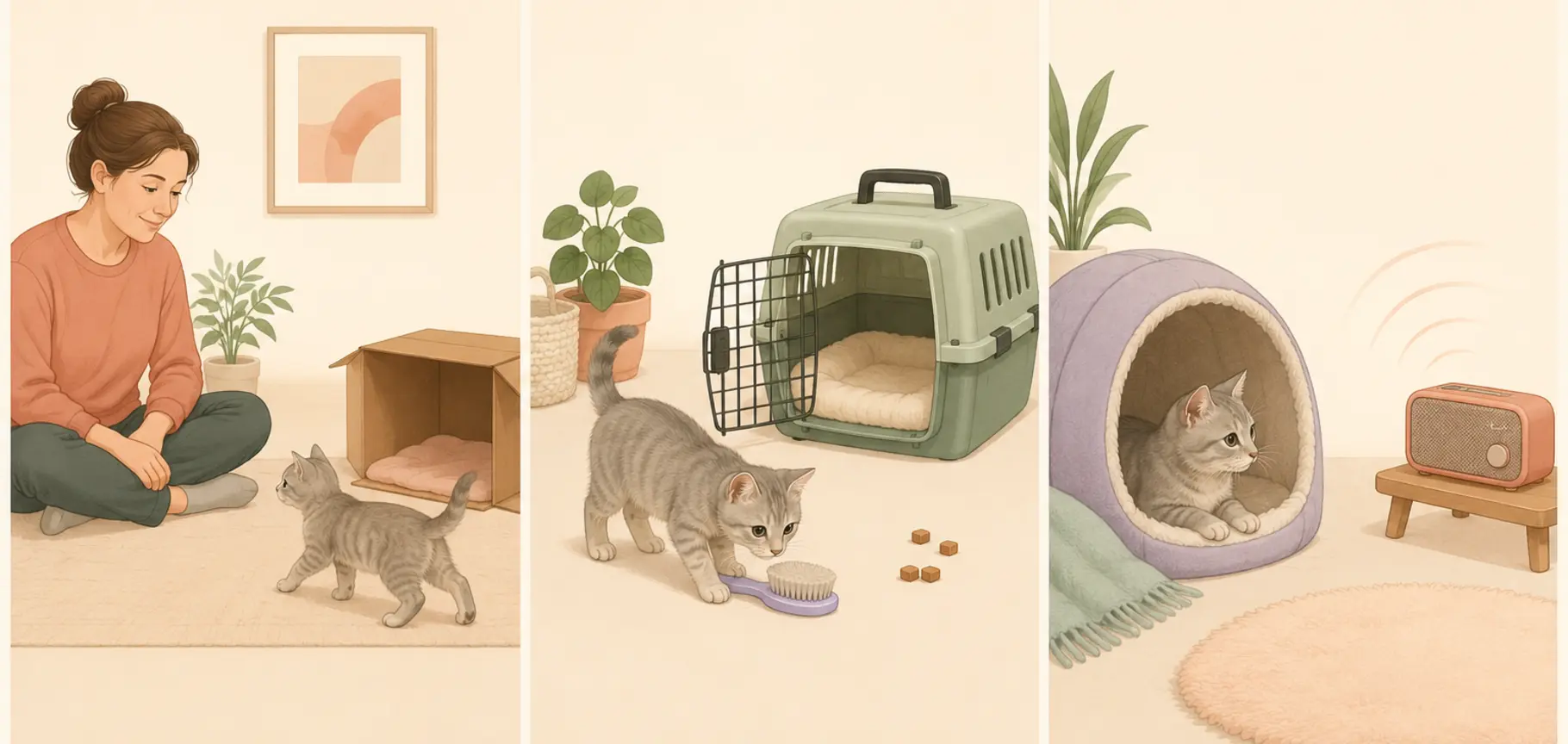
- 1Begin from a secure base
Keep an open hiding place nearby and let the kitten choose whether to approach a calm person without reaching, lifting or cornering.
- 2Pair one novelty with something good
Introduce one gentle item, sound or handling cue at low intensity and pair calm investigation with a treat or play.
- 3Finish while confidence remains
End after a brief success and make the next session easier if the kitten freezes, hides, flattens the ears or refuses food.
Start here
Positive, choice-based exposure helps kittens learn what is safe.
A practical plan
Pair gentle sounds, people and handling with food or play.
Know when to pause
Never flood a frightened kitten; short successful sessions are better.
Work from a secure base
Keep an open hiding place nearby and introduce one gentle novelty at low intensity. Let the kitten approach a calm person, carrier, brush, household sound or new surface without being cornered. Pair voluntary investigation with food or play and end after a brief success while the kitten can still eat, explore and recover normally.
Protect health and individual pace
Follow veterinary advice about infection risk and vaccination before contact with unknown animals or environments. Make the next session easier after freezing, fleeing, flattened ears, repeated hiding or refusal of food. Children need calm supervision and should never chase or lift a retreating kitten. Sudden lethargy, poor appetite or illness signs need veterinary care, not more exposure.
Your quick checklist
Your progress is saved on this device.
Three simple things you can do
You do not have to change everything today. Pick one step that feels realistic, try it and see how your cat responds.
- 1Observe your cat’s individual baseline.
- 2Make one gentle change at a time.
- 3Ask a qualified professional when health or safety is involved.
Common mistakes
×Waiting for a dramatic symptom instead of noticing smaller changes from the cat’s normal routine.
×Changing several things at once, making it difficult to learn what actually helped.
×Treating general guidance as a substitute for advice from a veterinarian who knows the individual cat.
Questions cat people ask
Does every cat follow the same rule?+
No. Age, health, history, temperament and environment all change what works for an individual.
When should I seek professional help?+
Seek veterinary advice for sudden, persistent or concerning changes and urgent help for breathing difficulty, collapse, seizures, poisoning or urinary obstruction signs.
Still looking for the right answer?
Search the full EverYes Cats encyclopedia with your own words — a symptom, food, behaviour, breed or everyday question.
Checked, dated and transparent
- Prepared by
- EverYes Cats editorial team
- Last updated
- 4 September 2026
- Source checked
- 4 September 2026
- Primary reference
- FelineVMA Life Stage Guidelines ↗
We begin with the named reference, rewrite the information in plain language and add practical cat-parent steps. Urgent health statements are checked against veterinary sources. This guide has not been individually reviewed by a veterinarian unless explicitly stated. It provides education, not diagnosis or treatment.
Spotted something unclear or outdated? Tell us so we can review it.
Your answer helps us improve the cat encyclopedia.
Hands are not toys; redirect hunting to safe moving targets.