Cat symptom guide: Difficulty breathing
Open-mouth breathing, marked effort or blue/grey gums are emergencies.
 Topic illustration selected for this guide. Some learning images may be AI-assisted.
This sign can be urgent. Call a veterinarian or emergency clinic now for individual triage; do not wait for this article to diagnose the cause.
Cat symptom guide: Difficulty breathing — the quick answer
✓ Treat this as urgent
✓ Keep the cat calm, minimize handling and travel to an emergency clinic now.
✓ Record timing, frequency and related changes
A symptom is information, not a diagnosis. Open-mouth breathing, marked effort or blue/grey gums are emergencies. When in doubt, a veterinary professional can triage the situation using your cat's age, history and current signs.
Minimise handling and leave for emergency care
Open-mouth breathing or marked effort in a cat is an emergency. Do not complete a breathing count, perform home tests or wait for the pattern to settle.
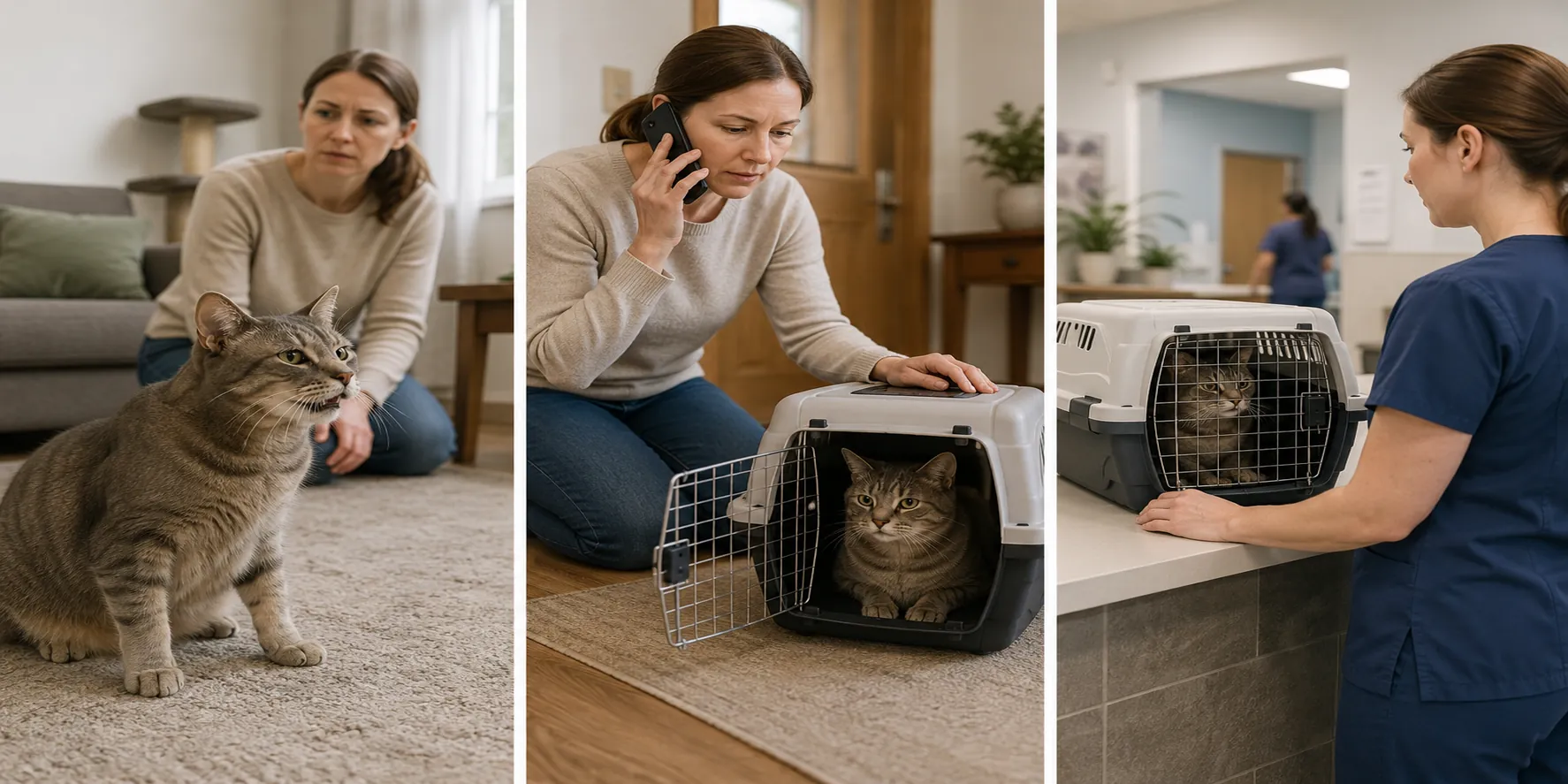
- 1Recognise visible effort
Open-mouth breathing, abdominal pumping, a stretched neck, elbows held away, blue-grey gums, collapse or inability to settle requires immediate action.
- 2Call while preparing transport
Keep the room quiet, minimise handling, open the carrier nearby and phone the emergency clinic; do not force food, water or medicine.
- 3Travel now
Move the cat as gently as possible in the secure ventilated carrier and follow the clinic’s arrival instructions without delaying for photos or repeated gum checks.
What this sign can look like
Open-mouth breathing, marked effort or blue/grey gums are emergencies.
What to do now
Keep the cat calm, minimize handling and travel to an emergency clinic now.
Useful information for the clinic
Note when it began, frequency, appetite, drinking, litter use, medication and possible exposures. Take a short video only if it is safe and does not delay care.
Your quick checklist
Your progress is saved on this device.
What to do now
Do not use this guide to delay care. Start with the first step and follow the veterinary professional's instructions.
- 1Observe your cat’s individual baseline.
- 2Make one gentle change at a time.
- 3Ask a qualified professional when health or safety is involved.
Common mistakes
×Waiting for a dramatic symptom instead of noticing smaller changes from the cat’s normal routine.
×Changing several things at once, making it difficult to learn what actually helped.
×Treating general guidance as a substitute for advice from a veterinarian who knows the individual cat.
Questions cat people ask
Does every cat follow the same rule?+
No. Age, health, history, temperament and environment all change what works for an individual.
When should I seek professional help?+
Seek veterinary advice for sudden, persistent or concerning changes and urgent help for breathing difficulty, collapse, seizures, poisoning or urinary obstruction signs.
Still looking for the right answer?
Search the full EverYes Cats encyclopedia with your own words — a symptom, food, behaviour, breed or everyday question.
Checked, dated and transparent
- Prepared by
- EverYes Cats editorial team
- Last updated
- 6 August 2026
- Source checked
- 6 August 2026
- Primary reference
- Cornell Feline Health Center ↗
We begin with the named reference, rewrite the information in plain language and add practical cat-parent steps. Urgent health statements are checked against veterinary sources. This guide has not been individually reviewed by a veterinarian unless explicitly stated. It provides education, not diagnosis or treatment.
Spotted something unclear or outdated? Tell us so we can review it.
Your answer helps us improve the cat encyclopedia.
Repeated vomiting is not something to simply watch for days. Blood, pain, weakness, dehydration, possible string or toxin exposure, or inability to keep water down needs prompt veterinary assessment.