Cat symptom guide: Diarrhea
Cat diarrhoea may be brief or reflect parasites, infection, diet problems, toxins, foreign material or systemic illness. Frequency matters, but age, hydration, appetite, vomiting and overall condition determine how quickly veterinary care is needed.
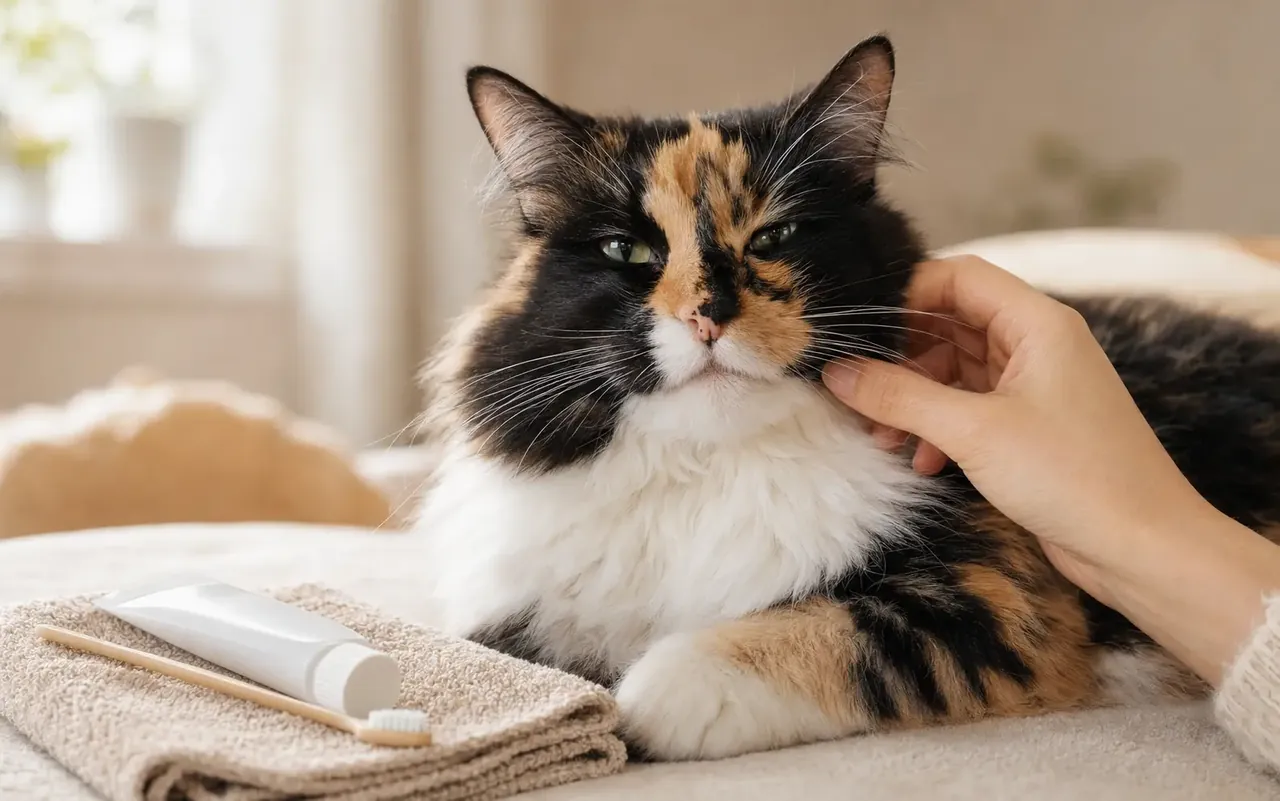 Topic illustration selected for this guide. Some learning images may be AI-assisted.
Cat symptom guide: Diarrhea — the quick answer
✓ Watch the whole pattern
✓ Contact a vet sooner for kittens, seniors or cats with another illness.
✓ Record timing, frequency and related changes
A symptom is information, not a diagnosis. One mild episode may pass, but blood, pain, dehydration or persistence matters. When in doubt, a veterinary professional can triage the situation using your cat's age, history and current signs.
Describe the stool and frequency
Record every episode, amount, colour, consistency, blood, mucus and straining. Note whether stool is soft but formed, completely watery or only small urgent amounts. Add appetite, drinking, vomiting, urine, activity and recent food, medication, parasite prevention or household changes.
Protect hydration without force
Keep fresh water freely available and offer familiar complete food only as the veterinary team advises. Do not syringe water into a struggling, nauseated or weak cat because aspiration is possible. Watch urine clumps, gum moisture, energy and whether the cat can keep food and water down.
Use careful hygiene and preserve evidence
Scoop promptly, wear gloves when needed and wash hands. Clean soiled fur gently without repeated bathing or fragranced wipes. Separate litter equipment if contagious illness is possible. Photograph the stool and collect a fresh sample only when the clinic requests one, using their storage instructions.
Avoid fasting and home medicine
Do not fast a kitten or medically vulnerable cat. Never give human anti-diarrhoeal medicine, antibiotics, pain medicine, probiotics or leftover prescription food without veterinary direction. Avoid making several rapid diet changes, because reduced intake and changing variables can worsen risk and obscure the cause.
Know which cats need prompt care
Contact a veterinarian promptly for kittens, seniors, medically vulnerable cats, repeated watery stool, blood, pain, vomiting, lethargy, dehydration or reduced eating. Suspected toxin, string or foreign-object exposure is urgent. Cats with poor intake can deteriorate faster than owners expect.
Arrange assessment when it persists or returns
Even mild diarrhoea deserves assessment when it continues, recurs or accompanies weight loss. Bring the timeline, diet details and requested sample. Treating only stool consistency can miss parasites, inflammation or illness, and apparent improvement does not cancel care when appetite or behaviour remains abnormal.
Your quick checklist
Loading saved progress…
Three simple things you can do
You do not have to change everything today. Pick one step that feels realistic, try it and see how your cat responds.
- 1Observe your cat’s individual baseline.
- 2Make one gentle change at a time.
- 3Ask a qualified professional when health or safety is involved.
Common mistakes
×Waiting for a dramatic symptom instead of noticing smaller changes from the cat’s normal routine.
×Changing several things at once, making it difficult to learn what actually helped.
×Treating general guidance as a substitute for advice from a veterinarian who knows the individual cat.
Questions cat people ask
Does every cat follow the same rule?+
No. Age, health, history, temperament and environment all change what works for an individual.
When should I seek professional help?+
Seek veterinary advice for sudden, persistent or concerning changes and urgent help for breathing difficulty, collapse, seizures, poisoning or urinary obstruction signs.
Still looking for the right answer?
Search the full EverYes Cats encyclopedia with your own words — a symptom, food, behaviour, breed or everyday question.
Checked, dated and transparent
- Prepared by
- EverYes Cats editorial team
- Last updated
- Source checked
- Primary reference
- Merck Veterinary Manual: Digestive Disorders of Cats ↗
We begin with the named reference, rewrite the information in plain language and add practical cat-parent steps. Urgent health statements are checked against veterinary sources. This guide has not been individually reviewed by a veterinarian unless explicitly stated. It provides education, not diagnosis or treatment.
How we choose and use sources →
Spotted something unclear or outdated? Tell us so we can review it.
Loading your saved choice…
A cat that starts limping may have a paw injury, torn claw, bite, fracture, joint pain or another painful condition. Restrict running and jumping, observe without forcing the leg and arrange veterinary assessment.
 01
 02
 06