How do you keep a cat safe during a home viewing?
Repeated visitors and open doors make a home viewing an escape risk. Prepare one secure room before arrival and assign one person responsibility for that door and the cat.
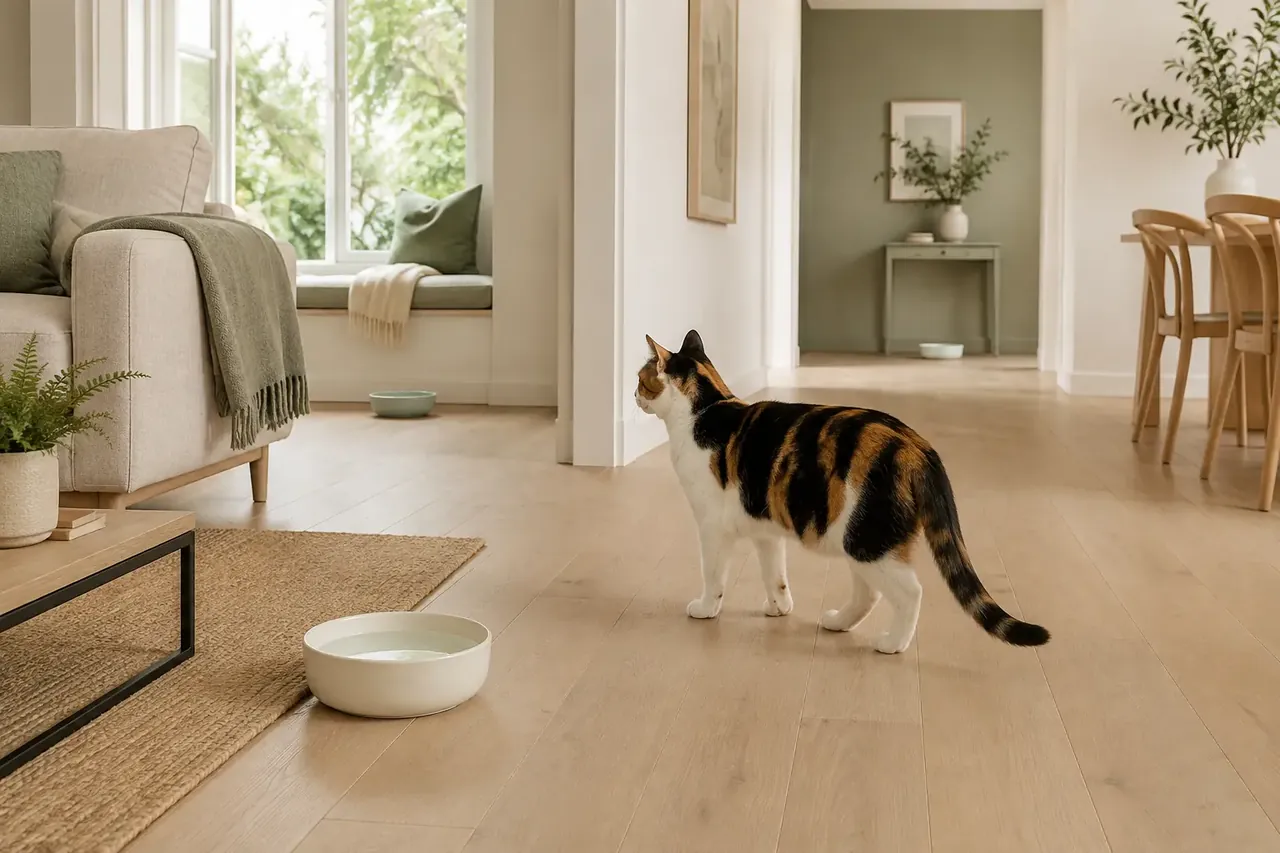
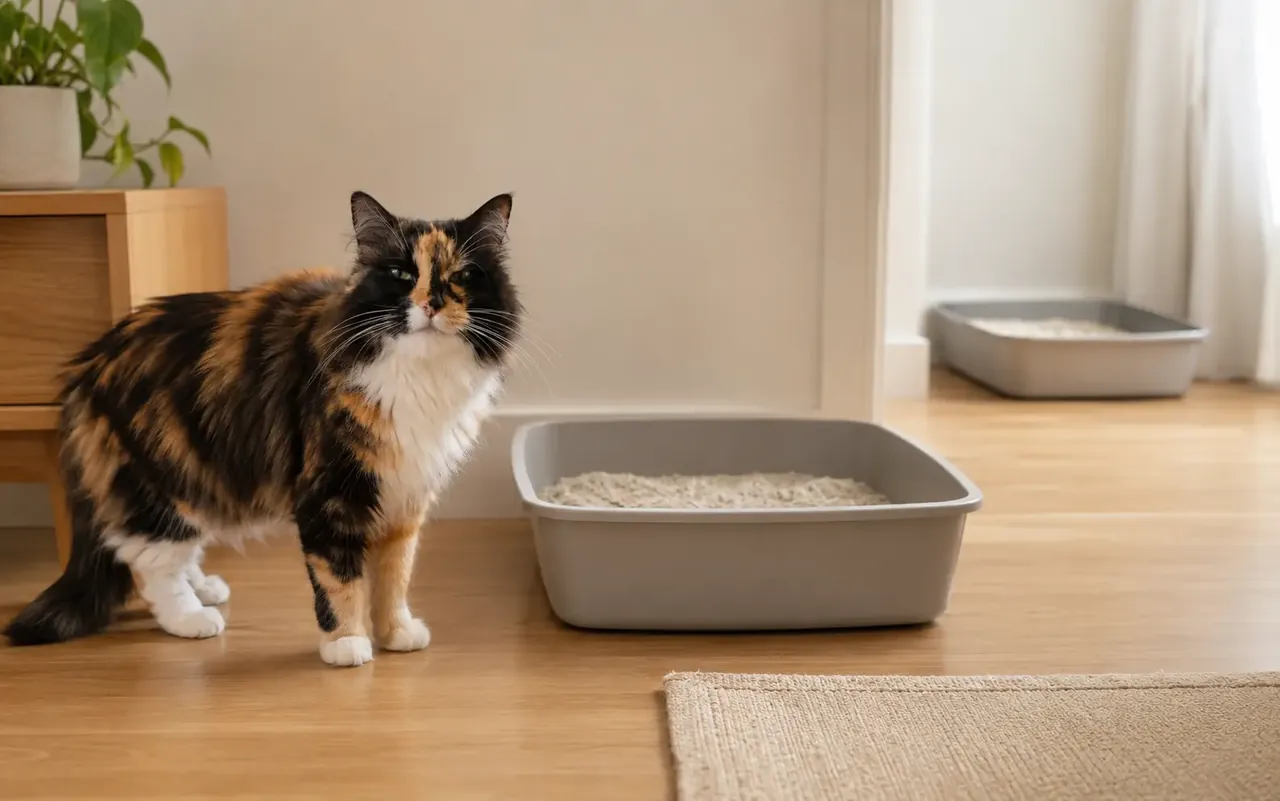 Topic illustration selected for this guide. Some learning images may be AI-assisted.
How do you keep a cat safe during a home viewing — the quick answer
✓ Repeated strangers and open doors create escape and stress risks that require a secure plan before anyone arrives.
✓ Observe: Choose a room visitors will not enter and verify every exit and hiding gap.
✓ Try this: Use a labelled locked or monitored safe room with carrier, water, litter and familiar bedding.
Repeated strangers and open doors create escape and stress risks that require a secure plan before anyone arrives. The useful question is not only what the moment resembles, but whether it fits this cat’s normal pattern. Context, frequency, recovery and accompanying changes make the interpretation safer and more accurate.
Choose the room in advance
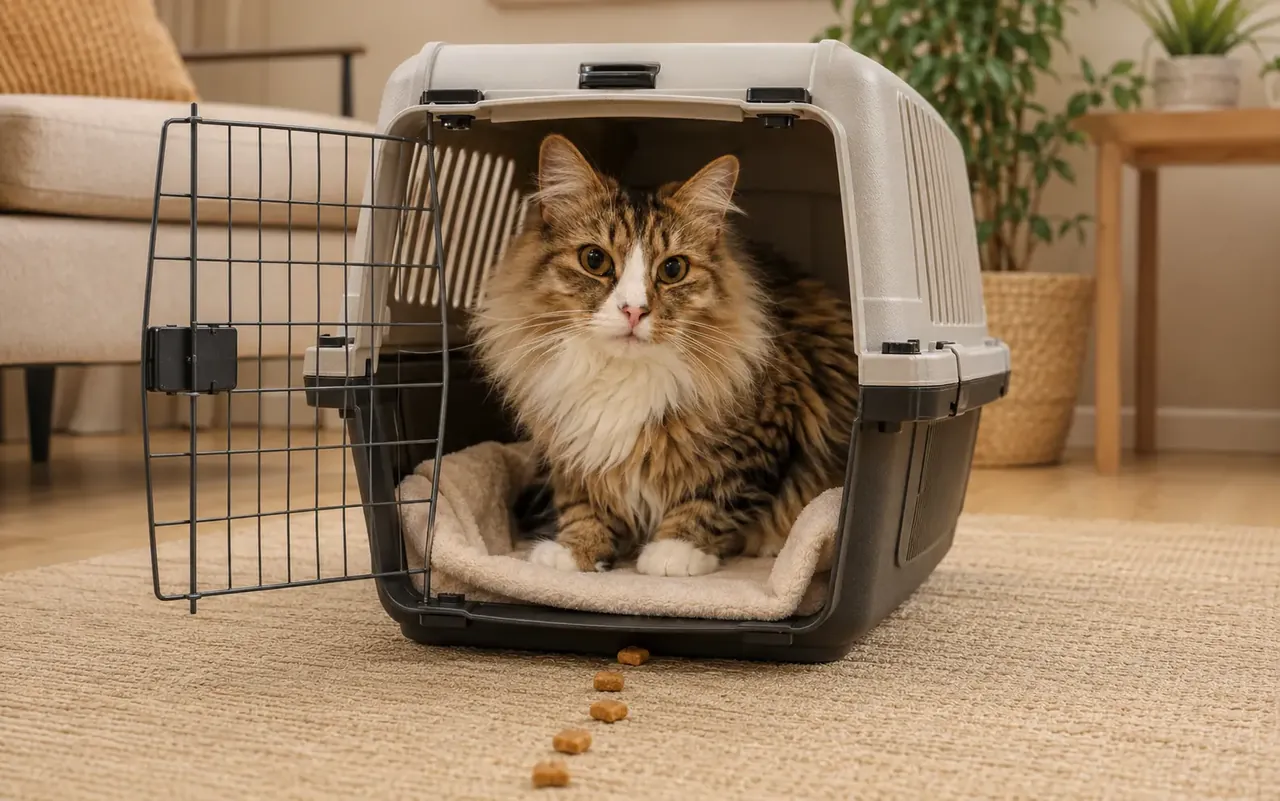
Use a quiet room that viewers will not enter, with secure windows, vents and no dangerous hiding gaps. Add litter, water, familiar bedding, a hiding place and the cat’s labelled carrier.
Move the cat before activity begins
Settle the cat before signs, agents or visitors arrive. Confirm the cat visually, close and if appropriate lock the door, then place a clear notice outside. Do not wait until the doorbell rings.
Control people and keys
Tell the agent and every household member that the room is off-limits and designate one adult to retain the key or monitor entry. A note alone is not enough when people may assume the room should be shown.
Keep the cat secured through departure
Wait until all visitors have left, exterior doors are closed and the agent confirms the viewing is over before opening the safe room. Check the cat, food, water and litter and restore the normal routine calmly.
When stress needs help
Seek veterinary advice for reduced eating, repeated vomiting, toileting change, injury or distress that does not resolve. Plan alternatives such as temporary care elsewhere for repeated viewings only when that option is familiar and less stressful.
Your quick checklist
Loading saved progress…
Three simple things you can do
You do not have to change everything today. Pick one step that feels realistic, try it and see how your cat responds.
- 1Observe your cat’s individual baseline.
- 2Make one gentle change at a time.
- 3Ask a qualified professional when health or safety is involved.
Common mistakes
×Waiting for a dramatic symptom instead of noticing smaller changes from the cat’s normal routine.
×Changing several things at once, making it difficult to learn what actually helped.
×Treating general guidance as a substitute for advice from a veterinarian who knows the individual cat.
Questions cat people ask
Does every cat follow the same rule?+
No. Age, health, history, temperament and environment all change what works for an individual.
When should I seek professional help?+
Seek veterinary advice for sudden, persistent or concerning changes and urgent help for breathing difficulty, collapse, seizures, poisoning or urinary obstruction signs.
Still looking for the right answer?
Search the full EverYes Cats encyclopedia with your own words — a symptom, food, behaviour, breed or everyday question.
Checked, dated and transparent
- Prepared by
- EverYes Cats editorial team
- Last updated
- Source checked
- Primary reference
- Cats Protection: Moving Home With Your Cat ↗
We begin with the named reference, rewrite the information in plain language and add practical cat-parent steps. Urgent health statements are checked against veterinary sources. This guide has not been individually reviewed by a veterinarian unless explicitly stated. It provides education, not diagnosis or treatment.
How we choose and use sources →
Spotted something unclear or outdated? Tell us so we can review it.
Loading your saved choice…
A clean rigid basket with wide safe openings can support supervised hiding and play. Handles, broken plastic, collapsing mesh, trapped paws and detergent residue can turn an ordinary basket into a hazard.
 01
 03
 04
 06