Are laundry baskets safe for cat play?
A clean rigid basket with wide safe openings can support supervised hiding and play. Handles, broken plastic, collapsing mesh, trapped paws and detergent residue can turn an ordinary basket into a hazard.
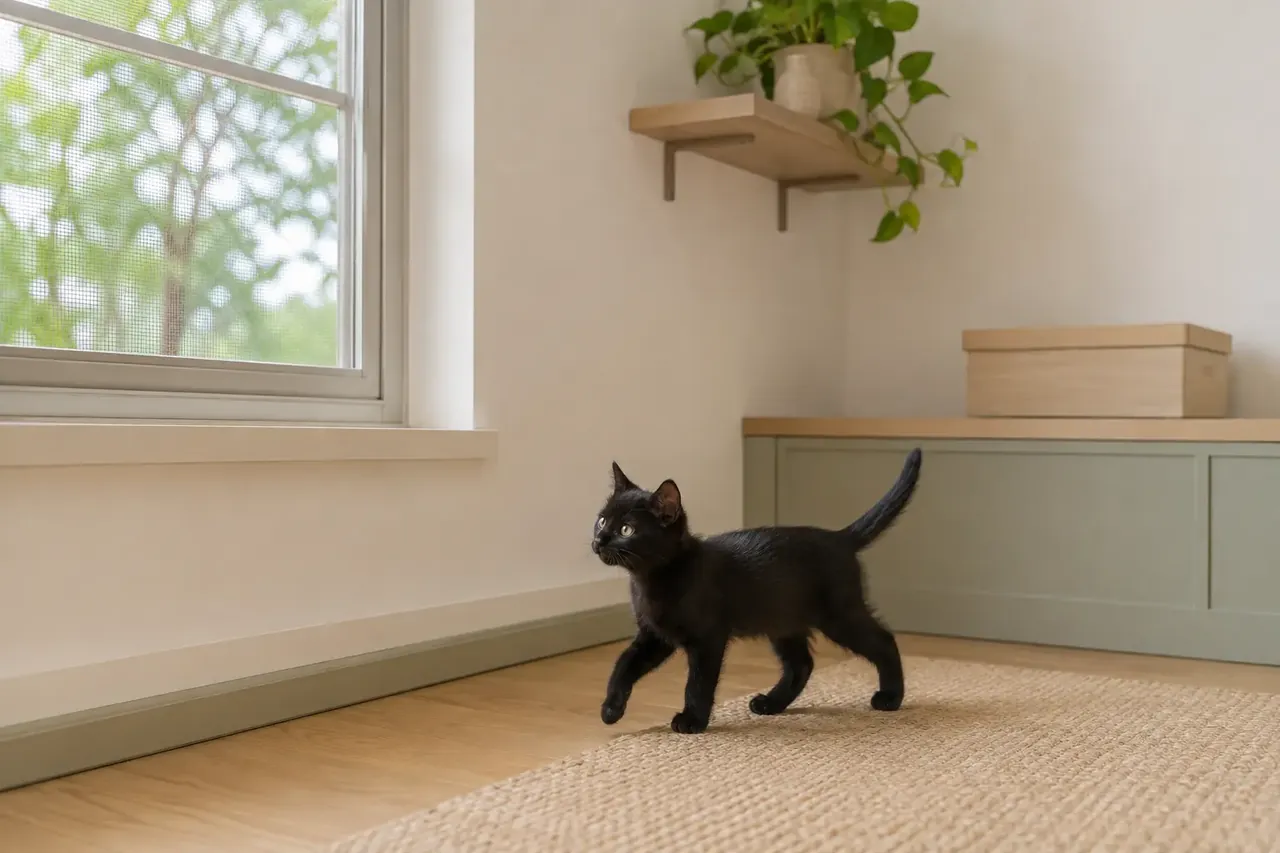 Topic illustration selected for this guide. Some learning images may be AI-assisted.
Are laundry baskets safe for cat play — the quick answer
✓ A stable open basket can be enriching, while handles, broken plastic, collapsing fabric and detergent residue create hazards.
✓ Observe: Check every opening against head, paw and collar entrapment.
✓ Try this: Use a clean undamaged basket under supervision and put laundry chemicals away.
A stable open basket can be enriching, while handles, broken plastic, collapsing fabric and detergent residue create hazards. The useful question is not only what the moment resembles, but whether it fits this cat’s normal pattern. Context, frequency, recovery and accompanying changes make the interpretation safer and more accurate.
Inspect every opening and edge
Check whether the cat's head, jaw, paw, collar or claw could enter and become trapped. Remove baskets with cracks, sharp edges, loose wire, narrow handles or broken weave. Cut plastic should be discarded rather than taped where chewing can expose adhesive.
Choose stability over novelty
Place the basket flat on the floor where it cannot roll, fold or fall from furniture. Collapsible fabric and pop-up frames can close around a cat or expose wire. Never carry, spin or tip a basket with the cat inside, and keep children from stacking objects on top.
Separate play from laundry chemicals
Use only a clean dry basket. Store detergent, capsules, stain removers and dryer products in a closed cabinet and keep the cat away from spills and damp treated laundry. A strong smell does not reveal whether residue is safe.
Supervise the play setup
Offer a safe toy outside the openings and let the cat enter and leave freely. Do not thread string through handles or encourage reaching into holes that catch claws. Put the basket away if chewing, frantic escape or conflict with another cat begins.
When an incident needs urgent help
Seek veterinary advice for trapped limbs, wounds, limping or suspected detergent exposure. Breathing difficulty, collapse, severe pain, eye exposure or swallowing concentrated detergent is urgent. Keep the exact product label available and do not induce vomiting unless directed.
Your quick checklist
Loading saved progress…
Three simple things you can do
You do not have to change everything today. Pick one step that feels realistic, try it and see how your cat responds.
- 1Observe your cat’s individual baseline.
- 2Make one gentle change at a time.
- 3Ask a qualified professional when health or safety is involved.
Common mistakes
×Waiting for a dramatic symptom instead of noticing smaller changes from the cat’s normal routine.
×Changing several things at once, making it difficult to learn what actually helped.
×Treating general guidance as a substitute for advice from a veterinarian who knows the individual cat.
Questions cat people ask
Does every cat follow the same rule?+
No. Age, health, history, temperament and environment all change what works for an individual.
When should I seek professional help?+
Seek veterinary advice for sudden, persistent or concerning changes and urgent help for breathing difficulty, collapse, seizures, poisoning or urinary obstruction signs.
Still looking for the right answer?
Search the full EverYes Cats encyclopedia with your own words — a symptom, food, behaviour, breed or everyday question.
Checked, dated and transparent
- Prepared by
- EverYes Cats editorial team
- Last updated
- Source checked
- Primary reference
- Cats Protection: Keeping Cats Safe at Home ↗
We begin with the named reference, rewrite the information in plain language and add practical cat-parent steps. Urgent health statements are checked against veterinary sources. This guide has not been individually reviewed by a veterinarian unless explicitly stated. It provides education, not diagnosis or treatment.
How we choose and use sources →
Spotted something unclear or outdated? Tell us so we can review it.
Loading your saved choice…
A safe balcony routine combines floor-to-ceiling cat-proof screening, supervised access and a consistent check before the door moves. A training cue cannot replace a physical barrier.
 01
 02
 03
 04