Preparing your cat for houseguests
Help a cat cope with houseguests by protecting one guest-free safe room, keeping resources stable and asking visitors to let the cat choose contact.
 Topic illustration selected for this guide. Some learning images may be AI-assisted.
Preparing your cat for houseguests — the quick answer
✓ A cat may hide, watch from above or become unusually social depending on temperament and experience.
✓ Set up a quiet retreat before guests arrive, protect litter access and ask visitors to let the cat initiate contact.
✓ Persistent refusal to eat, toileting changes or severe fear after the visit should be discussed with a veterinarian.
Guests change sound, scent, routes and access to familiar human attention.
Give your cat a real choice during visits
Prepare before the doorbell so hiding, litter access and visitor rules do not depend on a stressed moment.
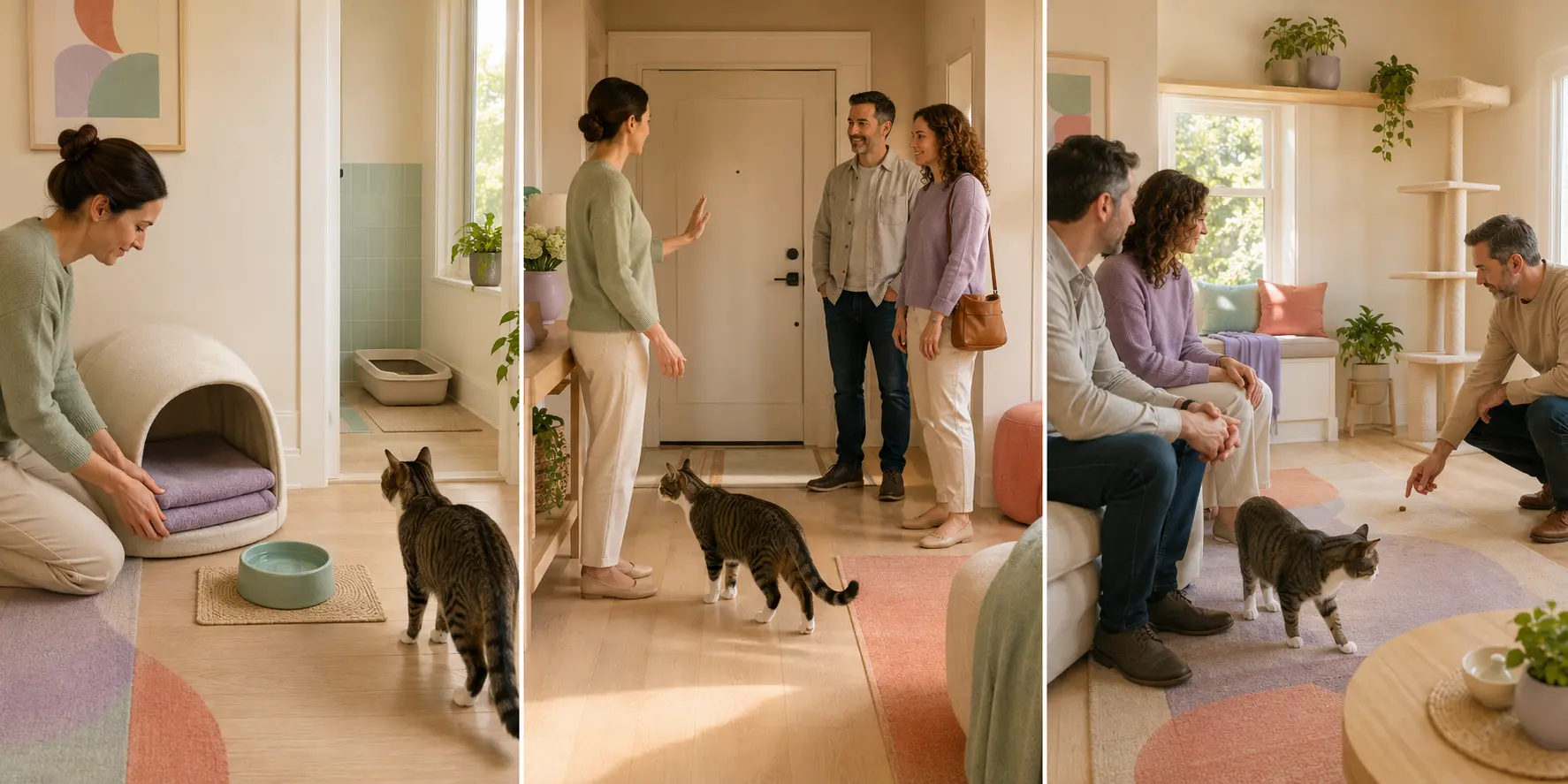
- 1Set up a retreat
Provide an open-access hide with familiar bedding and protect clear routes to water and a separately located litter box.
- 2Control the arrival
Keep the exterior door secured and ask guests to pause, lower their voices and avoid approaching or reaching for the cat.
- 3Let the cat decide
Guests can sit sideways and place a treat at a distance while preserving an open escape route and high resting option.
The short answer
Guests change sound, scent, routes and access to familiar human attention.
Why it may happen
A cat may hide, watch from above or become unusually social depending on temperament and experience.
Read the whole situation
One behaviour rarely has one guaranteed meaning. Compare it with your cat’s age, health, posture, appetite, litter habits, environment and usual pattern before drawing a conclusion.
What to do now
Set up a quiet retreat before guests arrive, protect litter access and ask visitors to let the cat initiate contact.
What not to do
Avoid punishment, forced handling and sudden large changes. They can add fear while hiding the information that would help you understand the original cause.
When to contact a veterinarian
Persistent refusal to eat, toileting changes or severe fear after the visit should be discussed with a veterinarian.
Keep a useful record
Write down when it started, how often it happens and what immediately precedes and follows it. Photos, weights or short videos can make a veterinary or behaviour consultation more productive.
What to check first
New voices, luggage, doors and scents can cause hiding, reduced eating or route avoidance. A cat watching from cover is gathering information, not asking to be approached.
DEEPER GUIDE1 more detailed sectionsOpen +
What to do next
Brief guests about doors, feeding and no-chase rules. Set up the refuge before arrival and keep litter, food and medication routines consistent. Reward voluntary calm approaches without lifting or cornering. Failure to eat, urinary changes, vomiting or prolonged distress needs veterinary advice.
Your quick checklist
Your progress is saved on this device.
Three simple things you can do
You do not have to change everything today. Pick one step that feels realistic, try it and see how your cat responds.
- 1Prepare a guest-free refuge with all essential resources.
- 2Ask visitors to ignore the cat until it approaches.
- 3Keep doors, medications, luggage and food hazards controlled.
Common mistakes
×Passing a shy cat around.
×Blocking access to the usual safe room.
×Letting guests feed unknown foods.
Questions cat people ask
How can I help my cat with houseguests?+
Preserve choice, routine and a private retreat. Calm visitors who avoid staring and reaching are easier to assess.
Should guests try to make friends with a hiding cat?+
No. Let the cat remain hidden and place resources where they can be reached without crossing a busy room.
Still looking for the right answer?
Search the full EverYes Cats encyclopedia with your own words — a symptom, food, behaviour, breed or everyday question.
Checked, dated and transparent
- Prepared by
- EverYes Cats editorial team
- Last updated
- 14 August 2026
- Source checked
- 14 August 2026
- Primary reference
- International Cat Care ↗
We begin with the named reference, rewrite the information in plain language and add practical cat-parent steps. Urgent health statements are checked against veterinary sources. This guide has not been individually reviewed by a veterinarian unless explicitly stated. It provides education, not diagnosis or treatment.
Spotted something unclear or outdated? Tell us so we can review it.
Your answer helps us improve the cat encyclopedia.
Cats cope best when weekend meals, medication and essential care stay close to the weekday pattern, even if play and family time become more flexible.