How to prepare a cat for a workday alone
Most healthy adult cats can manage a normal workday when food, water, clean litter, safe resting choices and enrichment are prepared before you leave.
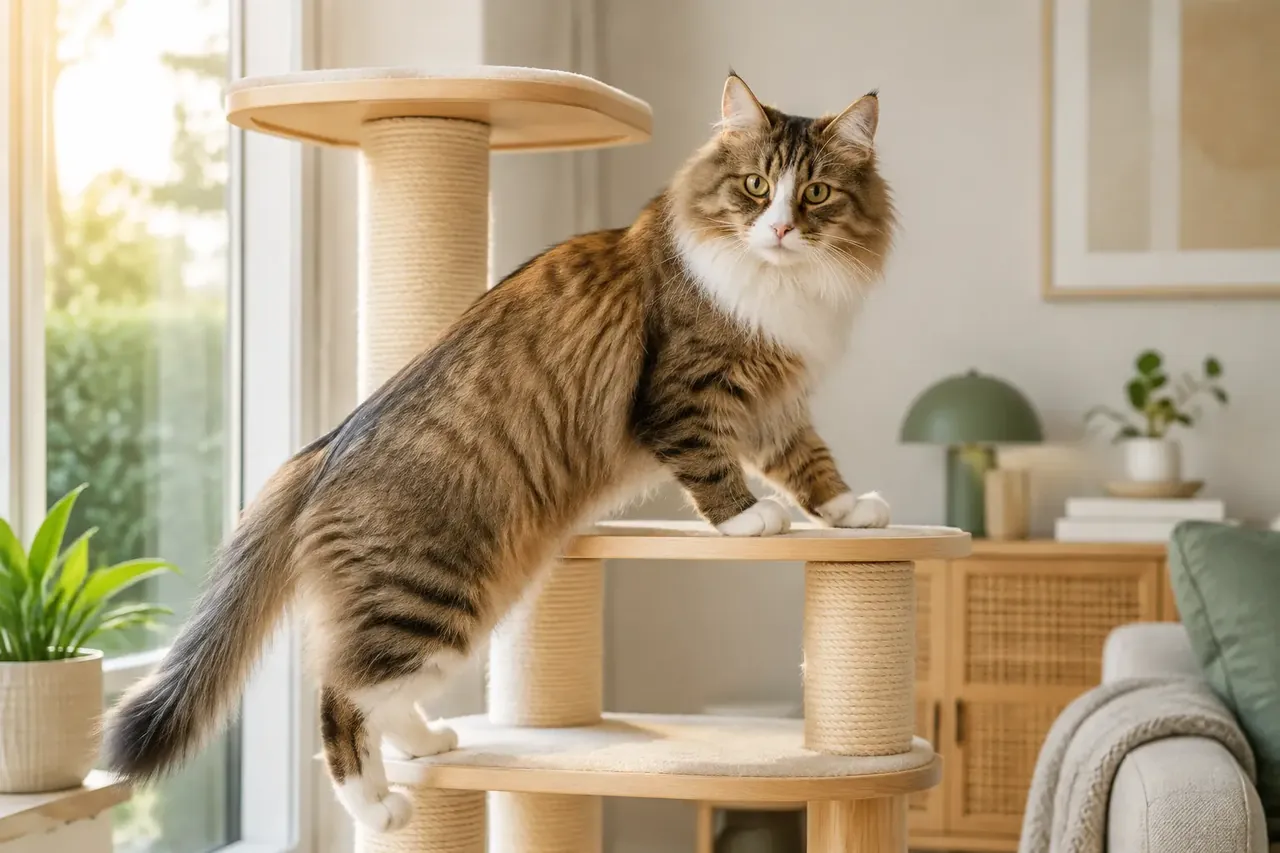 Topic illustration selected for this guide. Some learning images may be AI-assisted.
How to prepare a cat for a workday alone — the quick answer
✓ A sudden schedule change can alter meals, play and social contact even when the cat is not distressed by solitude itself.
✓ Provide separated water, clean litter, secure resting places, window options and food enrichment that is safe unsupervised.
✓ Kittens, ill cats and cats with medication or separation-related distress may need a different plan.
Most adult cats can cope with an ordinary workday when health, temperament and the home setup are suitable.
Prepare the home before the workday begins
A safe ordinary day depends on reliable resources, low-risk enrichment and places where your cat can rest undisturbed.
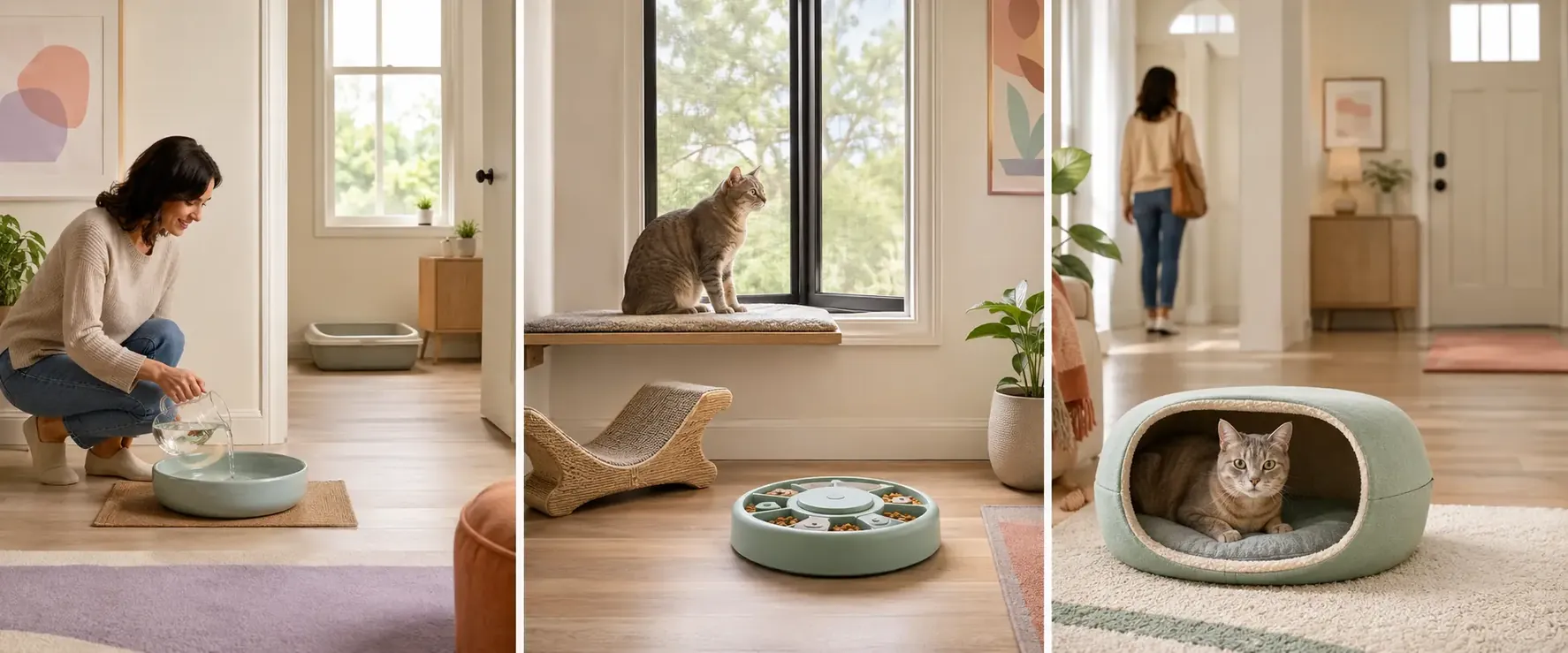
- 1Refresh essential resources
Provide fresh water in separate locations, a clean litter box and secure every exterior window and door before leaving.
- 2Choose unsupervised-safe enrichment
Offer a stable scratcher, safe viewing place and a simple food puzzle without strings or small detachable parts.
- 3Protect quiet rest
Leave familiar beds, open hiding choices and comfortable room temperatures so your cat can choose activity or sleep.
The short answer
Most adult cats can cope with an ordinary workday when health, temperament and the home setup are suitable.
Why it may happen
A sudden schedule change can alter meals, play and social contact even when the cat is not distressed by solitude itself.
Read the whole situation
One behaviour rarely has one guaranteed meaning. Compare it with your cat’s age, health, posture, appetite, litter habits, environment and usual pattern before drawing a conclusion.
What to do now
Provide separated water, clean litter, secure resting places, window options and food enrichment that is safe unsupervised.
What not to do
Avoid punishment, forced handling and sudden large changes. They can add fear while hiding the information that would help you understand the original cause.
When to contact a veterinarian
Kittens, ill cats and cats with medication or separation-related distress may need a different plan.
Keep a useful record
Write down when it started, how often it happens and what immediately precedes and follows it. Photos, weights or short videos can make a veterinary or behaviour consultation more productive.
What to check first
Judge the individual cat rather than a fixed hour limit. Kittens, seniors, cats on medication and cats with illness or separation distress need different plans and more frequent checks.
DEEPER GUIDE1 more detailed sectionsOpen +
What to do next
Remove hazards, separate incompatible cats, leave multiple water sources and safe solo activities, and offer interactive play before and after work. Arrange a trusted check when needs exceed the schedule. Food refusal, repeated vomiting, urinary signs, injury or marked distress on return needs veterinary advice.
Your quick checklist
Your progress is saved on this device.
Three simple things you can do
You do not have to change everything today. Pick one step that feels realistic, try it and see how your cat responds.
- 1Provide fresh water, clean litter, secure resting places and safe enrichment before leaving.
- 2Use a predictable departure and return routine.
- 3Arrange a check-in when age, health or time alone requires it.
Common mistakes
×Leaving string toys or unsafe windows available.
×Using a camera as a substitute for care.
×Making departures and returns highly dramatic.
Questions cat people ask
Can a cat stay alone during a workday?+
Many healthy adult cats cope with a normal workday when resources and enrichment are adequate. Kittens, seniors and ill cats may need more support.
How do I know if my cat struggles alone?+
Look for persistent vocalising, house-soiling, poor eating, destructive escape behaviour or inability to settle, not only a brief greeting.
Still looking for the right answer?
Search the full EverYes Cats encyclopedia with your own words — a symptom, food, behaviour, breed or everyday question.
Checked, dated and transparent
- Prepared by
- EverYes Cats editorial team
- Last updated
- 14 August 2026
- Source checked
- 14 August 2026
- Primary reference
- International Cat Care ↗
We begin with the named reference, rewrite the information in plain language and add practical cat-parent steps. Urgent health statements are checked against veterinary sources. This guide has not been individually reviewed by a veterinarian unless explicitly stated. It provides education, not diagnosis or treatment.
Spotted something unclear or outdated? Tell us so we can review it.
Your answer helps us improve the cat encyclopedia.
Cats are naturally active around dawn and dusk, and a cat may save play for night when the home is quiet. A planned evening routine can shift some activity earlier.