Why some cats prefer horizontal scratchers
Horizontal scratching is normal. Cats differ in preferred angle, material, stability and location, and seniors or cats with joint pain may find floor-level scratching easier. Offer a long stable surface that matches the cat's existing choice instead of punishing furniture or rug use.
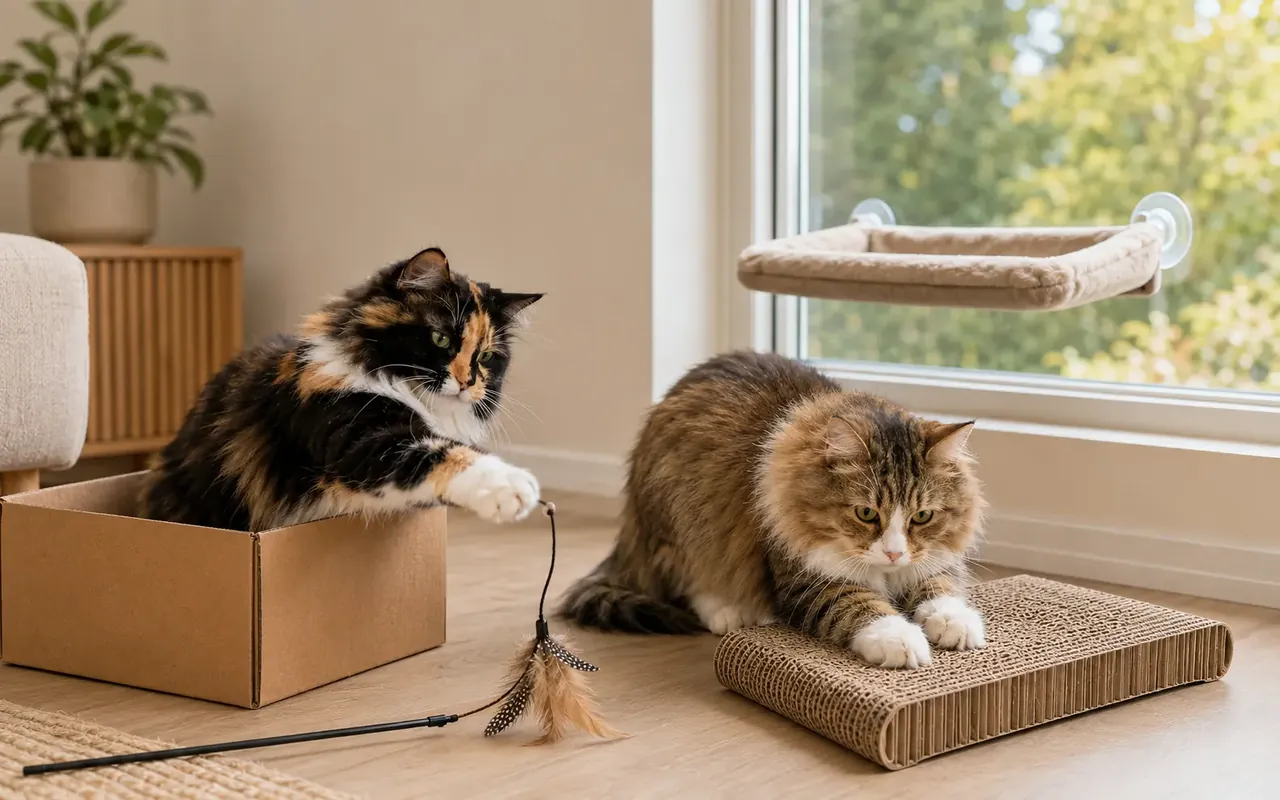 Topic illustration selected for this guide. Some learning images may be AI-assisted.
Why some cats prefer horizontal scratchers — the quick answer
✓ Body angle, material and stability determine whether a scratching surface feels satisfying
✓ Offer both orientations near sleep and activity routes, then keep the preferred material available.
✓ A sudden reduction in all scratching can accompany pain or mobility change.
Body angle, material and stability determine whether a scratching surface feels satisfying. A cat that ignores posts may reliably use cardboard or sisal laid flat. This guide separates the useful observation from guesswork and gives you one safe next step.
Understand what scratching accomplishes
Scratching maintains claws, stretches muscles and leaves visual and scent marks. A horizontal surface supports these functions just as a vertical post can. Preference is not stubbornness and does not mean the cat lacks other enrichment.
Copy the angle, material and location
If the cat scratches carpet, offer a flat stable surface with a similar safe texture beside the chosen spot. Cardboard, sisal and carpet-like materials feel different. Keep the successful option rather than moving it immediately to a hidden corner.
Make it long and non-slip
The scratcher should let the cat place the paws, lean and extend the body without the pad sliding, flipping or bunching. Secure edges and replace loose fibres or staples. Small light pads often fail because they move, not because the cat dislikes horizontal scratching.
Offer orientation choices
Provide horizontal, angled and sturdy vertical options near waking places, activity routes and socially important areas. Reward voluntary use with calm praise, play or a treat. Catnip may interest some cats, but it should not be required and does not solve poor placement.
Protect surfaces without punishment
Temporarily cover the unwanted area while placing the acceptable surface directly beside it. Do not shout, spray water, declaw or drag paws over the scratcher. Punishment can increase stress while failing to meet the need that drives scratching.
Notice a change in scratching ability
A sudden decline, shorter reach, one-sided use, reluctance to climb or overgrown claws can accompany pain or weakness. Seniors may prefer softer horizontal options. Record ordinary movement and arrange veterinary assessment when scratching changes with stiffness, limping or touch sensitivity.
Your quick checklist
Loading saved progress…
Three simple things you can do
You do not have to change everything today. Pick one step that feels realistic, try it and see how your cat responds.
- 1Offer a long stable cardboard, sisal or carpet surface on the floor.
- 2Place it beside existing scratch marks or a favourite sleeping area.
- 3Reward use and replace worn material before it becomes unsatisfying.
Common mistakes
×Providing only a vertical post.
×Using a small pad that slides or tips.
×Punishing floor or rug scratching without a similar alternative.
Questions cat people ask
Why does my cat only scratch horizontally?+
Cats differ in preferred angle, material and location. Horizontal scratching still stretches muscles, maintains claws and leaves scent and visual marks.
How large should a horizontal scratcher be?+
Long and stable enough for the cat to stand and extend the body while scratching without the pad moving.
Still looking for the right answer?
Search the full EverYes Cats encyclopedia with your own words — a symptom, food, behaviour, breed or everyday question.
Checked, dated and transparent
- Prepared by
- EverYes Cats editorial team
- Last updated
- Source checked
- Primary reference
- International Cat Care: Home Modifications for Cats ↗
We begin with the named reference, rewrite the information in plain language and add practical cat-parent steps. Urgent health statements are checked against veterinary sources. This guide has not been individually reviewed by a veterinarian unless explicitly stated. It provides education, not diagnosis or treatment.
How we choose and use sources →
Spotted something unclear or outdated? Tell us so we can review it.
Loading your saved choice…
Rotate a small selection of safe cat toys every few days while leaving familiar comfort items available. Novelty comes from presentation and movement as well as the object.
 01
 03
 05