Create a disaster and evacuation plan for your cat
A ready carrier, records and destination plan save time when minutes matter.
 Topic illustration selected for this guide. Some learning images may be AI-assisted.
Create a disaster and evacuation plan for your cat — the quick answer
✓ Plan to evacuate pets with you
✓ Keep one accessible carrier per cat
✓ Store records in two places
✓ Practise before an emergency
Flood, fire, severe weather and evacuation become harder when a frightened cat is hiding and supplies are scattered. A written plan turns decisions into actions.
Prepare the carrier, proof and route before an emergency
A written plan saves time when doors, transport and destinations must be decided quickly. Prepare one complete route for every cat.
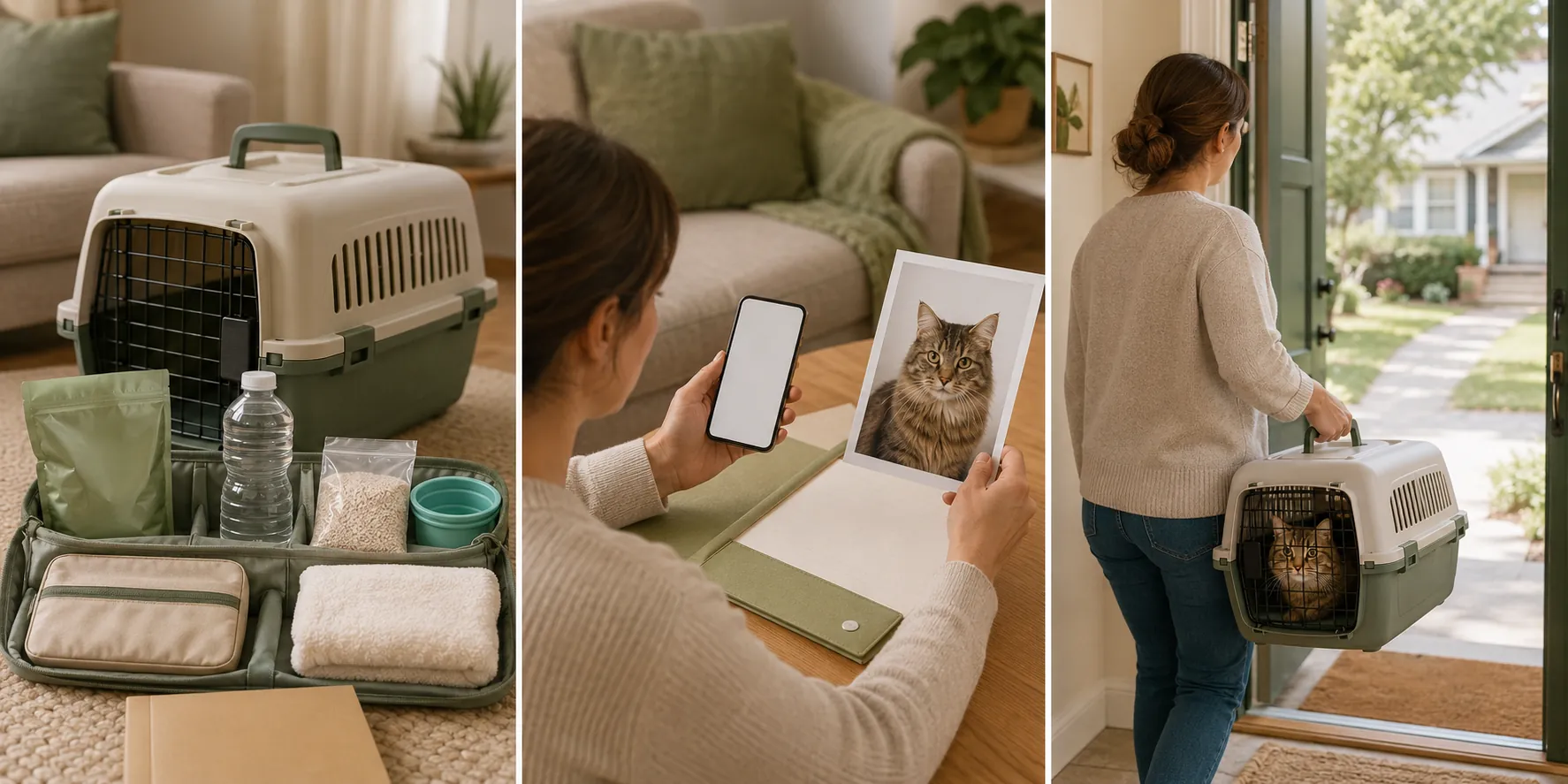
- 1Build one accessible kit per cat
Keep a secure labelled carrier ready with food, water, litter supplies, medication, towels and other essentials rotated before expiry.
- 2Copy identity and health records
Save current photographs, microchip details, prescriptions, medical records and emergency contacts both digitally and on paper.
- 3Practise the complete exit
Rehearse calm carrier entry, closing every latch and moving to the planned transport while confirming two cat-friendly destinations and backup caregivers.
Prepare the go-kit
Pack food, water, litter, medication, basic first aid, towels, bowls and cleaning supplies. Rotate food and medicine before they expire.
Protect identity and records
Keep microchip details current and save photos, medical records, prescriptions and proof of ownership both digitally and on paper.
Know where you can go
Identify pet-friendly accommodation, trusted contacts and emergency clinics beyond your immediate area. Confirm transport for every cat.
Practise the hardest part
Train cats to enter carriers for rewards and rehearse closing doors calmly. Never risk your life entering a dangerous building to search; tell responders where pets may hide.
Your quick checklist
Your progress is saved on this device.
Three simple things you can do
You do not have to change everything today. Pick one step that feels realistic, try it and see how your cat responds.
- 1Keep one labelled carrier per cat accessible near the evacuation route.
- 2Pack several days of food, water, litter, medication and printed records.
- 3Name two backup caregivers and practise calm carrier entry before an emergency.
Common mistakes
×Storing carriers in an inaccessible loft or garage.
×Planning for supplies but not transport or a cat-friendly destination.
×Forgetting current photos, microchip details and medication instructions.
Questions cat people ask
What belongs in a cat evacuation kit?+
Include food, water, bowls, litter, medication, first-aid basics, records, photos, contacts and familiar bedding alongside a secure carrier.
How often should I update the plan?+
Review it at least twice yearly and whenever medication, address, contacts or the number of pets changes.
Still looking for the right answer?
Search the full EverYes Cats encyclopedia with your own words — a symptom, food, behaviour, breed or everyday question.
Checked, dated and transparent
- Prepared by
- EverYes Cats editorial team
- Last updated
- 7 August 2026
- Source checked
- 7 August 2026
- Primary reference
- AVMA: Pets and disasters ↗
We begin with the named reference, rewrite the information in plain language and add practical cat-parent steps. Urgent health statements are checked against veterinary sources. This guide has not been individually reviewed by a veterinarian unless explicitly stated. It provides education, not diagnosis or treatment.
Spotted something unclear or outdated? Tell us so we can review it.
Your answer helps us improve the cat encyclopedia.
Why the visible end must never be pulled.