Heat safety for cats
Cool spaces, hydration and the signs of heatstroke that cannot wait.
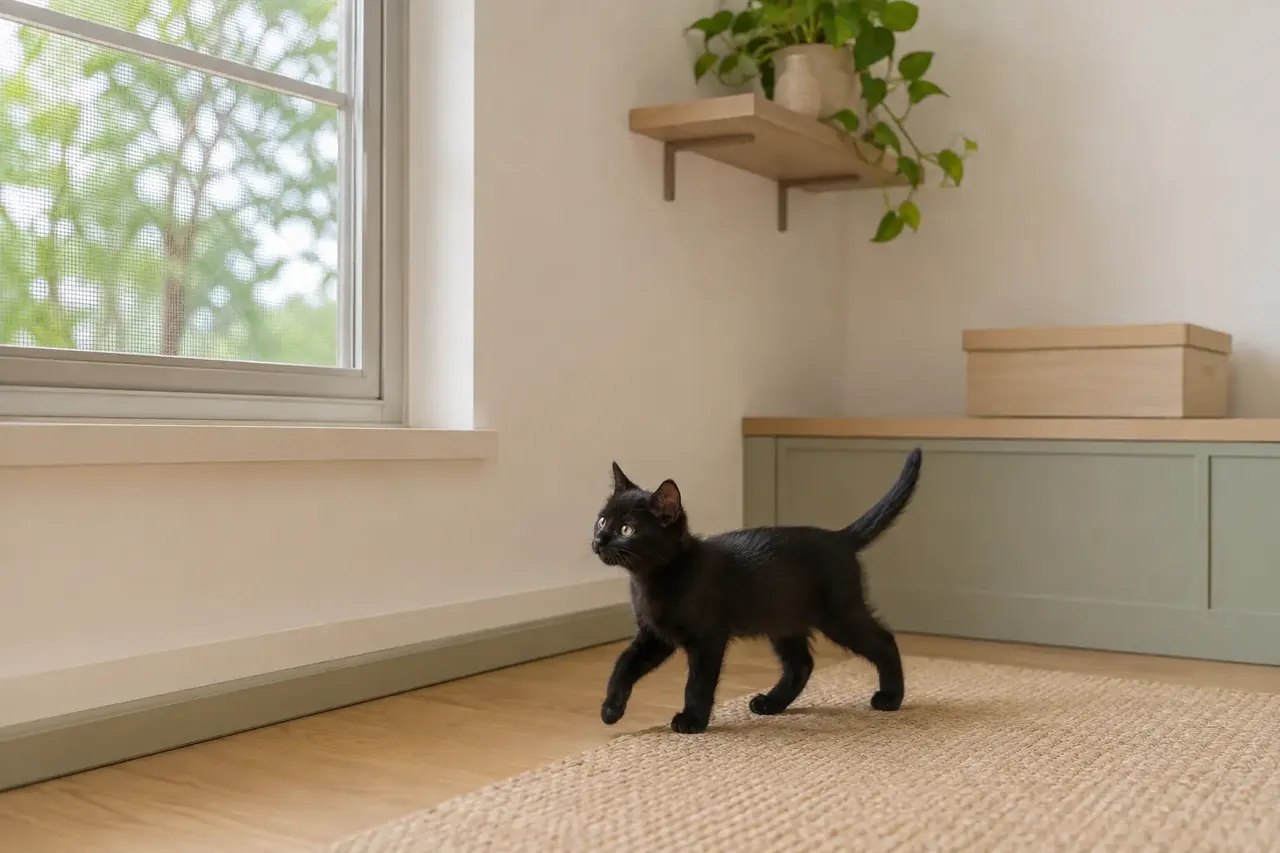 Topic illustration selected for this guide. Some learning images may be AI-assisted.
This sign can be urgent. Call a veterinarian or emergency clinic now for individual triage; do not wait for this article to diagnose the cause.
Heat safety for cats — the quick answer
✓ Never leave a cat in a parked car
✓ Provide shade, airflow and several water sources
✓ Panting or collapse in heat is an emergency
✓ Cool gradually while travelling to care
Cats can overheat in hot, poorly ventilated spaces, cars, sunrooms and enclosed balconies. Flat-faced, elderly, very young, overweight and ill cats may be at greater risk.
Prevent heat build-up
Keep the cat in the coolest ventilated rooms, close blinds before direct sun, provide shade and fresh water, and check enclosed balconies, sheds and conservatories.
Recognise danger
Panting, drooling, bright or abnormal gums, weakness, vomiting, confusion, collapse or seizures after heat exposure requires emergency veterinary care.
What to do
Move the cat to a cooler area, call an emergency clinic and begin gentle cooling with cool—not ice-cold—water or damp towels while arranging immediate transport. Follow the clinic's directions.
Plan for vulnerable cats
Ask your veterinarian about an individual hot-weather plan if your cat has heart, lung or airway disease. Check indoor temperature rather than assuming the home stays cool.
Your quick checklist
Your progress is saved on this device.
What to do now
Do not use this guide to delay care. Start with the first step and follow the veterinary professional's instructions.
- 1Move the cat to shade and airflow and call an emergency clinic immediately for panting, weakness or collapse.
- 2Begin gentle cooling with cool, not ice-cold, water while arranging transport.
- 3Provide several water sources and check enclosed balconies, conservatories and parked vehicles.
Common mistakes
×Leaving a cat in a parked car even for a short errand.
×Using ice, an ice bath or wrapping the cat in heavy wet towels.
×Waiting to see whether serious heat signs resolve on their own.
Questions cat people ask
What are emergency signs of heatstroke in cats?+
Panting, drooling, weakness, confusion, vomiting, collapse or seizures after heat exposure require immediate veterinary care.
Does a fan keep a cat safe in hot weather?+
Airflow may help, but it is not enough in a dangerously hot room. Provide shade, water and access to a genuinely cooler area, and monitor vulnerable cats closely.
Still looking for the right answer?
Search the full EverYes Cats encyclopedia with your own words — a symptom, food, behaviour, breed or everyday question.
Checked, dated and transparent
- Prepared by
- EverYes Cats editorial team
- Last updated
- 7 August 2026
- Source checked
- 7 August 2026
- Primary reference
- Merck Veterinary Manual ↗
We begin with the named reference, rewrite the information in plain language and add practical cat-parent steps. Urgent health statements are checked against veterinary sources. This guide has not been individually reviewed by a veterinarian unless explicitly stated. It provides education, not diagnosis or treatment.
Spotted something unclear or outdated? Tell us so we can review it.
Your answer helps us improve the cat encyclopedia.
Why the visible end must never be pulled.