Choosing and fitting a cat collar safely
Visible identification with a release mechanism and correct fit.
 Topic illustration selected for this guide. Some learning images may be AI-assisted.
Choosing and fitting a cat collar safely — the quick answer
✓ Choose a cat-specific breakaway collar
✓ Check fit and skin often
✓ A collar does not replace a microchip
✓ Remove dangling hazards
A collar can make contact details immediately visible, but cats climb and squeeze through gaps. A cat-specific breakaway design is intended to release if caught.
Choose, fit and recheck a safer visible ID layer
A lightweight cat-specific breakaway collar can add visible identification, but it must release as designed and be checked regularly.
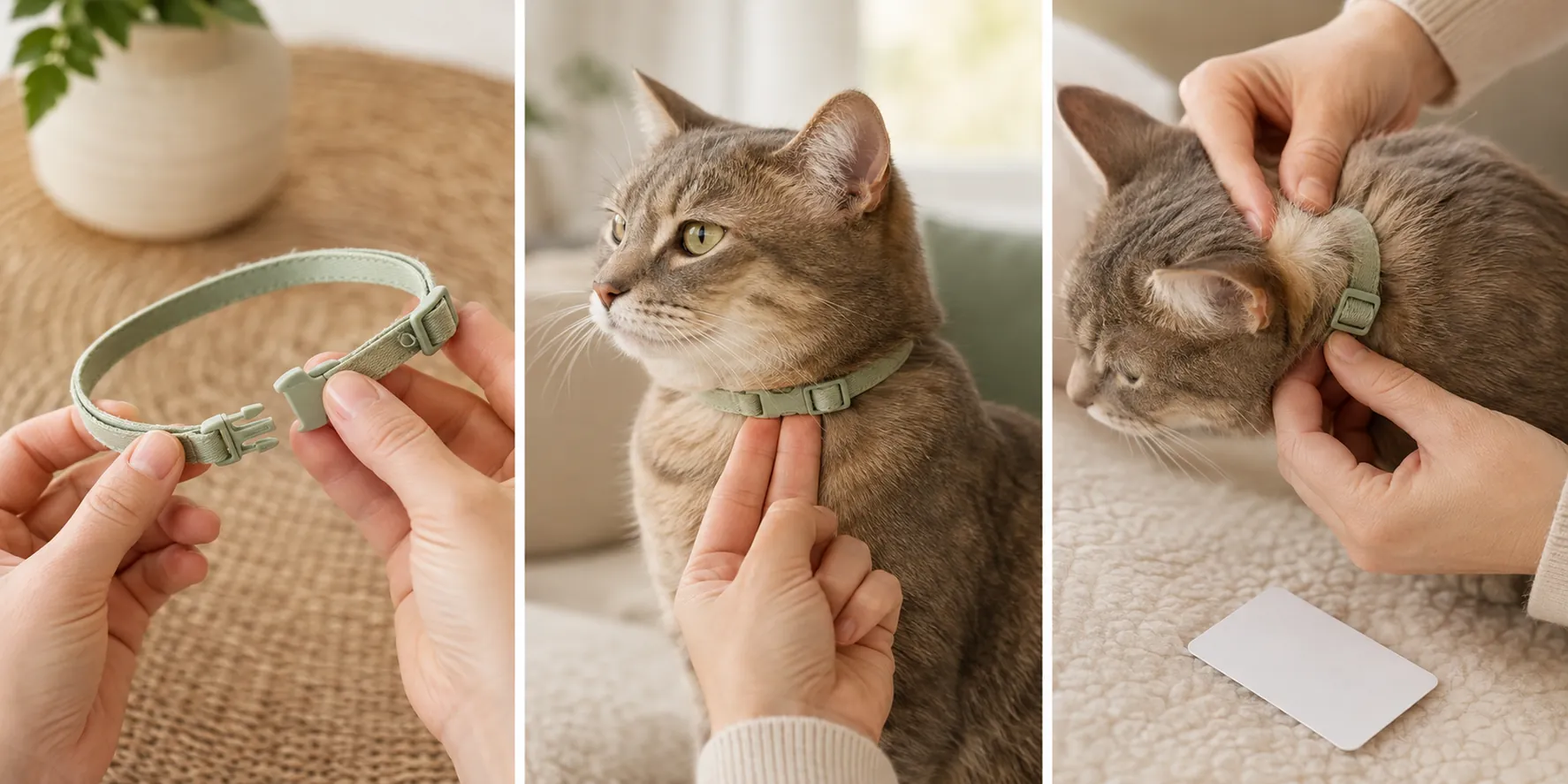
- 1Inspect the release mechanism
Choose a purpose-made cat breakaway buckle and test or replace it according to the manufacturer’s instructions before use.
- 2Fit without pressure or loose loops
Follow the product guidance and check for a comfortable, secure fit—roughly two fingertips—without heavy or long dangling accessories.
- 3Recheck skin, fit and buckle
Inspect the neck and hardware often, especially for kittens or changing weight, and keep microchip registration current because collars can be lost.
Select the mechanism
Use a purpose-made breakaway buckle rather than a fixed dog collar. Test and replace worn hardware according to the manufacturer's instructions.
Fit without guessing
Follow product guidance and check that the collar is secure without pressing the neck. Recheck growing kittens and cats whose weight or coat changes.
Introduce gradually
Let the cat inspect the collar, pair short supervised wear with rewards and watch for persistent distress, chewing or a leg becoming trapped.
Keep identification current
Use a light tag or printed details that do not create excessive dangling. Maintain microchip registration because collars can release and disappear.
Your quick checklist
Your progress is saved on this device.
Three simple things you can do
You do not have to change everything today. Pick one step that feels realistic, try it and see how your cat responds.
- 1Choose a correctly fitted breakaway collar designed to release under force.
- 2Check that two fingertips fit comfortably and inspect the neck regularly.
- 3Keep microchip details current because a collar can be lost.
Common mistakes
×Using a fixed collar that cannot release if caught.
×Hanging heavy accessories or long tags from the collar.
×Relying on the collar instead of permanent identification.
Questions cat people ask
Should an indoor cat wear a collar?+
A light breakaway collar can provide visible identification, but suitability depends on the cat. A registered microchip remains important.
How tight should a cat collar be?+
It should be snug enough not to catch the jaw yet allow roughly two fingertips. Recheck growing kittens and changing weight frequently.
Still looking for the right answer?
Search the full EverYes Cats encyclopedia with your own words — a symptom, food, behaviour, breed or everyday question.
Checked, dated and transparent
- Prepared by
- EverYes Cats editorial team
- Last updated
- 7 August 2026
- Source checked
- 7 August 2026
- Primary reference
- American Veterinary Medical Association ↗
We begin with the named reference, rewrite the information in plain language and add practical cat-parent steps. Urgent health statements are checked against veterinary sources. This guide has not been individually reviewed by a veterinarian unless explicitly stated. It provides education, not diagnosis or treatment.
Spotted something unclear or outdated? Tell us so we can review it.
Your answer helps us improve the cat encyclopedia.
Keep cats safe in heat with shade, airflow, fresh water and access to cooler surfaces. Never leave a cat in a parked vehicle or an enclosed sun-heated room.