Why domestic cats purr but cannot roar
Domestic cats cannot produce the sustained true roar associated with lions and some other big cats because their voice-box and throat anatomy is arranged differently. They instead have a wide repertoire of purrs, meows, trills, growls, yowls and hisses.
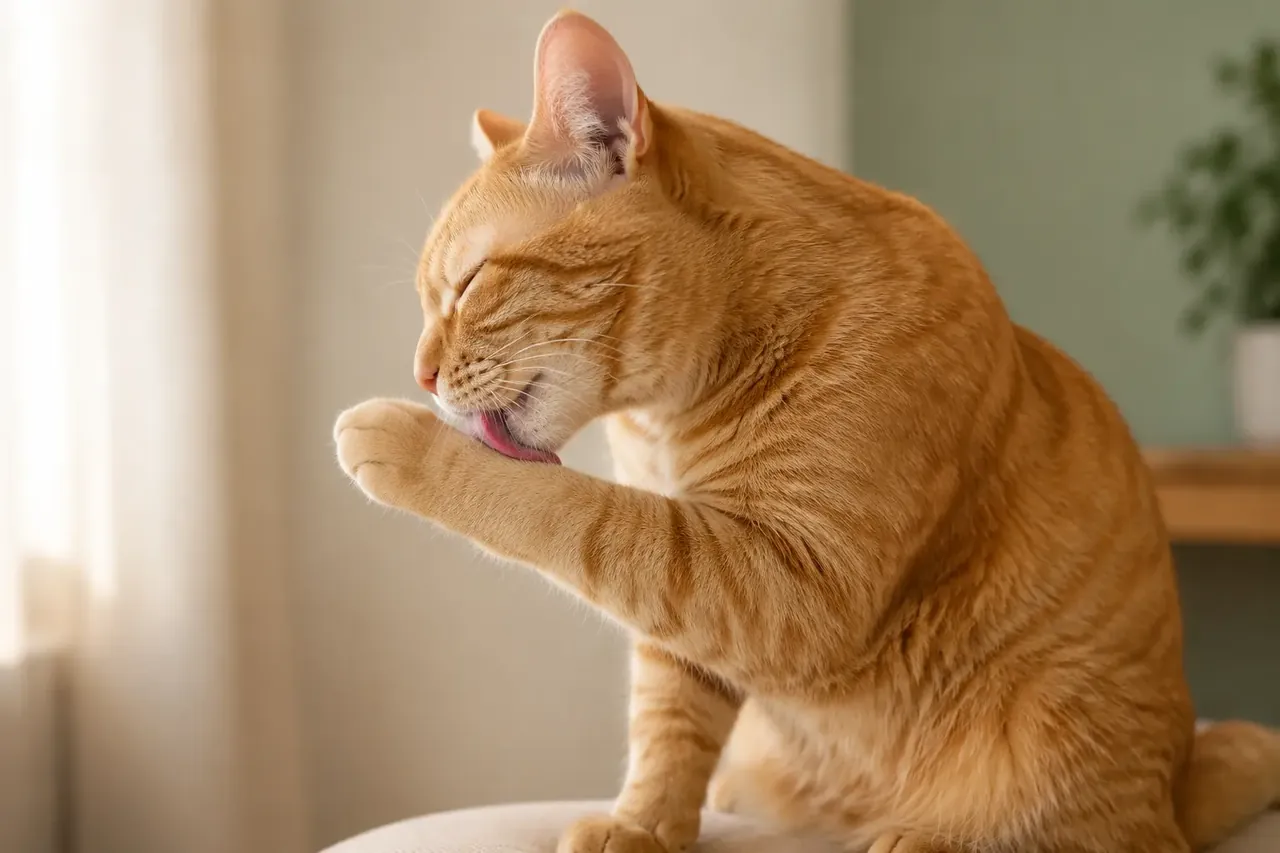 Topic illustration selected for this guide. Some learning images may be AI-assisted.
Why domestic cats purr but cannot roar — the quick answer
✓ Domestic cats lack the specialised voice-box arrangement associated with a true big-cat roar.
✓ Learn your cat's normal voice so a new change is easier to spot.
✓ Hoarseness with breathing or swallowing trouble needs veterinary advice.
Domestic cats lack the specialised voice-box arrangement associated with a true big-cat roar. Their anatomy instead supports purrs, meows, trills, growls and hisses. This guide keeps the fascinating detail while separating observation, evidence and internet exaggeration.
The anatomy behind the difference
Sound begins as air moves through the larynx and vibrates tissue. Roaring species have specialised laryngeal and hyoid structures that support a deep, powerful roar. Domestic cats belong to a lineage with a different arrangement.
Small cats are not silent cats
A house cat can purr, meow, trill, chirp, growl, hiss, yowl and produce individual variations. Vocal style depends on anatomy, arousal, learning and the social situation, so loudness is not a simple measure of wildness.
Purring and roaring are not opposites
The old idea that every cat species either purrs or roars is too neat. Vocal mechanisms and definitions vary across the cat family, and a simplified purr-versus-roar split does not capture every species or sound.
What this does not prove
A domestic cat is not a miniature lion, and inability to roar says nothing about courage, dominance or personality. Breed and body size also do not reliably predict how vocal an individual cat will be.
When a voice change needs care
New hoarseness, loss of voice, coughing, gagging, noisy breathing, swallowing trouble or distress needs veterinary advice. Open-mouth breathing, blue or grey gums or marked breathing effort is an emergency.
Your quick checklist
Loading saved progress…
Three simple things you can do
You do not have to change everything today. Pick one step that feels realistic, try it and see how your cat responds.
- 1Observe your cat’s individual baseline.
- 2Make one gentle change at a time.
- 3Ask a qualified professional when health or safety is involved.
Common mistakes
×Waiting for a dramatic symptom instead of noticing smaller changes from the cat’s normal routine.
×Changing several things at once, making it difficult to learn what actually helped.
×Treating general guidance as a substitute for advice from a veterinarian who knows the individual cat.
Questions cat people ask
Does every cat follow the same rule?+
No. Age, health, history, temperament and environment all change what works for an individual.
When should I seek professional help?+
Seek veterinary advice for sudden, persistent or concerning changes and urgent help for breathing difficulty, collapse, seizures, poisoning or urinary obstruction signs.
Still looking for the right answer?
Search the full EverYes Cats encyclopedia with your own words — a symptom, food, behaviour, breed or everyday question.
Checked, dated and transparent
- Prepared by
- EverYes Cats editorial team
- Last updated
- Source checked
- Primary reference
- Merck Veterinary Manual ↗
We begin with the named reference, rewrite the information in plain language and add practical cat-parent steps. Urgent health statements are checked against veterinary sources. This guide has not been individually reviewed by a veterinarian unless explicitly stated. It provides education, not diagnosis or treatment.
How we choose and use sources →
Spotted something unclear or outdated? Tell us so we can review it.
Loading your saved choice…
A cat's eyes can appear to glow because light reflects from the tapetum lucidum, a reflective layer behind the retina that helps the eye use dim light efficiently. The eye is reflecting available light, not producing its own.
 01
 02
 03
 05
 06