A calm fireworks plan for cats
Prepare for fireworks before the noise starts: keep the cat indoors, secure escape points and create a familiar hiding room with food, water and litter.
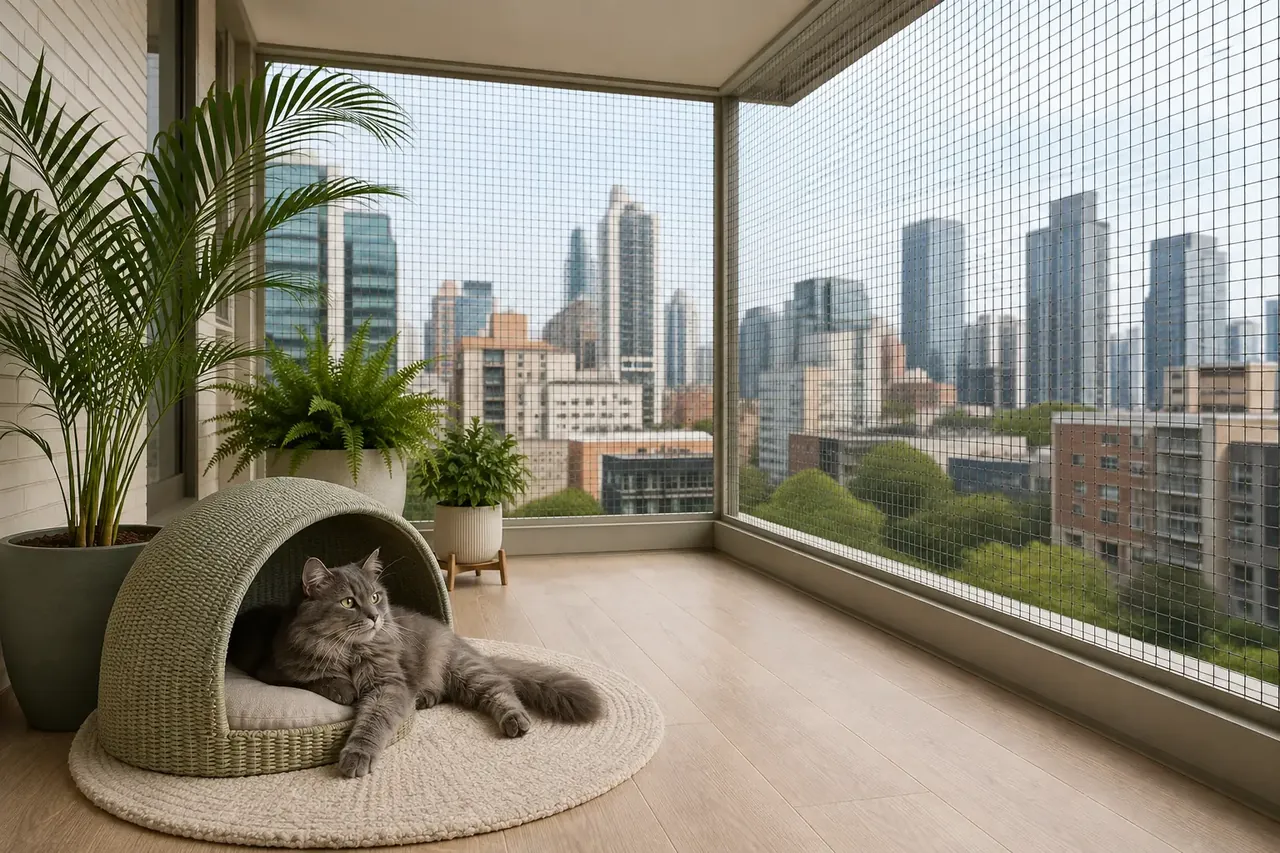 Topic illustration selected for this guide. Some learning images may be AI-assisted.
A calm fireworks plan for cats — the quick answer
✓ Cats may hide, freeze, flee or refuse food even when they usually seem confident.
✓ Keep the cat securely indoors, close curtains, provide familiar hiding choices and use steady background sound.
✓ Do not force a cat from hiding; contact a veterinarian in advance if fear is severe or prolonged.
Fireworks are unpredictable, intense and difficult for a cat to locate or escape.
Prepare before the first firework
Set up safety and comfort while the home is still quiet, then let your cat choose distance and contact.
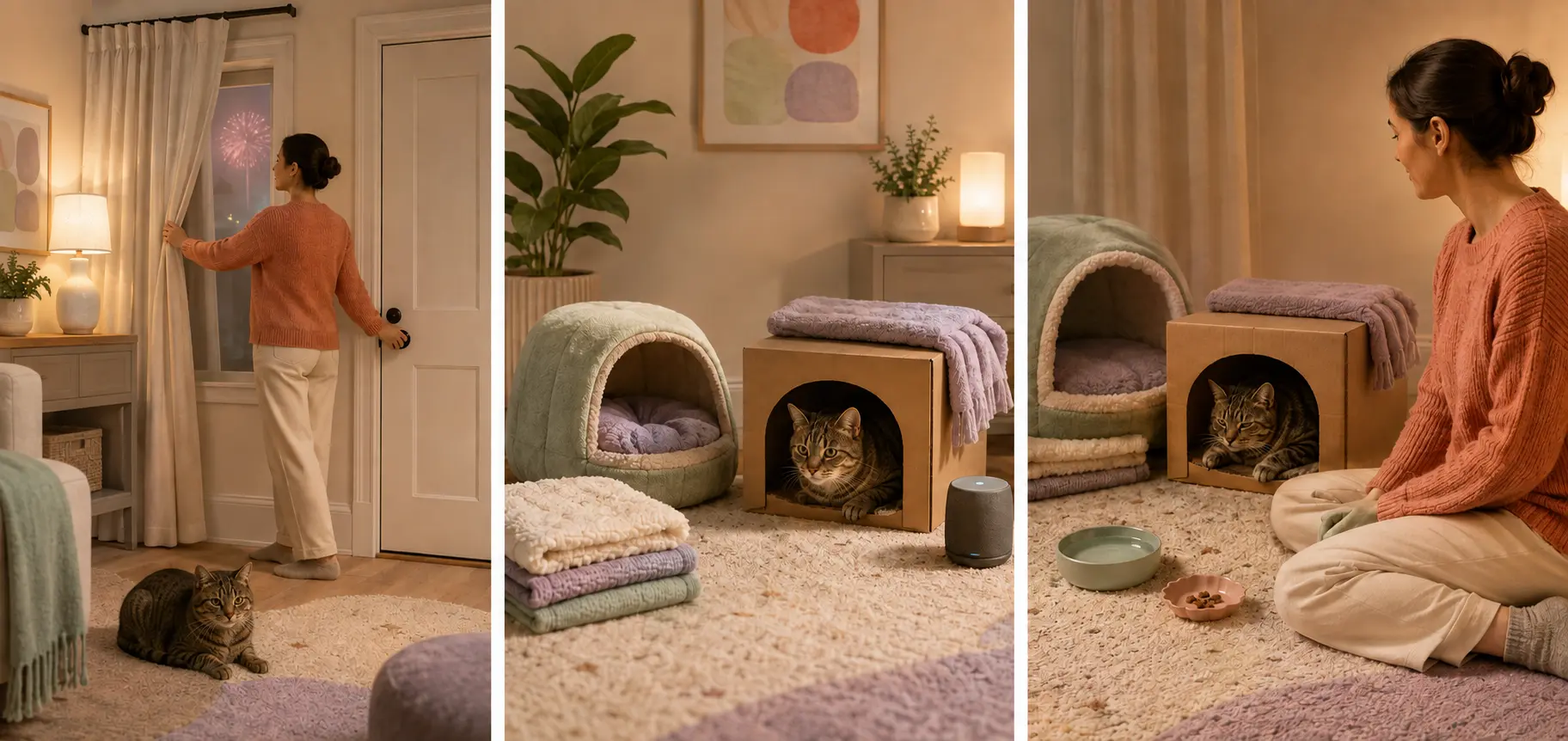
- 1Secure the home
Keep your cat indoors, close windows and exterior doors, draw curtains and check identification before noise begins.
- 2Offer familiar hiding
Make several accessible retreats with familiar bedding and use gentle steady background sound if your cat tolerates it.
- 3Stay calm and available
Let your cat remain hidden, keep water accessible and offer quiet company without pulling them out or forcing touch.
The short answer
Fireworks are unpredictable, intense and difficult for a cat to locate or escape.
Why it may happen
Cats may hide, freeze, flee or refuse food even when they usually seem confident.
Read the whole situation
One behaviour rarely has one guaranteed meaning. Compare it with your cat’s age, health, posture, appetite, litter habits, environment and usual pattern before drawing a conclusion.
What to do now
Keep the cat securely indoors, close curtains, provide familiar hiding choices and use steady background sound.
What not to do
Avoid punishment, forced handling and sudden large changes. They can add fear while hiding the information that would help you understand the original cause.
When to contact a veterinarian
Do not force a cat from hiding; contact a veterinarian in advance if fear is severe or prolonged.
Keep a useful record
Write down when it started, how often it happens and what immediately precedes and follows it. Photos, weights or short videos can make a veterinary or behaviour consultation more productive.
What to check first
Watch for hiding, flattened posture, pacing, panting, escape attempts, food refusal or inability to settle. Individual cats may prefer company, distance or complete cover.
DEEPER GUIDE1 more detailed sectionsOpen +
What to do next
Close windows and cat flaps early, draw curtains, add steady background sound and let the cat choose a hiding place. Update identification and ask a veterinarian about severe recurring fear well before the event. Breathing difficulty, collapse, injury, prolonged panic or a cat that escapes requires urgent help; never give human sedatives.
Your quick checklist
Your progress is saved on this device.
Three simple things you can do
You do not have to change everything today. Pick one step that feels realistic, try it and see how your cat responds.
- 1Keep the cat indoors before displays begin and secure doors, windows and cat flaps.
- 2Create a dark quiet refuge with familiar scent and background sound.
- 3Ask a veterinarian early about medication for severe fear.
Common mistakes
×Taking the cat outside to become accustomed to noise.
×Dragging the cat from hiding.
×Trying an untested sedative on the night.
Questions cat people ask
Should I comfort my cat during fireworks?+
Yes, if the cat seeks you. Calm predictable contact does not reward fear; let the cat choose distance and hiding.
When should I ask for anxiety medication?+
Seek help before the event when the cat panics, injures itself, refuses food or remains distressed long afterward.
Still looking for the right answer?
Search the full EverYes Cats encyclopedia with your own words — a symptom, food, behaviour, breed or everyday question.
Checked, dated and transparent
- Prepared by
- EverYes Cats editorial team
- Last updated
- 14 August 2026
- Source checked
- 14 August 2026
- Primary reference
- Cats Protection ↗
We begin with the named reference, rewrite the information in plain language and add practical cat-parent steps. Urgent health statements are checked against veterinary sources. This guide has not been individually reviewed by a veterinarian unless explicitly stated. It provides education, not diagnosis or treatment.
Spotted something unclear or outdated? Tell us so we can review it.
Your answer helps us improve the cat encyclopedia.
Thunderstorm fear can involve sound, pressure changes and flashes. Give the cat a secure indoor refuge and allow hiding instead of forcing reassurance or exposure.