Are my cats playing or fighting?
Balanced cat play includes loose bodies, pauses, role changes and both cats choosing to return. Conflict is more likely when one cat repeatedly pursues while the other flees or cannot disengage.
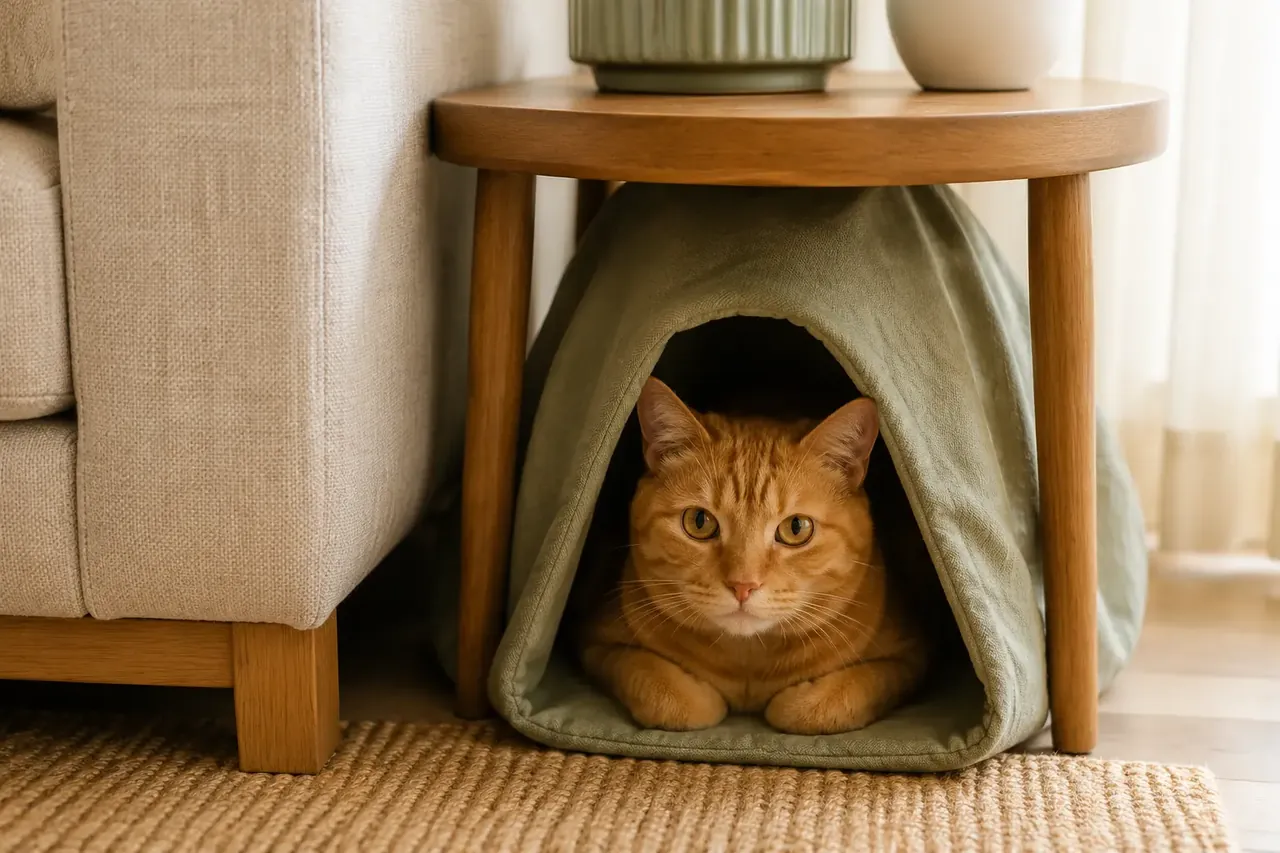 Topic illustration selected for this guide. Some learning images may be AI-assisted.
Are my cats playing or fighting — the quick answer
✓ In conflict, one cat may consistently chase while the other flees, hides, vocalises or cannot disengage.
✓ Film from a safe distance, interrupt escalating tension with a barrier or distraction, and never put hands between fighting cats.
✓ Injury, fear, persistent pursuit or a sudden relationship change needs professional assessment.
Play can look rough, but balanced play is usually loose, quiet and interrupted by natural pauses.
The short answer
Play can look rough, but balanced play is usually loose, quiet and interrupted by natural pauses.
Why it may happen
In conflict, one cat may consistently chase while the other flees, hides, vocalises or cannot disengage.
Read the whole situation
One behaviour rarely has one guaranteed meaning. Compare it with your cat’s age, health, posture, appetite, litter habits, environment and usual pattern before drawing a conclusion.
What to do now
Film from a safe distance, interrupt escalating tension with a barrier or distraction, and never put hands between fighting cats.
What not to do
Avoid punishment, forced handling and sudden large changes. They can add fear while hiding the information that would help you understand the original cause.
When to contact a veterinarian
Injury, fear, persistent pursuit or a sudden relationship change needs professional assessment.
Keep a useful record
Write down when it started, how often it happens and what immediately precedes and follows it. Photos, weights or short videos can make a veterinary or behaviour consultation more productive.
Use four signs of balanced play
Look for turn-taking, quiet pauses, re-engagement and similar intensity from both cats. Brief hissing can end an interaction, but repeated screaming, flattened posture, fur flying or one cat hiding afterwards points away from mutual play.
DEEPER GUIDE1 more detailed sectionsOpen +
Interrupt without using your hands
Place a visual barrier between escalating cats or create distance with a safe distraction. Never grab fighting cats or force immediate reunion. Check for injuries and use separation followed by a gradual reintroduction after serious conflict.
Your quick checklist
Your progress is saved on this device.
Three simple things you can do
You do not have to change everything today. Pick one step that feels realistic, try it and see how your cat responds.
- 1Watch for role reversal, pauses and loose re-engagement.
- 2Provide escape routes and interrupt early when one cat repeatedly tries to leave.
- 3Separate calmly after screaming, injury or sustained pursuit.
Common mistakes
×Using noise or hands between fighting cats.
×Assuming silence means play.
×Forcing immediate reunion after conflict.
Questions cat people ask
How can I tell cat play from fighting?+
Balanced play usually includes pauses, loose bodies and changing roles. Conflict is more one-sided, tense and difficult for one cat to end.
Should I let cats fight it out?+
No. Prevent injury with a barrier or distraction from a safe distance, then separate and address resources and reintroduction.
Still looking for the right answer?
Search the full EverYes Cats encyclopedia with your own words — a symptom, food, behaviour, breed or everyday question.
Checked, dated and transparent
- Prepared by
- EverYes Cats editorial team
- Last updated
- 13 August 2026
- Source checked
- 13 August 2026
- Primary reference
- International Cat Care ↗
We begin with the named reference, rewrite the information in plain language and add practical cat-parent steps. Urgent health statements are checked against veterinary sources. This guide has not been individually reviewed by a veterinarian unless explicitly stated. It provides education, not diagnosis or treatment.
Spotted something unclear or outdated? Tell us so we can review it.
Your answer helps us improve the cat encyclopedia.
Excitement or surprise can raise the fur for a moment even during play, but sustained tension means arousal is too high. Read the full body, try a gentle response and know when the change matters.