What does it mean when cats sleep together?
Cats sleeping in contact usually shows tolerance, familiarity or affiliation, but it does not prove that every part of their relationship is stress-free.
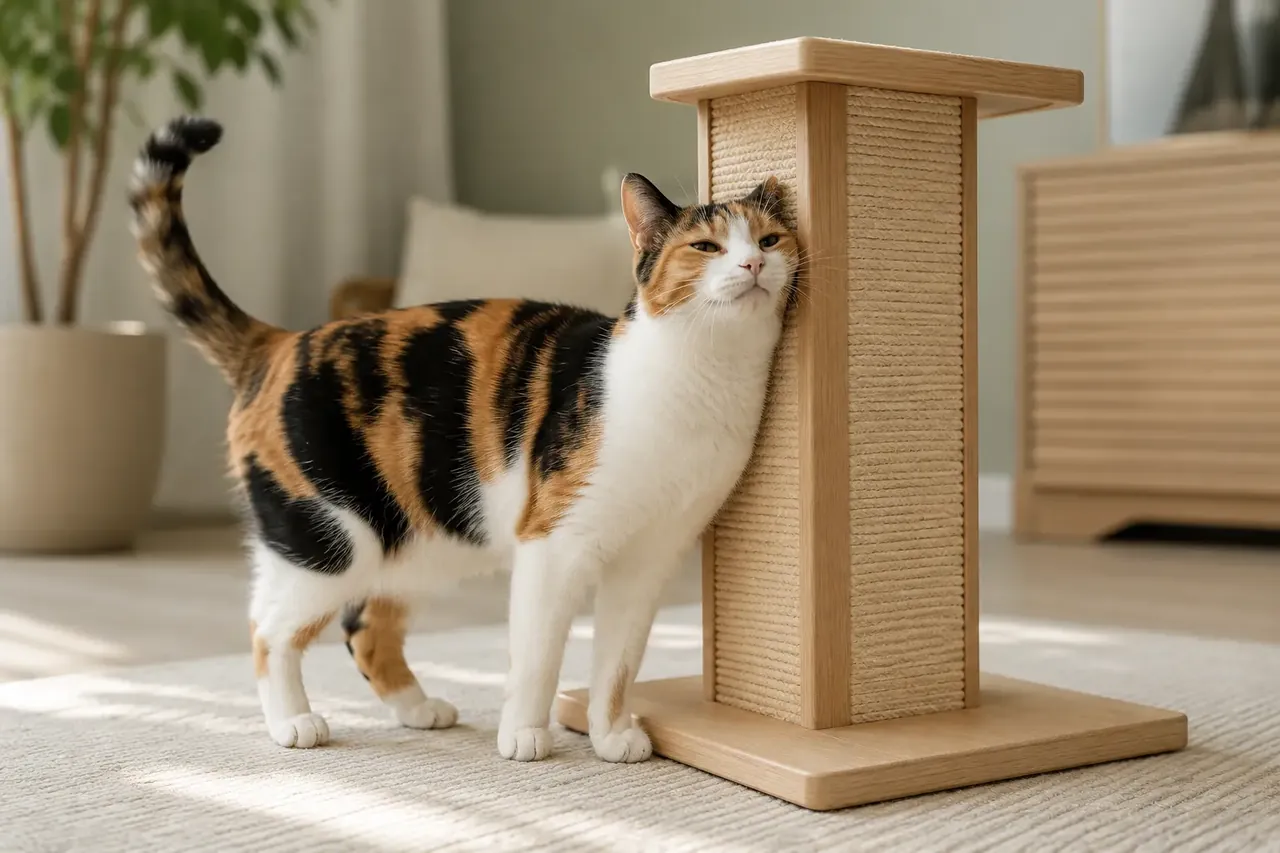 Topic illustration selected for this guide. Some learning images may be AI-assisted.
What does it mean when cats sleep together — the quick answer
✓ Warmth, familiarity and a valued sleeping location may all contribute.
✓ Keep several equally comfortable beds available so closeness remains a choice.
✓ Do not overlook blocking, chasing or stress elsewhere simply because the cats sometimes cuddle.
Sleeping in contact requires a degree of trust because both cats are less ready to react.
The short answer
Sleeping in contact requires a degree of trust because both cats are less ready to react.
Why it may happen
Warmth, familiarity and a valued sleeping location may all contribute.
Read the whole situation
One behaviour rarely has one guaranteed meaning. Compare it with your cat’s age, health, posture, appetite, litter habits, environment and usual pattern before drawing a conclusion.
What to do now
Keep several equally comfortable beds available so closeness remains a choice.
What not to do
Avoid punishment, forced handling and sudden large changes. They can add fear while hiding the information that would help you understand the original cause.
When to contact a veterinarian
Do not overlook blocking, chasing or stress elsewhere simply because the cats sometimes cuddle.
Keep a useful record
Write down when it started, how often it happens and what immediately precedes and follows it. Photos, weights or short videos can make a veterinary or behaviour consultation more productive.
Look for choice before and after sleep
Affiliated cats often approach with relaxed bodies, settle without displacement and separate calmly. Warmth and one especially valuable bed can also draw cats together, so provide several equally comfortable resting places rather than relying on one shared spot.
DEEPER GUIDE1 more detailed sectionsOpen +
Check the relationship away from the bed
Notice access to food, water, litter, doorways, people and elevated spaces. Staring, blocking, chasing, hiding or one cat changing routine can coexist with occasional cuddling. Persistent tension or health changes deserves qualified support.
Your quick checklist
Your progress is saved on this device.
Three simple things you can do
You do not have to change everything today. Pick one step that feels realistic, try it and see how your cat responds.
- 1Provide shared beds plus equally attractive separate beds.
- 2Keep routes open so neither cat is trapped.
- 3Watch whether both cats choose contact and relax fully.
Common mistakes
×Removing individual beds because cats cuddle.
×Assuming sleep proximity means there is no conflict elsewhere.
×Placing the only warm bed in a narrow guarded corner.
Questions cat people ask
Does sleeping together mean cats are bonded?+
Chosen relaxed body contact is a strong affiliative sign, especially with mutual grooming and friendly greetings, but relationships can still vary by context.
Why did bonded cats stop sleeping together?+
Temperature, new beds and routine can change preferences. Sudden avoidance with pain, illness or conflict signs deserves investigation.
Still looking for the right answer?
Search the full EverYes Cats encyclopedia with your own words — a symptom, food, behaviour, breed or everyday question.
Checked, dated and transparent
- Prepared by
- EverYes Cats editorial team
- Last updated
- 13 August 2026
- Source checked
- 13 August 2026
- Primary reference
- International Cat Care ↗
We begin with the named reference, rewrite the information in plain language and add practical cat-parent steps. Urgent health statements are checked against veterinary sources. This guide has not been individually reviewed by a veterinarian unless explicitly stated. It provides education, not diagnosis or treatment.
Spotted something unclear or outdated? Tell us so we can review it.
Your answer helps us improve the cat encyclopedia.
Wrapping or curving the tail can be a friendly contact gesture during a relaxed greeting. Read the full body, try a gentle response and know when the change matters.