Why does my cat suddenly stop purring?
Purring naturally changes with breathing, attention, movement and arousal, so stopping alone does not reveal a mood. Read the whole cat and what changed at that moment rather than treating purring as a comfort meter.
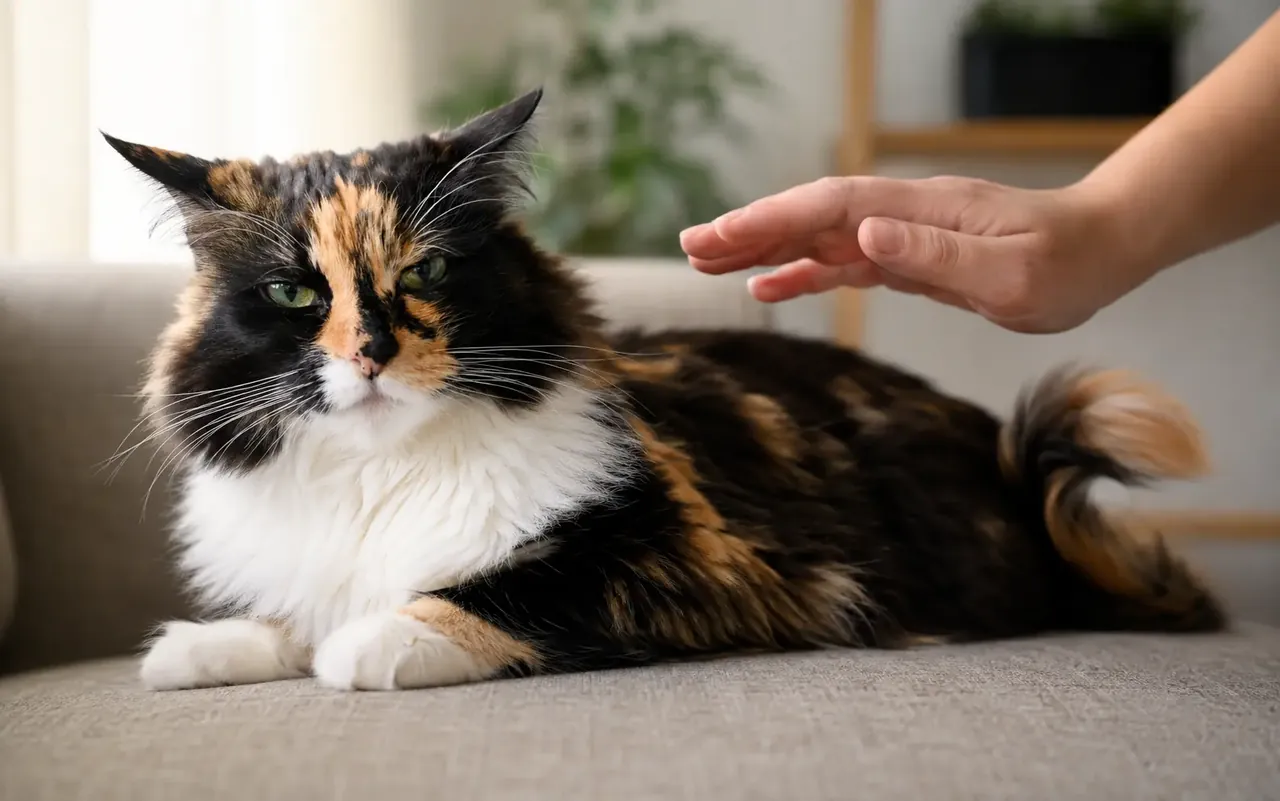 Topic illustration selected for this guide. Some learning images may be AI-assisted.
Why does my cat suddenly stop purring — the quick answer
✓ Purring naturally changes with attention, breathing and arousal; stopping alone does not reveal a mood.
✓ Observe: Read the full posture and look for a new sound, touch or change in comfort.
✓ Try this: Pause contact and let the cat decide what happens next.
Purring naturally changes with attention, breathing and arousal; stopping alone does not reveal a mood. The useful question is not only what the moment resembles, but whether it fits this cat’s normal pattern. Context, frequency, recovery and accompanying changes make the interpretation safer and more accurate.
Start with what changed
Note whether purring stopped when you touched a new area, shifted position, made a sound or when the cat noticed something. A relaxed cat may simply fall asleep, listen, move or end contact. Purring can also occur during stress or pain, so both its presence and absence require context.
Read posture instead of one sound
Soft eyes, loose muscles, ordinary breathing and choosing to remain nearby support comfort. Tension, skin twitching, a sharp head turn, tail movement, flattened ears or leaving means pause. Do not restart petting repeatedly just to test whether purring returns.
Use a brief consent pause
After one or two gentle strokes in a preferred area, stop. If the cat leans in, rubs or approaches again, another brief contact may be welcome. If the cat remains still without asking, let the pause continue. Never hold the cat in place to preserve a purring session.
Check breathing separately
Purring can make breathing difficult to count by ear. Observe the cat later while fully asleep and not purring if a veterinarian has asked you to monitor respiration. Do not press on the chest or disturb sleep repeatedly. Effort matters more than the sound itself.
When to contact a veterinarian
A new change in vocalisation with hiding, pain, reduced appetite, weakness, coughing or altered breathing needs veterinary advice. Open-mouth breathing, blue or grey gums, collapse or marked breathing effort is an emergency even if the cat purrs.
Your quick checklist
Loading saved progress…
Three simple things you can do
You do not have to change everything today. Pick one step that feels realistic, try it and see how your cat responds.
- 1Observe your cat’s individual baseline.
- 2Make one gentle change at a time.
- 3Ask a qualified professional when health or safety is involved.
Common mistakes
×Waiting for a dramatic symptom instead of noticing smaller changes from the cat’s normal routine.
×Changing several things at once, making it difficult to learn what actually helped.
×Treating general guidance as a substitute for advice from a veterinarian who knows the individual cat.
Questions cat people ask
Does every cat follow the same rule?+
No. Age, health, history, temperament and environment all change what works for an individual.
When should I seek professional help?+
Seek veterinary advice for sudden, persistent or concerning changes and urgent help for breathing difficulty, collapse, seizures, poisoning or urinary obstruction signs.
Still looking for the right answer?
Search the full EverYes Cats encyclopedia with your own words — a symptom, food, behaviour, breed or everyday question.
Checked, dated and transparent
- Prepared by
- EverYes Cats editorial team
- Last updated
- Source checked
- Primary reference
- FelineVMA: Feline Environmental Needs Guidelines ↗
We begin with the named reference, rewrite the information in plain language and add practical cat-parent steps. Urgent health statements are checked against veterinary sources. This guide has not been individually reviewed by a veterinarian unless explicitly stated. It provides education, not diagnosis or treatment.
How we choose and use sources →
Spotted something unclear or outdated? Tell us so we can review it.
Loading your saved choice…
A relaxed stretch can bridge rest and social contact while showing the cat feels safe enough to lengthen the body..
 02
 04