A 14-day carrier confidence plan
Turn the carrier from a warning sign into ordinary furniture.
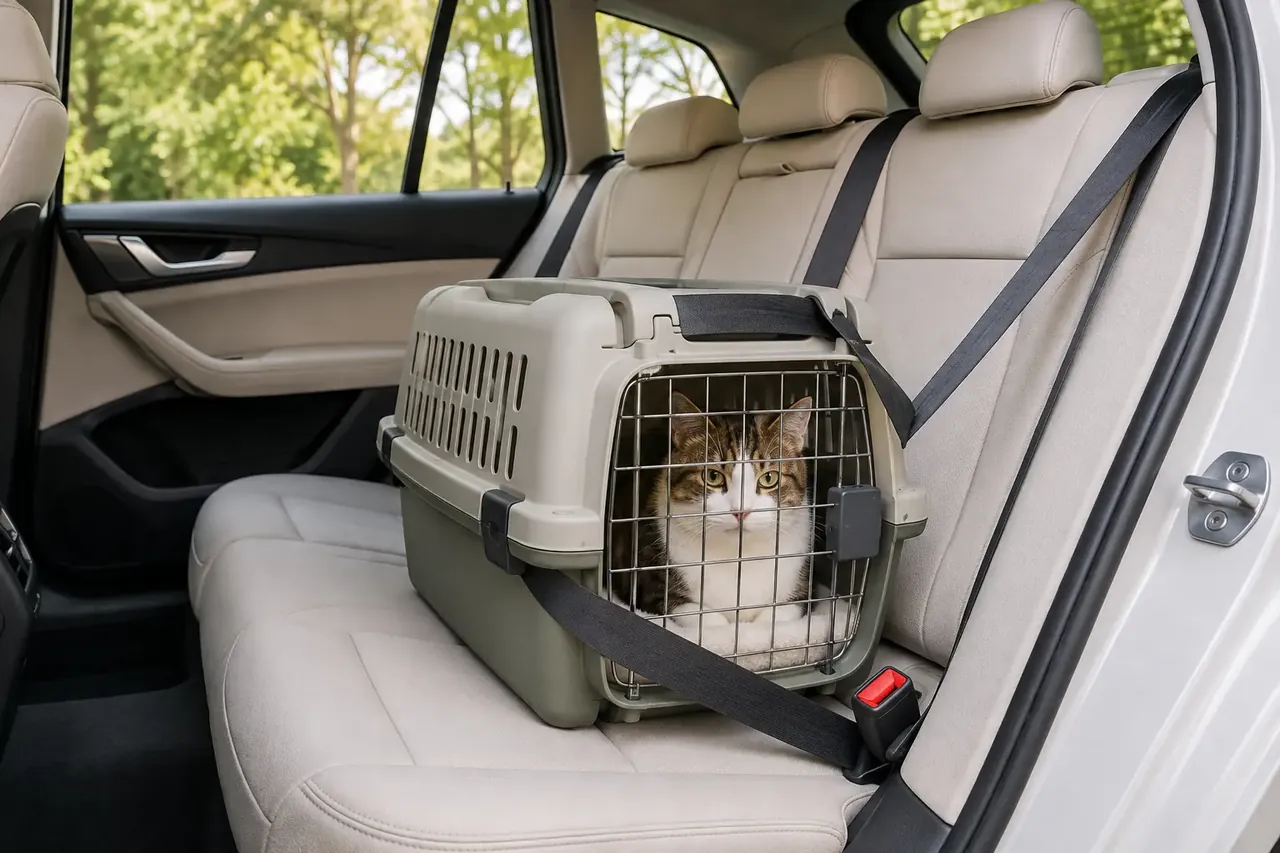 Topic illustration selected for this guide. Some learning images may be AI-assisted.
A 14-day carrier confidence plan — the quick answer
✓ Keep the carrier out every day
✓ Reward voluntary investigation
✓ Practise door movement separately from car travel
✓ Never open the carrier beside an unsecured door
Carrier training works best long before an appointment. The plan below is flexible: repeat an easy step until your cat remains relaxed, and shorten sessions before frustration appears.
Days 1–3: make it furniture
Place the carrier in a familiar room with the door secured open. Add comfortable bedding with a familiar scent. Scatter treats nearby without pushing the cat inside.
Days 4–7: reward entry
Move treats gradually farther inside or serve part of a meal at the entrance. Let the cat leave immediately. A removable top can make the space feel less enclosed.
Days 8–11: add the door
Close the door for one second, reward and open it. Build slowly to several calm seconds. Stop if the cat freezes, pants, claws or refuses food.
Days 12–14: lift and move
Lift the carrier a few centimetres, replace it and reward. Progress to a short walk around the room, then a parked car and finally a brief drive on another day.
Travel-day safety
Line the carrier with an absorbent pad, secure it so it cannot slide and cover part of it if that helps. Ask your veterinarian ahead of time about severe travel fear or nausea.
Your quick checklist
Your progress is saved on this device.
Three simple things you can do
You do not have to change everything today. Pick one step that feels realistic, try it and see how your cat responds.
- 1Leave the carrier open in a familiar room with the door secured.
- 2Reward voluntary investigation before practising the door, lifting and travel as separate steps.
- 3Repeat the easiest successful step until your cat stays relaxed.
Common mistakes
×Forcing the cat inside and turning the carrier into a trap.
×Only bringing out the carrier before a veterinary visit.
×Progressing to a car ride while the cat is already frozen, panting or refusing food.
Questions cat people ask
How long does carrier training take?+
The 14-day plan is a framework, not a deadline. Confident cats may progress quickly, while fearful cats may need several days at one easy step.
What type of carrier is easiest to use?+
A sturdy, well-ventilated carrier with a removable top and secure front door often allows gentler loading and examination.
Still looking for the right answer?
Search the full EverYes Cats encyclopedia with your own words — a symptom, food, behaviour, breed or everyday question.
Checked, dated and transparent
- Prepared by
- EverYes Cats editorial team
- Last updated
- 7 August 2026
- Source checked
- 7 August 2026
- Primary reference
- FelineVMA Cat Friendly Environment ↗
We begin with the named reference, rewrite the information in plain language and add practical cat-parent steps. Urgent health statements are checked against veterinary sources. This guide has not been individually reviewed by a veterinarian unless explicitly stated. It provides education, not diagnosis or treatment.
Spotted something unclear or outdated? Tell us so we can review it.
Your answer helps us improve the cat encyclopedia.
Leaving the carrier open in the home turns it from an alarm signal into ordinary furniture and gives the cat time to investigate without pressure.