Do cats have belly buttons?
Cats do have an umbilical scar where the cord connected before birth, but it is usually a small, flat mark hidden by fur rather than a deep human-style belly button.
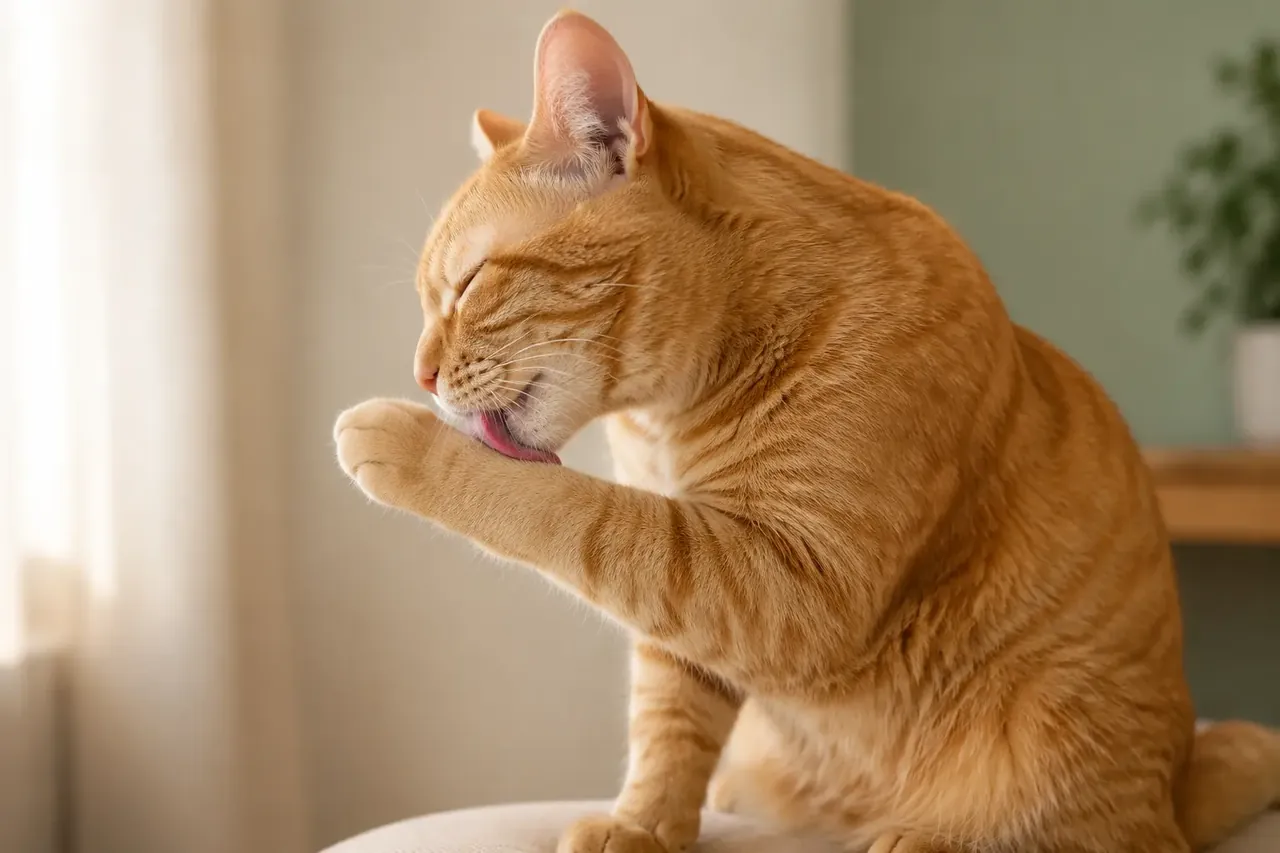 Topic illustration selected for this guide. Some learning images may be AI-assisted.
Do cats have belly buttons — the quick answer
✓ Cats have a subtle umbilical scar on the abdominal midline rather than a human-style navel.
✓ Do not restrain a cat just to search for the tiny flat mark.
✓ A soft bulge, pain or changing swelling may be an umbilical hernia.
Cats have a subtle umbilical scar on the abdominal midline rather than a human-style navel. The cord supplied the developing kitten through the placenta and detached after birth. This guide keeps the fascinating detail while separating observation, evidence and internet exaggeration.
Where the belly button comes from
Before birth, the umbilical cord connects each kitten to its placenta and carries blood vessels involved in exchanging oxygen and nutrients. After birth the cord separates, leaving a healed scar on the abdominal midline.
Why it is difficult to find
The scar is commonly tiny, flat and covered by fur. It may look like a subtle hair whorl or slightly different patch of skin. There is no need to hold a cat on its back or search forcefully for it.
What to do at home
If the cat is already relaxed during ordinary handling, glance at the abdomen without pressing or stretching the skin. Stop when the cat moves away. A belly-button search offers no health benefit and should never become restraint.
What this does not prove
Not finding the scar does not mean anything is missing. A visible bump is not simply a prominent belly button and cannot be identified safely from an online photograph alone.
When to contact a veterinarian
A soft or firm bulge, pain, heat, redness, discharge, sudden swelling or a changing abdominal lump needs veterinary assessment. Vomiting, weakness, severe pain or a tense enlarging abdomen warrants urgent care.
Your quick checklist
Loading saved progress…
Three simple things you can do
You do not have to change everything today. Pick one step that feels realistic, try it and see how your cat responds.
- 1Observe your cat’s individual baseline.
- 2Make one gentle change at a time.
- 3Ask a qualified professional when health or safety is involved.
Common mistakes
×Waiting for a dramatic symptom instead of noticing smaller changes from the cat’s normal routine.
×Changing several things at once, making it difficult to learn what actually helped.
×Treating general guidance as a substitute for advice from a veterinarian who knows the individual cat.
Questions cat people ask
Does every cat follow the same rule?+
No. Age, health, history, temperament and environment all change what works for an individual.
When should I seek professional help?+
Seek veterinary advice for sudden, persistent or concerning changes and urgent help for breathing difficulty, collapse, seizures, poisoning or urinary obstruction signs.
Still looking for the right answer?
Search the full EverYes Cats encyclopedia with your own words — a symptom, food, behaviour, breed or everyday question.
Checked, dated and transparent
- Prepared by
- EverYes Cats editorial team
- Last updated
- Source checked
- Primary reference
- Merck Veterinary Manual ↗
We begin with the named reference, rewrite the information in plain language and add practical cat-parent steps. Urgent health statements are checked against veterinary sources. This guide has not been individually reviewed by a veterinarian unless explicitly stated. It provides education, not diagnosis or treatment.
How we choose and use sources →
Spotted something unclear or outdated? Tell us so we can review it.
Loading your saved choice…
A cat's eyes can appear to glow because light reflects from the tapetum lucidum, a reflective layer behind the retina that helps the eye use dim light efficiently. The eye is reflecting available light, not producing its own.
 01
 02
 03
 05
 06