Why is my cat’s voice hoarse in the morning?
A brief rough meow can follow heavy vocalising or dry air, but recurring or persistent hoarseness may involve the mouth, throat or airways and cannot be diagnosed from sound alone.
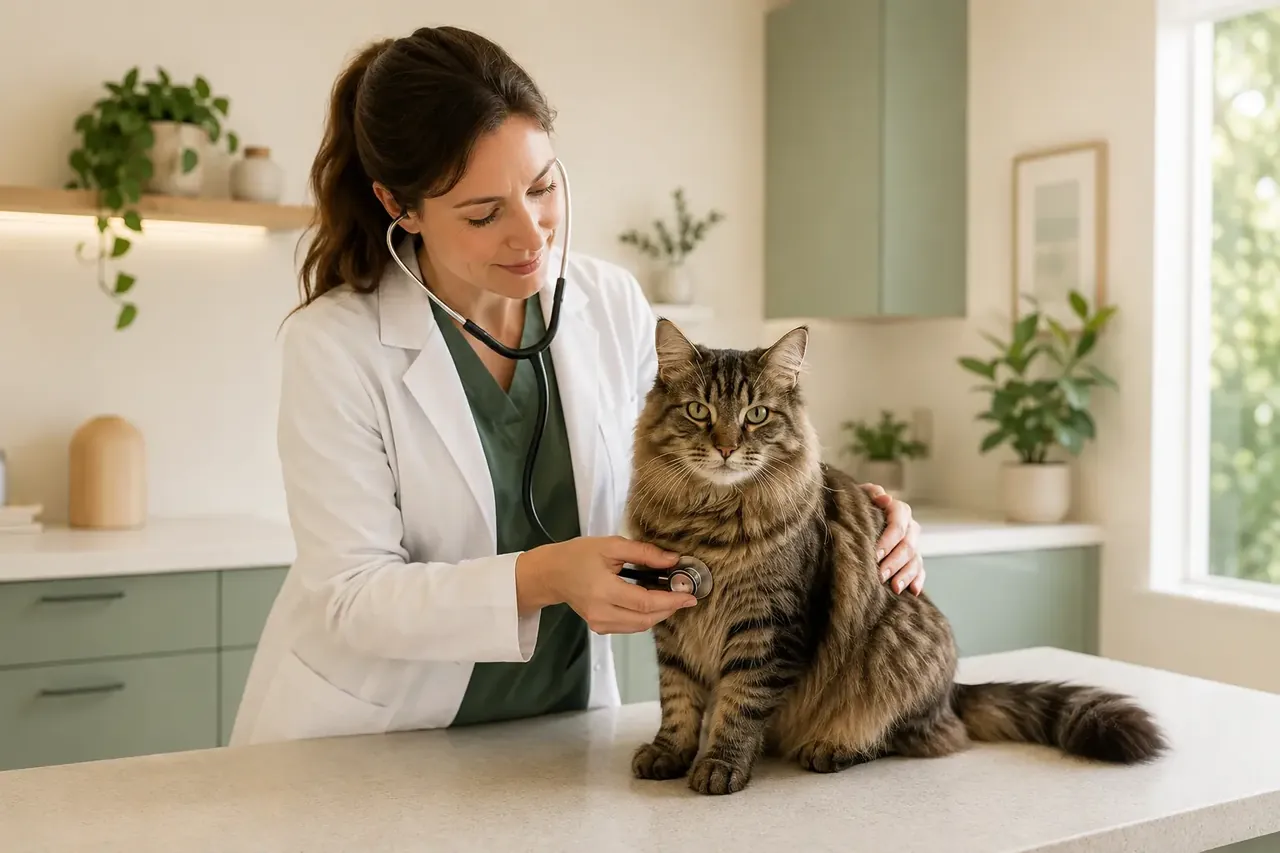 Topic illustration selected for this guide. Some learning images may be AI-assisted.
Why is my cat’s voice hoarse in the morning — the quick answer
✓ A brief voice change can follow heavy vocalising, while persistent hoarseness may involve the mouth, throat or airways.
✓ Observe: Check breathing, swallowing, appetite, coughing and how long the change lasts.
✓ Try this: Record the sound and arrange veterinary assessment if it persists or recurs.
A brief voice change can follow heavy vocalising, while persistent hoarseness may involve the mouth, throat or airways. The useful question is not only what the moment resembles, but whether it fits this cat’s normal pattern. Context, frequency, recovery and accompanying changes make the interpretation safer and more accurate.
Check the whole breathing picture
Observe at quiet rest for noisy breathing, increased effort, open-mouth breathing, coughing, gagging, drooling and swallowing difficulty. Record the voice only if doing so does not provoke repeated calling.
Look for a short-lived trigger
Note overnight vocalising, recent stress, smoke, aerosol, dust or a respiratory illness. Provide fresh water and clean air, but do not steam the cat, force fluids or use human cough or throat medicine.
Track duration and daily function
Record whether the voice returns to normal, appetite, drinking, play, sleep and any nasal or eye discharge. A recurring morning pattern still deserves assessment when it continues or is accompanied by other signs.
When veterinary care matters
Arrange an examination for persistent or repeated voice change, cough, pain, swallowing trouble, reduced eating or noisy breathing. Open-mouth breathing, marked effort, blue or pale gums, collapse or inability to swallow is an emergency.
Your quick checklist
Loading saved progress…
Three simple things you can do
You do not have to change everything today. Pick one step that feels realistic, try it and see how your cat responds.
- 1Observe your cat’s individual baseline.
- 2Make one gentle change at a time.
- 3Ask a qualified professional when health or safety is involved.
Common mistakes
×Waiting for a dramatic symptom instead of noticing smaller changes from the cat’s normal routine.
×Changing several things at once, making it difficult to learn what actually helped.
×Treating general guidance as a substitute for advice from a veterinarian who knows the individual cat.
Questions cat people ask
Does every cat follow the same rule?+
No. Age, health, history, temperament and environment all change what works for an individual.
When should I seek professional help?+
Seek veterinary advice for sudden, persistent or concerning changes and urgent help for breathing difficulty, collapse, seizures, poisoning or urinary obstruction signs.
Still looking for the right answer?
Search the full EverYes Cats encyclopedia with your own words — a symptom, food, behaviour, breed or everyday question.
Checked, dated and transparent
- Prepared by
- EverYes Cats editorial team
- Last updated
- Source checked
- Primary reference
- Merck Veterinary Manual: Laryngeal Paralysis in Dogs and Cats ↗
We begin with the named reference, rewrite the information in plain language and add practical cat-parent steps. Urgent health statements are checked against veterinary sources. This guide has not been individually reviewed by a veterinarian unless explicitly stated. It provides education, not diagnosis or treatment.
How we choose and use sources →
Spotted something unclear or outdated? Tell us so we can review it.
Loading your saved choice…
A small amount of light wax may be present, but dark debris, odour, redness, pain, discharge or repeated head shaking needs veterinary assessment before treatment.
 02
 03
 04