Why does my cat stand in the litter box for a long time?
A cat remaining in the litter box may be trying to urinate or pass stool, hiding because of stress, or struggling with pain. First confirm output because little or no urine can be an emergency.
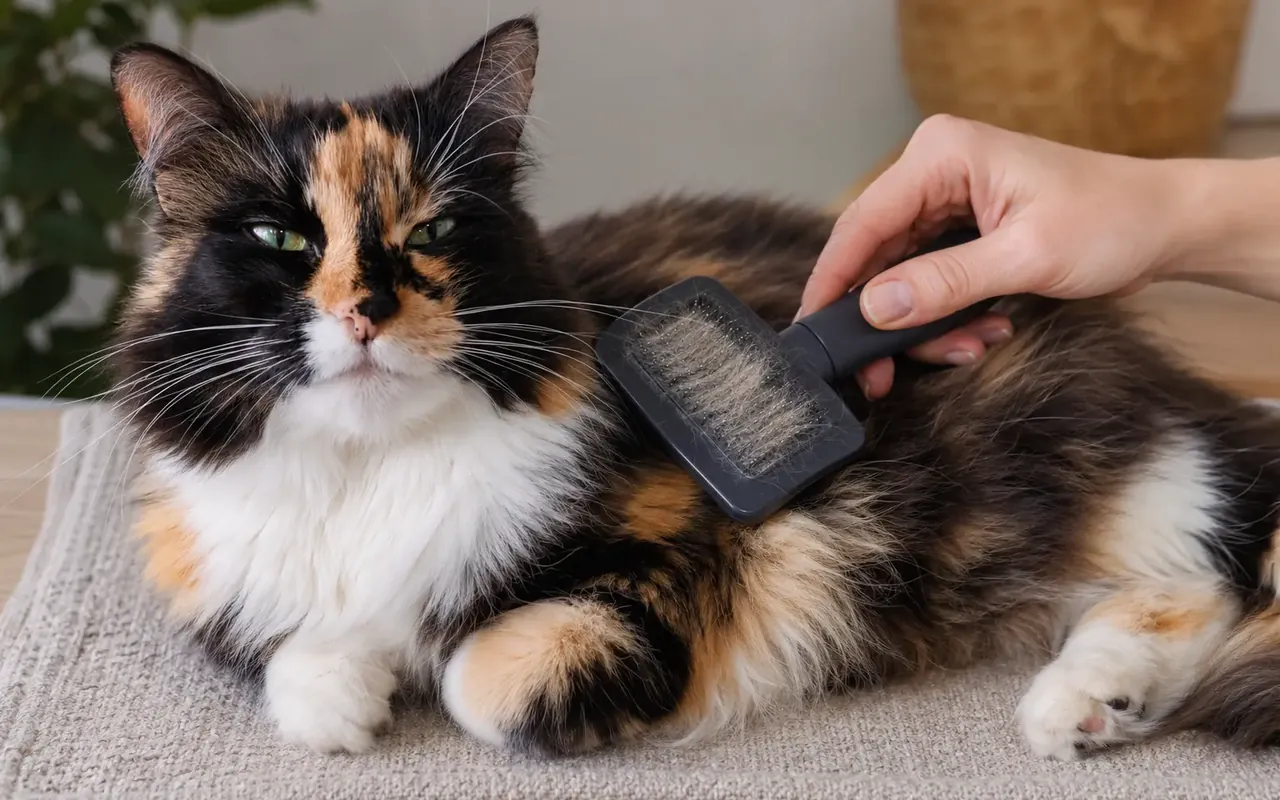 Topic illustration selected for this guide. Some learning images may be AI-assisted.
Why does my cat stand in the litter box for a long time — the quick answer
✓ Lingering may reflect difficulty urinating or defecating, pain, confusion or an unsafe environment.
✓ Observe: Check posture, output, vocalising, licking and repeated visits.
✓ Try this: Contact a veterinarian promptly; little or no urine is an emergency, especially in male cats.
Lingering may reflect difficulty urinating or defecating, pain, confusion or an unsafe environment. The useful question is not only what the moment resembles, but whether it fits this cat’s normal pattern. Context, frequency, recovery and accompanying changes make the interpretation safer and more accurate.
Confirm what the cat produces
After each visit, check for a normal urine clump or stool and note time spent, posture, straining, crying and repeat visits. Shared trays require temporary observation or separate clean options so the output belongs to the correct cat.
Recognise possible urinary obstruction
Repeated squatting with drops or no urine, frequent returns, genital licking, restlessness, vomiting or a painful abdomen can indicate blockage, especially in male cats. Contact an emergency veterinarian immediately rather than waiting for the next visit.
Consider stool and mobility
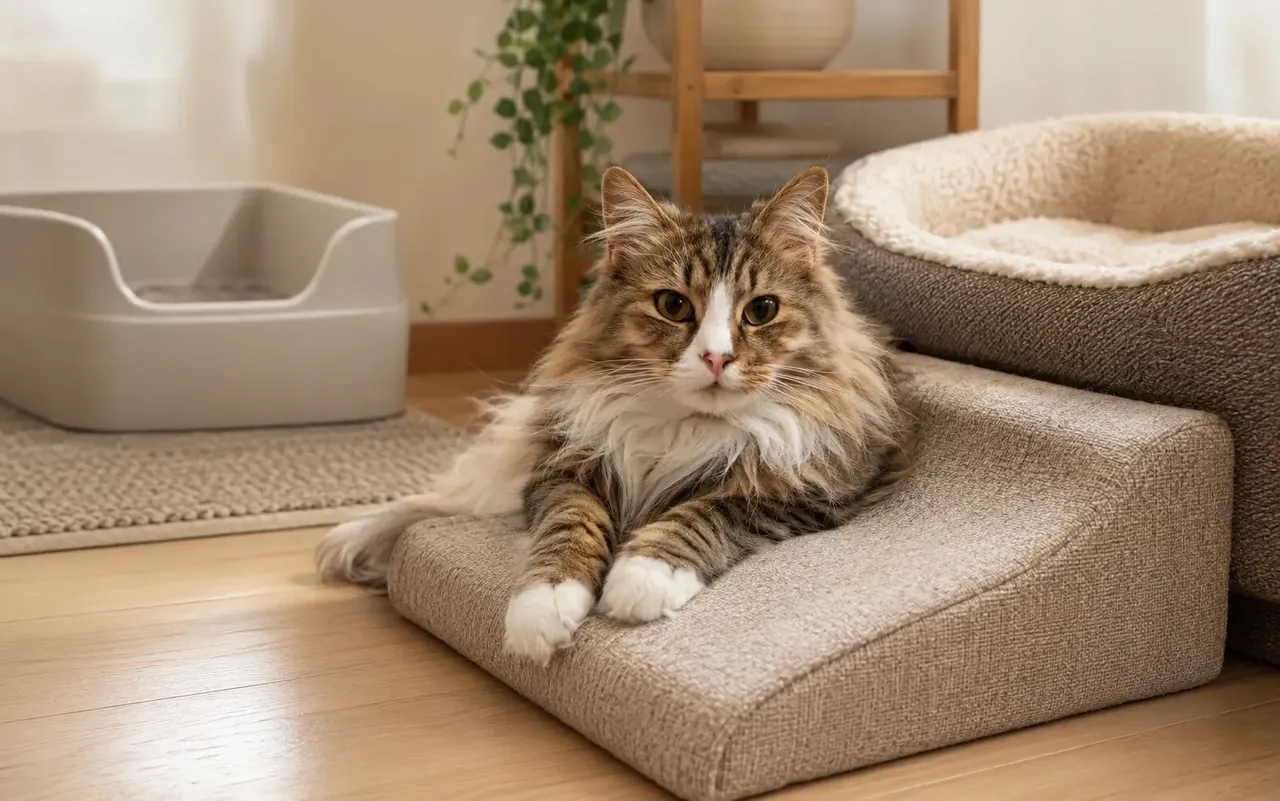
Hard stool, diarrhoea, pain entering or turning, stiffness and a high tray edge can also prolong a visit. Provide a large clean low-entry option on non-slip flooring, but do not let an equipment change delay medical advice.
Respect hiding without normalising illness
Some cats sit in a tray when frightened because it smells familiar, particularly after adoption or at a clinic. Add clean hiding places and reduce pressure, while still confirming normal urine, stool, appetite and behaviour.
Avoid risky home checks
Do not press or massage the abdomen, give laxatives, enemas or pain medicine, or repeatedly place the cat in the tray. Record the last confirmed normal urine and stool and follow veterinary instructions for transport and assessment.
Your quick checklist
Loading saved progress…
Three simple things you can do
You do not have to change everything today. Pick one step that feels realistic, try it and see how your cat responds.
- 1Observe your cat’s individual baseline.
- 2Make one gentle change at a time.
- 3Ask a qualified professional when health or safety is involved.
Common mistakes
×Waiting for a dramatic symptom instead of noticing smaller changes from the cat’s normal routine.
×Changing several things at once, making it difficult to learn what actually helped.
×Treating general guidance as a substitute for advice from a veterinarian who knows the individual cat.
Questions cat people ask
Does every cat follow the same rule?+
No. Age, health, history, temperament and environment all change what works for an individual.
When should I seek professional help?+
Seek veterinary advice for sudden, persistent or concerning changes and urgent help for breathing difficulty, collapse, seizures, poisoning or urinary obstruction signs.
Still looking for the right answer?
Search the full EverYes Cats encyclopedia with your own words — a symptom, food, behaviour, breed or everyday question.
Checked, dated and transparent
- Prepared by
- EverYes Cats editorial team
- Last updated
- Source checked
- Primary reference
- FelineVMA/ISFM: House-Soiling Guidelines ↗
We begin with the named reference, rewrite the information in plain language and add practical cat-parent steps. Urgent health statements are checked against veterinary sources. This guide has not been individually reviewed by a veterinarian unless explicitly stated. It provides education, not diagnosis or treatment.
How we choose and use sources →
Spotted something unclear or outdated? Tell us so we can review it.
Loading your saved choice…
A small amount of light wax may be present, but dark debris, odour, redness, pain, discharge or repeated head shaking needs veterinary assessment before treatment.
 01
 04
 05