Why is my cat holding their head lower than usual?
A lowered head can reflect fatigue, pain, weakness, breathing effort or an individual resting posture.
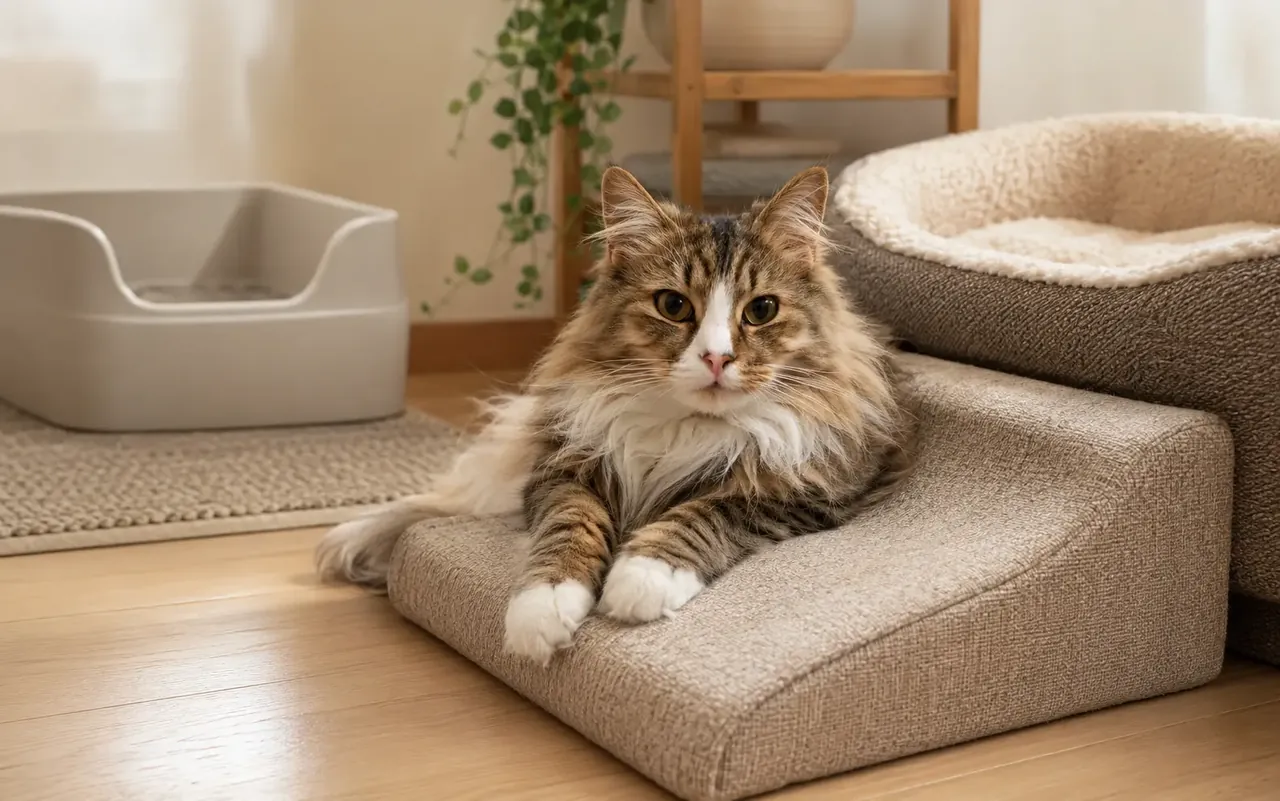 Topic illustration selected for this guide. Some learning images may be AI-assisted.
Why is my cat holding their head lower than usual — the quick answer
✓ A lowered head can reflect fatigue, pain, weakness, breathing effort or an individual resting posture.
✓ Observe: Compare appetite, gait, neck movement, breathing and alertness.
✓ Try this: Keep handling minimal and seek prompt veterinary advice for a new unexplained posture.
A lowered head can reflect fatigue, pain, weakness, breathing effort or an individual resting posture. The useful question is not only what the moment resembles, but whether it fits this cat’s normal pattern. Context, frequency, recovery and accompanying changes make the interpretation safer and more accurate.
The short answer
A lowered head can reflect fatigue, pain, weakness, breathing effort or an individual resting posture. One isolated moment rarely proves a single emotion, preference or medical cause. Age, experience, health and the immediate environment all matter.
What to observe first
Compare appetite, gait, neck movement, breathing and alertness. Note the time, duration, trigger and what the cat does next. Compare the event with the cat’s usual routine rather than with another cat.
Read the whole situation
Compare the posture while resting, walking and eating. A cat briefly lowering the head to investigate differs from one that keeps the neck low, moves stiffly, seems weak or stretches the head and neck while breathing. Check whether the cat can look up and turn normally without prompting or handling.
A practical next step
Keep food, water and litter easy to reach and minimise lifting while arranging veterinary advice for a new persistent posture. Do not bend the neck, press painful areas or give human pain medicine. Breathing effort, collapse or inability to raise the head is urgent.
Common mistakes to avoid
Do not punish, frighten, restrain or deliberately repeat a trigger for a reaction. Never use human medicine or a leftover pet prescription to test a theory. Avoid assuming that a behaviour is revenge, stubbornness or proof of a breed personality.
When veterinary advice matters
Contact a veterinarian promptly for a new, persistent or worsening change. Breathing difficulty, collapse, seizures, severe pain, major trauma, suspected poisoning or repeated attempts to urinate with little or no output require urgent care.
Make a useful record
Film a few steps from the side and front on a non-slip floor, without luring the cat into difficult movement. Record when the low posture began, appetite, swallowing, breathing, balance, recent injury and whether the position continues during sleep and wakefulness.
Three simple things you can do
You do not have to change everything today. Pick one step that feels realistic, try it and see how your cat responds.
- 1Compare the posture with your cat's normal position in several familiar situations: walking, resting, eating and looking toward a quiet sound. A brief resting pose is different from a persistent new change that also affects movement or alertness.
- 2Observe breathing from a distance before approaching. An open mouth, obvious effort, collapse or marked weakness needs immediate veterinary help; avoid stressful handling while arranging transport.
- 3Make a short timeline for the veterinarian: first noticed, whether the head is tilted as well as low, changes in appetite, drinking, balance, neck movement and responsiveness. A short natural video may help if taking one does not delay care.
Common mistakes
×Trying to straighten the head or neck by hand.
×Assuming that eating one treat rules out pain or illness.
×Waiting several days to ask for advice when a new low posture persists or the cat seems unwell.
Questions cat people ask
Can a cat simply rest with its head low?+
Yes. Cats adopt many comfortable resting positions. Check whether the cat readily returns to its usual posture and behaves normally afterward. A new position that persists when the cat gets up deserves more attention.
What details help the veterinarian?+
Report whether the change began suddenly, whether the head is tilted or just lowered, and what happens to walking, eating, drinking, breathing and awareness. Include any injury, medication or possible exposure without assuming one cause.
When should I seek urgent help?+
Seek emergency assessment for breathing difficulty, collapse, seizures, severe weakness or rapidly worsening signs. For a new unexplained head position without an emergency sign, contact a veterinarian promptly for advice rather than trying to diagnose it at home.
Still looking for the right answer?
Search the full EverYes Cats encyclopedia with your own words — a symptom, food, behaviour, breed or everyday question.
Checked, dated and transparent
- Prepared by
- EverYes Cats editorial team
- Last updated
- 19 September 2026
- Source checked
- 19 September 2026
- Primary reference
- Cornell Feline Health Center ↗
We begin with the named reference, rewrite the information in plain language and add practical cat-parent steps. Urgent health statements are checked against veterinary sources. This guide has not been individually reviewed by a veterinarian unless explicitly stated. It provides education, not diagnosis or treatment.
How we choose and use sources →
Spotted something unclear or outdated? Tell us so we can review it.
Your answer helps us improve the cat encyclopedia.
New touch sensitivity can be caused by inflammation, injury, parasites or pain around the head..