How to offer water during cat travel
Cats need access to safe hydration around travel, but forcing water or opening a carrier in an unsecured place creates greater risk.
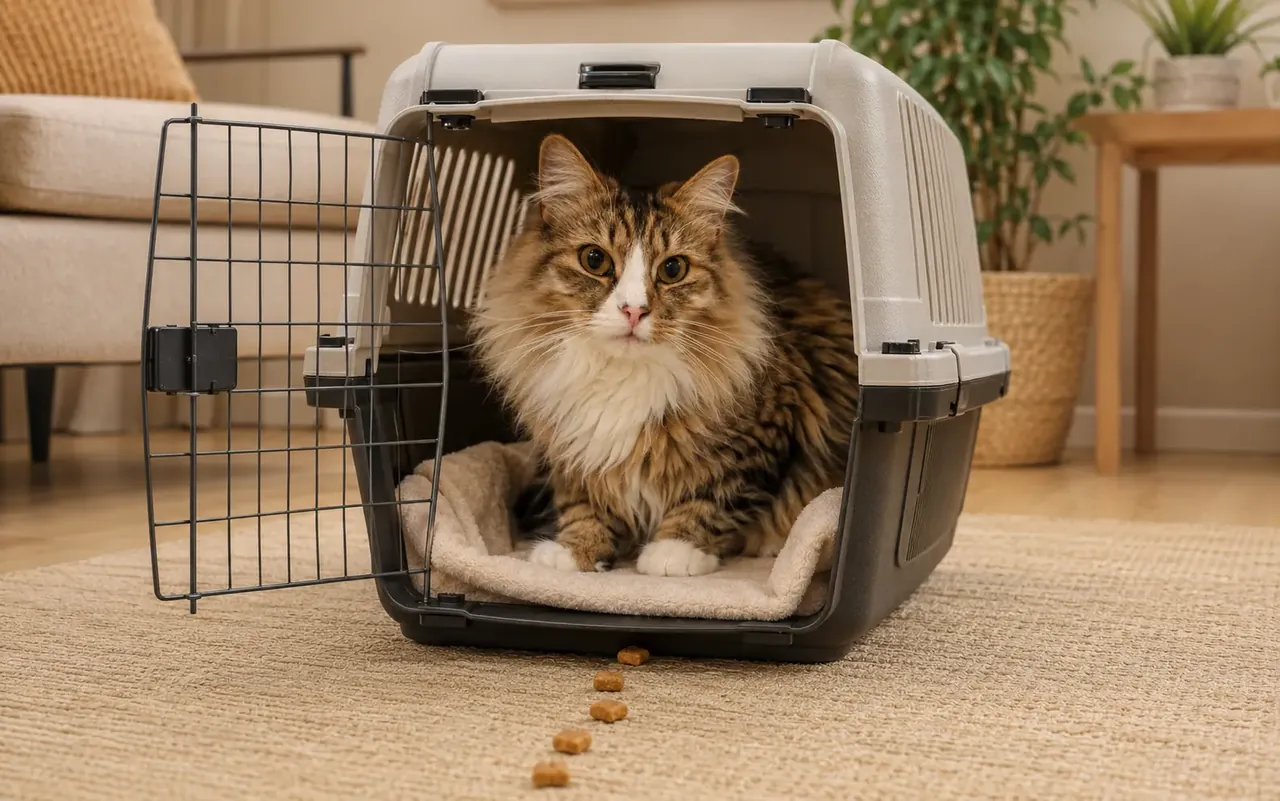 Topic illustration selected for this guide. Some learning images may be AI-assisted.
How to offer water during cat travel — the quick answer
✓ Journey length, temperature and the cat’s health determine the safest plan
✓ Ask your veterinarian for long-trip guidance and offer water only in a secure enclosed stop.
✓ Panting, weakness, repeated vomiting or suspected dehydration needs urgent help.
Journey length, temperature and the cat’s health determine the safest plan. An unsecured bowl can soak bedding, while withholding water for too long is not appropriate. This guide separates the useful observation from guesswork and gives you one safe next step.
Plan water around secure enclosed stops
Do not open a carrier beside a road or car door. Containment comes before offering a bowl.
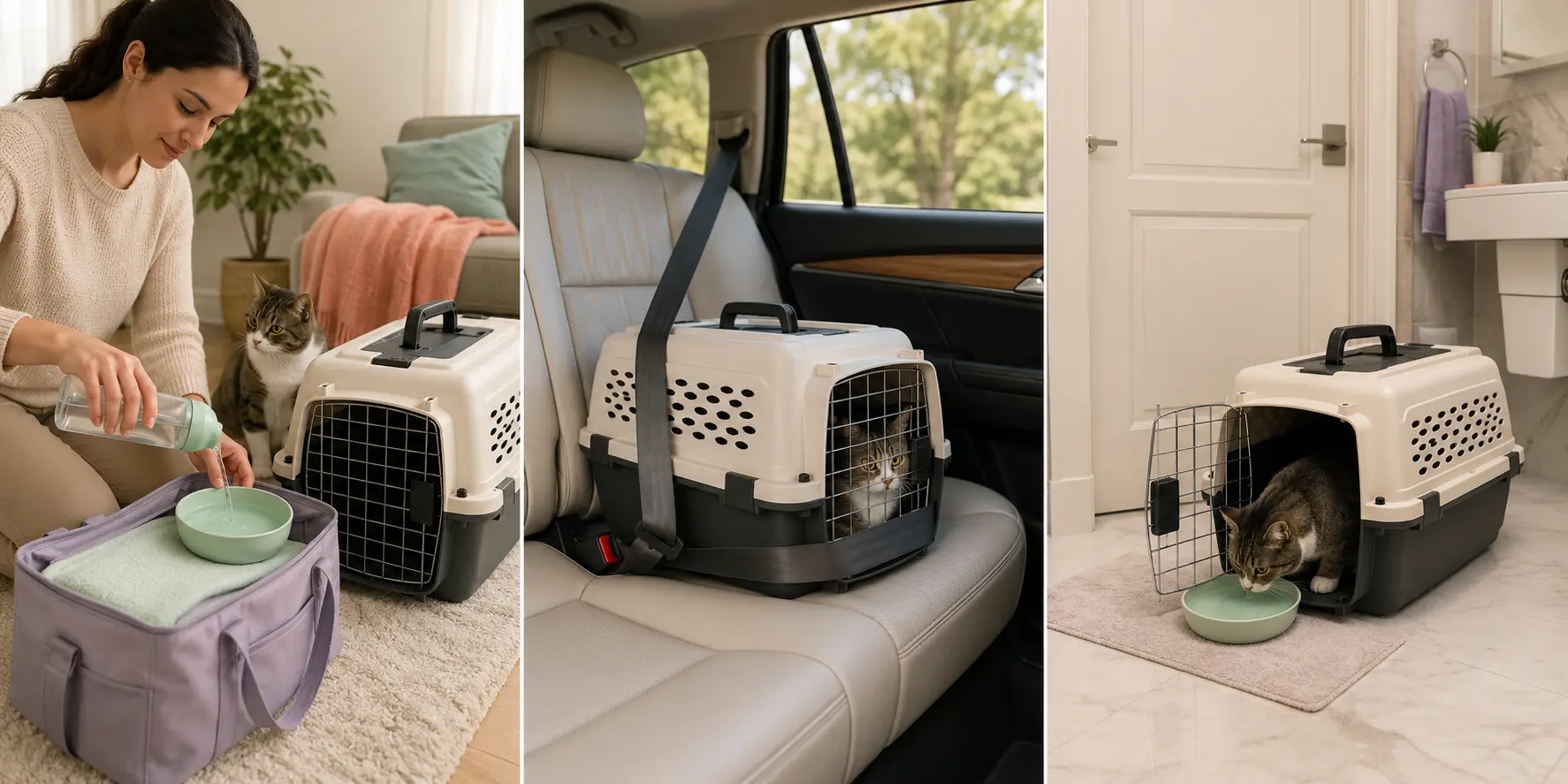
- 1Pack a leakproof supply
Bring fresh water in a sealed bottle and a stable shallow bowl that can be washed between stops.
- 2Keep the moving carrier dry
Secure the closed carrier level in the vehicle rather than leaving a loose bowl to spill over bedding.
- 3Offer water only when enclosed
Use a fully closed indoor room for longer stops, keep the carrier available and let the cat choose whether to drink.
The clear answer
Journey length, temperature and the cat’s health determine the safest plan. An unsecured bowl can soak bedding, while withholding water for too long is not appropriate.
What to observe in your own cat
Check identification, carrier security, temperature, water, litter, medication and every door before the journey changes. Journey length, temperature and the cat’s health determine the safest plan.
Why two cats may look different
Age, health, body shape, early experience, confidence and the immediate environment all affect what owners see. A common pattern can still deserve attention when it is new or different for this individual cat.
Make the home support the answer
Practise the carrier and care routine before the real trip. Keep written feeding, medication and emergency instructions with the cat, and never open containment beside an unsecured exit.
A practical next step
Ask your veterinarian for long-trip guidance and offer water only in a secure enclosed stop. Keep the change small and easy to reverse, then compare the same facts again rather than relying on memory.
What not to do
Do not punish, frighten, force handling or remove every familiar option at once. Avoid using a general explanation to dismiss a sudden change in health or behaviour.
Warning signs and veterinary help
Panting, weakness, repeated vomiting or suspected dehydration needs urgent help.
Source and limits
This educational guide is informed by Cats Protection. It can help you observe and prepare useful information, but it cannot examine your cat, diagnose a condition or replace individual veterinary advice.
DEEPER GUIDE2 more detailed sectionsOpen +
What to check first
Consider journey length, temperature, medical needs, wet-food intake and the cat's normal drinking pattern before departure.
What to do next
Offer familiar water before and after travel, carry a clean supply and stable bowl, and follow veterinary advice for long journeys or health conditions. Open-mouth breathing, repeated vomiting, collapse, marked weakness or overheating is urgent.
Your quick checklist
Your progress is saved on this device.
Three simple things you can do
You do not have to change everything today. Pick one step that feels realistic, try it and see how your cat responds.
- 1Offer familiar water before departure and at secure stops.
- 2Carry more water than expected in a leak-proof container.
- 3Use a stable bowl and record drinking on long journeys.
Common mistakes
×Restricting water to prevent accidents.
×Trying to syringe water into a resisting cat.
×Changing to strongly flavoured water on travel day.
Questions cat people ask
How do I give my cat water while travelling?+
Offer small amounts in a stable familiar bowl only when the carrier can be managed inside a secure closed space.
Is it normal for a cat not to drink during a short trip?+
Stress may reduce drinking briefly, but prolonged refusal, heat exposure, illness signs or a cat with medical needs requires veterinary guidance.
Still looking for the right answer?
Search the full EverYes Cats encyclopedia with your own words — a symptom, food, behaviour, breed or everyday question.
Checked, dated and transparent
- Prepared by
- EverYes Cats editorial team
- Last updated
- 14 August 2026
- Source checked
- 14 August 2026
- Primary reference
- Cats Protection ↗
We begin with the named reference, rewrite the information in plain language and add practical cat-parent steps. Urgent health statements are checked against veterinary sources. This guide has not been individually reviewed by a veterinarian unless explicitly stated. It provides education, not diagnosis or treatment.
Spotted something unclear or outdated? Tell us so we can review it.
Your answer helps us improve the cat encyclopedia.
A secure hard-sided carrier is often easiest to stabilise, clean and open from the top, while a structured soft carrier may suit specific travel needs if it cannot collapse.