What does a silent meow mean?
A silent meow is often a normal greeting or request made at a frequency or volume people barely hear. A sudden loss of voice, noisy breathing, coughing or swallowing difficulty needs veterinary attention.
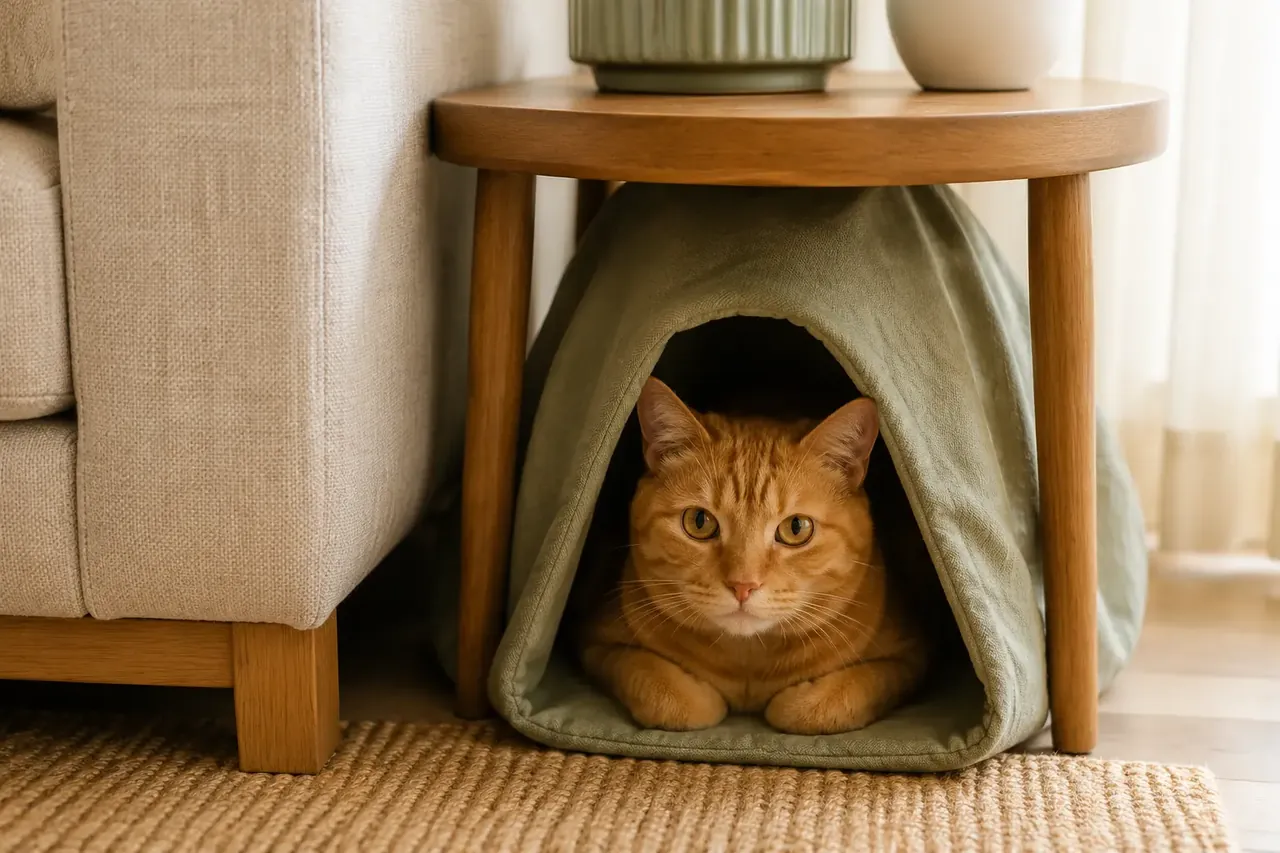 Topic illustration selected for this guide. Some learning images may be AI-assisted.
What does a silent meow mean — the quick answer
✓ Some cats open their mouth with a sound too soft or high for people to hear
✓ Read the full body language and respond to the request rather than the volume.
✓ Sudden loss of voice, coughing, gagging or noisy breathing needs veterinary care.
Some cats open their mouth with a sound too soft or high for people to hear. It can be an ordinary individual greeting when the voice and breathing are otherwise normal.
The short answer
Some cats open their mouth with a sound too soft or high for people to hear. It can be an ordinary individual greeting when the voice and breathing are otherwise normal.
What to observe first
Compare the moment with your cat’s usual pattern. Note timing, frequency, body language, appetite, litter-box use, mobility and any recent household change.
Why the setting matters
It can be an ordinary individual greeting when the voice and breathing are otherwise normal. One isolated detail rarely explains behaviour or health on its own, so look at the whole cat and the immediate environment.
What you can do
Read the full body language and respond to the request rather than the volume.
A gentle way to test it
Make one small safe adjustment and give the cat time and choice. Avoid punishment, forced handling and several changes at once, because they make the response harder to understand.
When to contact a veterinarian
Sudden loss of voice, coughing, gagging or noisy breathing needs veterinary care.
Prepare useful information
Write down when it began and how often it occurs. A short video, clear photo, food record or litter record can help a veterinary professional assess a pattern that may not appear during the appointment.
Read the request around the mouth movement
Notice where the cat is looking, what happened immediately before and whether the body is relaxed. A silent meow near a food station, door or favourite seat may be a learned signal. Respond to the likely need without automatically rewarding every request with extra food.
DEEPER GUIDE1 more detailed sectionsOpen +
Check whether the voice truly changed
Compare purring, ordinary meows, breathing and swallowing over the next interactions. Record a short video if the change comes and goes. Hoarseness that persists, drooling, gagging, open-mouth breathing or reduced appetite should be discussed promptly with a veterinarian.
Your quick checklist
Your progress is saved on this device.
Three simple things you can do
You do not have to change everything today. Pick one step that feels realistic, try it and see how your cat responds.
- 1Notice whether the cat also produces normal sounds at other times.
- 2Record any voice change and watch breathing, swallowing and appetite.
- 3Arrange assessment when silence is new, persistent or accompanied by illness.
Common mistakes
×Assuming every inaudible meow is manipulation.
×Encouraging repeated vocalisation to test the voice.
×Waiting with breathing difficulty or gagging.
Questions cat people ask
Why does my cat meow without sound?+
Some cats use a very soft or high-frequency vocalisation as normal communication, while temporary hoarseness or throat problems can also reduce sound.
When is a silent meow concerning?+
A sudden voice loss with coughing, gagging, drooling, poor eating, lethargy or breathing change needs veterinary advice.
Still looking for the right answer?
Search the full EverYes Cats encyclopedia with your own words — a symptom, food, behaviour, breed or everyday question.
Checked, dated and transparent
- Prepared by
- EverYes Cats editorial team
- Last updated
- 13 August 2026
- Source checked
- 13 August 2026
- Primary reference
- Cornell Feline Health Center ↗
We begin with the named reference, rewrite the information in plain language and add practical cat-parent steps. Urgent health statements are checked against veterinary sources. This guide has not been individually reviewed by a veterinarian unless explicitly stated. It provides education, not diagnosis or treatment.
Spotted something unclear or outdated? Tell us so we can review it.
Your answer helps us improve the cat encyclopedia.
Rubbing can be friendly while the bite that follows often means stimulation became too intense. Stop at the earliest body-language change and let the cat choose whether contact resumes.