Helping your cat settle after your vacation
After vacation, restore familiar meals, play and quiet time without overwhelming the cat. Let reconnection happen at the cat's pace.
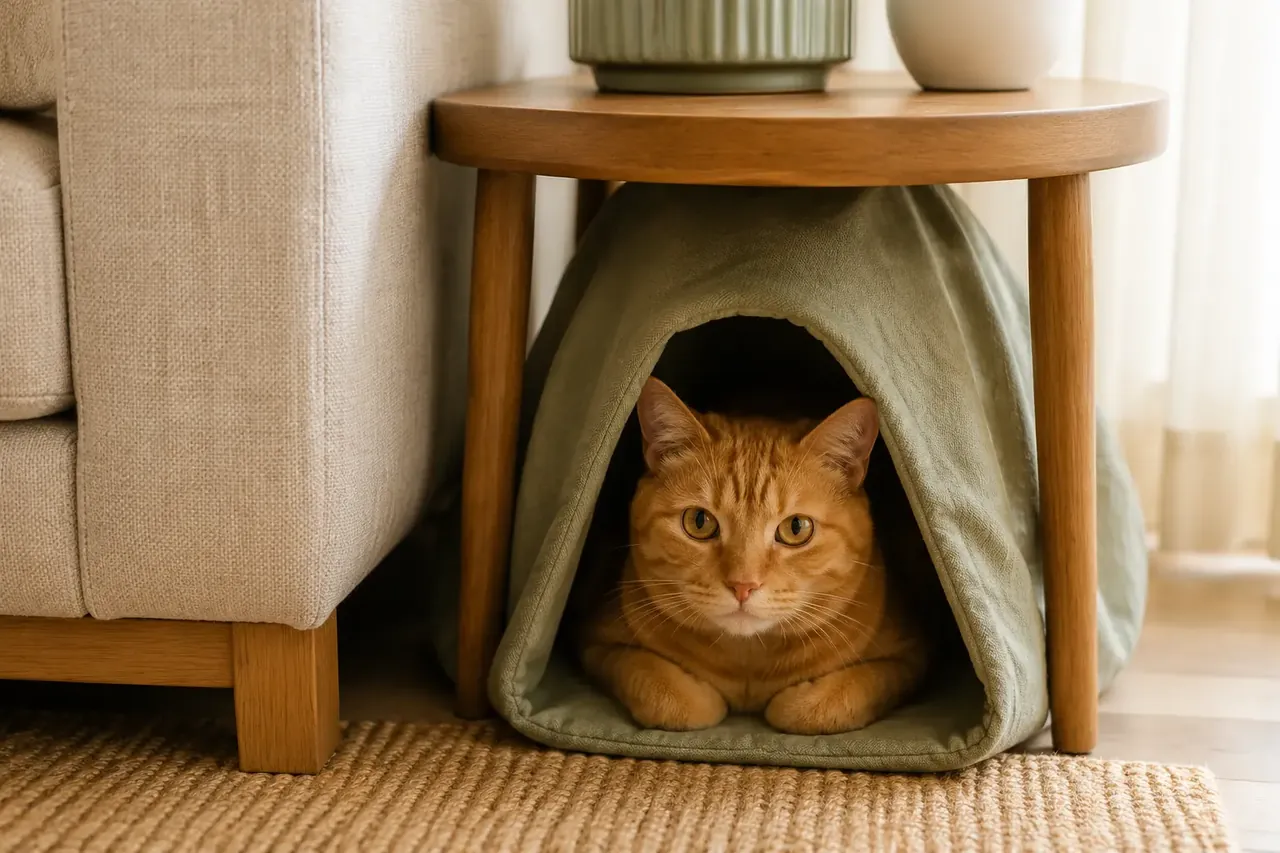 Topic illustration selected for this guide. Some learning images may be AI-assisted.
Helping your cat settle after your vacation — the quick answer
✓ Scent, feeding, sleep and social patterns changed during the absence, even with excellent care.
✓ Resume normal meals and play, allow the cat to choose contact and avoid forcing a dramatic reunion.
✓ Poor appetite, vomiting, diarrhoea, house-soiling or behaviour that does not settle deserves veterinary advice.
A cat may greet, avoid, vocalise or demand contact when household rhythms return.
The short answer
A cat may greet, avoid, vocalise or demand contact when household rhythms return.
Why it may happen
Scent, feeding, sleep and social patterns changed during the absence, even with excellent care.
Read the whole situation
One behaviour rarely has one guaranteed meaning. Compare it with your cat’s age, health, posture, appetite, litter habits, environment and usual pattern before drawing a conclusion.
What to do now
Resume normal meals and play, allow the cat to choose contact and avoid forcing a dramatic reunion.
What not to do
Avoid punishment, forced handling and sudden large changes. They can add fear while hiding the information that would help you understand the original cause.
When to contact a veterinarian
Poor appetite, vomiting, diarrhoea, house-soiling or behaviour that does not settle deserves veterinary advice.
Keep a useful record
Write down when it started, how often it happens and what immediately precedes and follows it. Photos, weights or short videos can make a veterinary or behaviour consultation more productive.
What to check first
Temporary extra following, hiding or vocalising may reflect adjustment, but appetite, urine, stool and physical health should remain normal. Ask the caregiver about any change that began while you were away.
DEEPER GUIDE1 more detailed sectionsOpen +
What to do next
Unpack gradually, return resources to normal positions and use short familiar play sessions. Avoid forcing cuddles or compensating with large meals and many new treats. Poor appetite, repeated vomiting, urinary changes, pain or behaviour that persists or worsens needs veterinary assessment.
Your quick checklist
Your progress is saved on this device.
Three simple things you can do
You do not have to change everything today. Pick one step that feels realistic, try it and see how your cat responds.
- 1Resume familiar meals, play and sleep timing without forcing contact.
- 2Let the cat investigate luggage and returning scents at its own pace.
- 3Monitor appetite, litter use and social behaviour for several days.
Common mistakes
×Overwhelming the cat with prolonged handling.
×Changing food or furniture immediately on return.
×Assuming withdrawal is spite.
Questions cat people ask
Why is my cat distant after vacation?+
Changed scent, altered routines and the caregiver arrangement can require readjustment. Distance is usually uncertainty, not punishment.
How long until the cat is normal again?+
Many settle within hours or days. Persistent appetite loss, house-soiling, hiding or illness signs deserve veterinary advice.
Still looking for the right answer?
Search the full EverYes Cats encyclopedia with your own words — a symptom, food, behaviour, breed or everyday question.
Checked, dated and transparent
- Prepared by
- EverYes Cats editorial team
- Last updated
- 14 August 2026
- Source checked
- 14 August 2026
- Primary reference
- International Cat Care ↗
We begin with the named reference, rewrite the information in plain language and add practical cat-parent steps. Urgent health statements are checked against veterinary sources. This guide has not been individually reviewed by a veterinarian unless explicitly stated. It provides education, not diagnosis or treatment.
Spotted something unclear or outdated? Tell us so we can review it.
Your answer helps us improve the cat encyclopedia.
A top-opening carrier can reduce struggling because the cat can be lowered in and examined with less pulling, provided every latch is strong and secure.