How to reduce stress in a veterinary waiting room
Reduce waiting-room stress by keeping the carrier closed, elevated and partly covered while increasing distance from unfamiliar animals whenever possible.
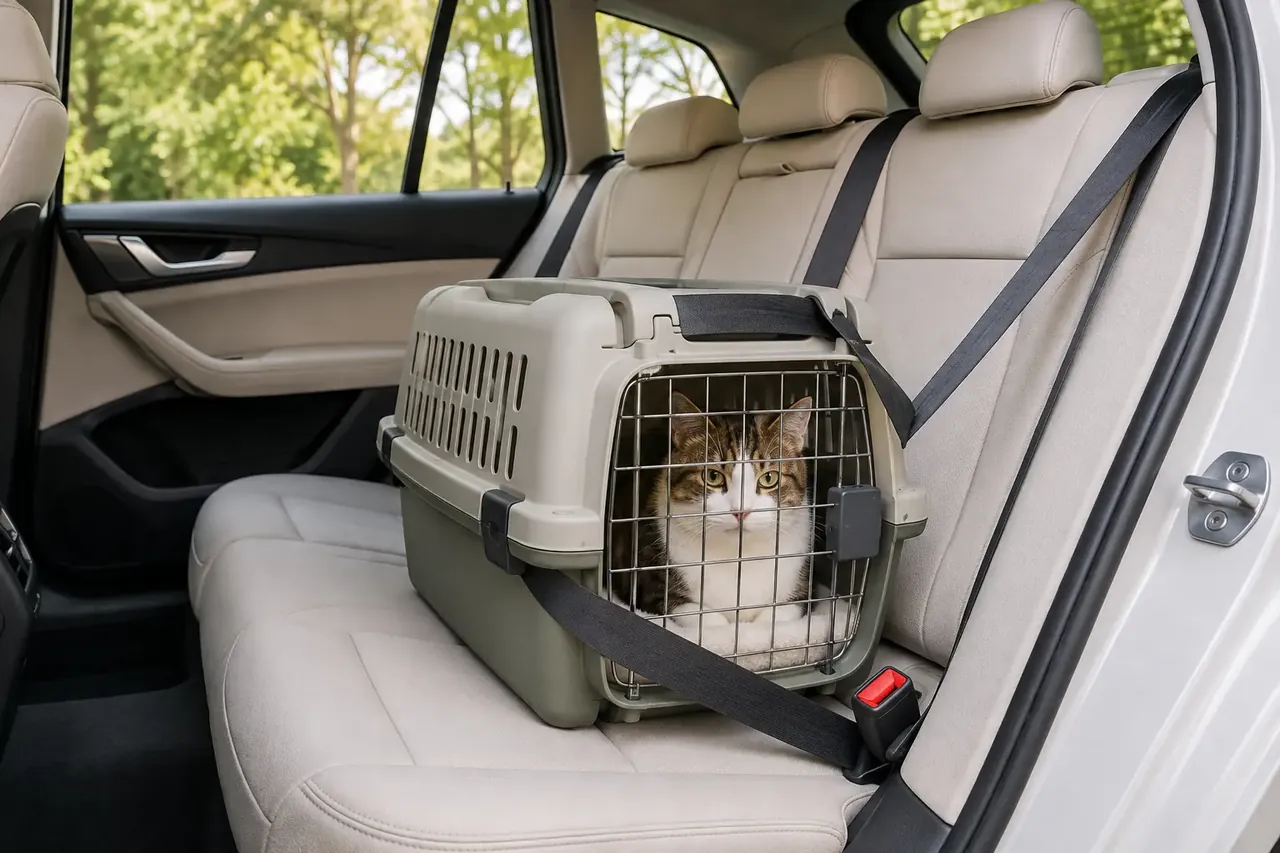 Topic illustration selected for this guide. Some learning images may be AI-assisted.
How to reduce stress in a veterinary waiting room — the quick answer
✓ Height, covering and distance from unfamiliar animals can protect a cat’s sense of safety
✓ Ask about waiting in the car when safe, use a carrier cover and place it on a stable raised surface.
✓ Never leave a cat in a hot or cold vehicle while waiting.
Height, covering and distance from unfamiliar animals can protect a cat’s sense of safety. A carrier on the floor near dogs creates sights, smells and vibration the cat cannot escape. This guide separates the useful observation from guesswork and gives you one safe next step.
Protect height, distance and visual cover
A secured carrier can feel safer when it is raised from the floor and shielded from unfamiliar animals.
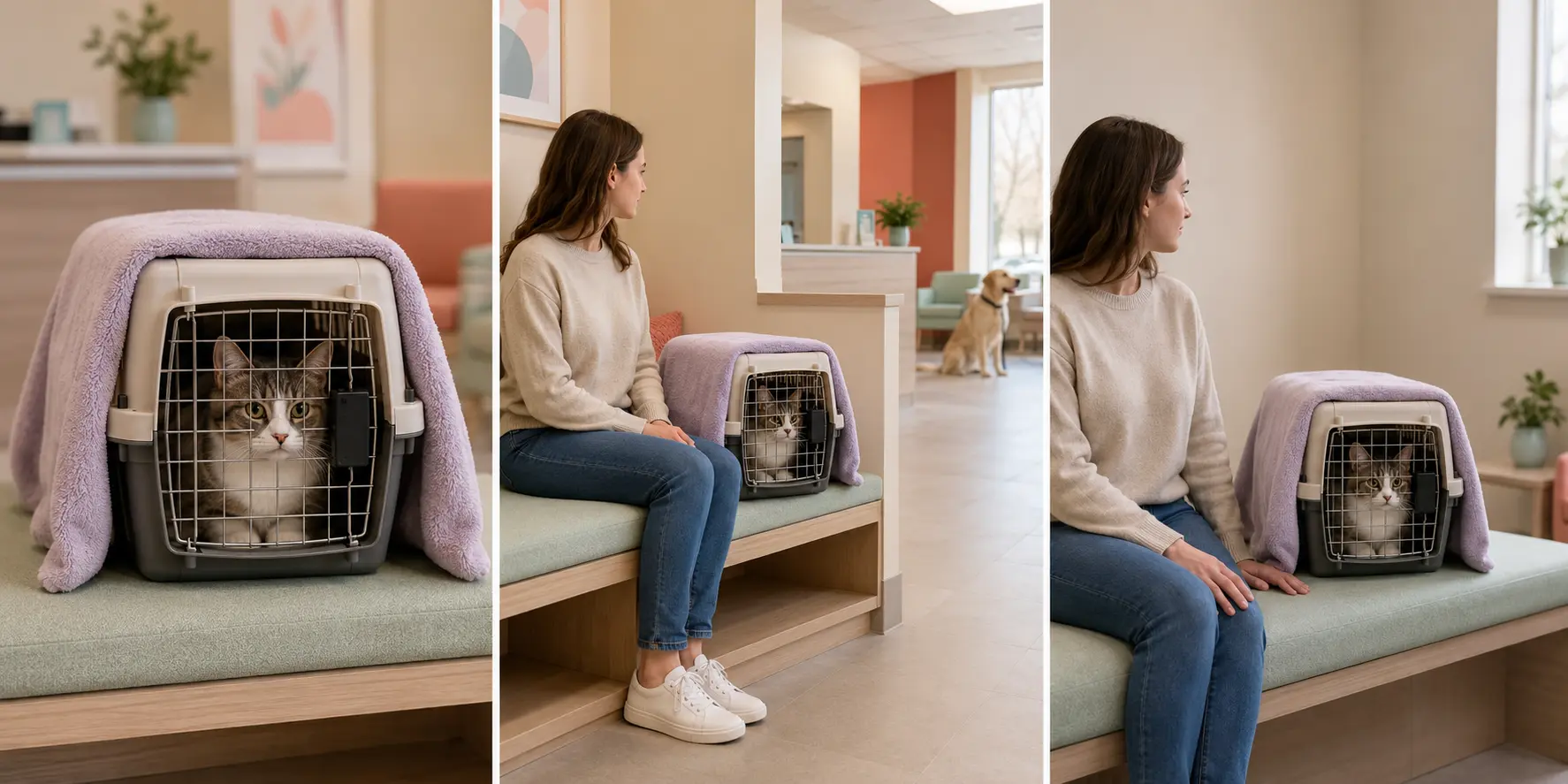
- 1Add breathable cover
Cover the top and sides with a light familiar towel while keeping the front and ventilation openings clear.
- 2Raise the carrier securely
Place the closed carrier on a broad stable bench beside you, never balanced or left on the floor near dogs.
- 3Ask for quieter waiting
When possible, request a separated area or direct room and keep the carrier closed, level and covered.
The clear answer
Height, covering and distance from unfamiliar animals can protect a cat’s sense of safety. A carrier on the floor near dogs creates sights, smells and vibration the cat cannot escape.
What to observe in your own cat
Check identification, carrier security, temperature, water, litter, medication and every door before the journey changes. Height, covering and distance from unfamiliar animals can protect a cat’s sense of safety.
Why two cats may look different
Age, health, body shape, early experience, confidence and the immediate environment all affect what owners see. A common pattern can still deserve attention when it is new or different for this individual cat.
Make the home support the answer
Practise the carrier and care routine before the real trip. Keep written feeding, medication and emergency instructions with the cat, and never open containment beside an unsecured exit.
A practical next step
Ask about waiting in the car when safe, use a carrier cover and place it on a stable raised surface. Keep the change small and easy to reverse, then compare the same facts again rather than relying on memory.
What not to do
Do not punish, frighten, force handling or remove every familiar option at once. Avoid using a general explanation to dismiss a sudden change in health or behaviour.
Warning signs and veterinary help
Never leave a cat in a hot or cold vehicle while waiting.
Source and limits
This educational guide is informed by International Cat Care. It can help you observe and prepare useful information, but it cannot examine your cat, diagnose a condition or replace individual veterinary advice.
DEEPER GUIDE2 more detailed sectionsOpen +
What to check first
Monitor breathing, posture, vocalising, drooling and temperature. Ask the clinic about a quieter waiting option before opening anything.
What to do next
Face the carrier away from dogs, keep vents uncovered and use the clinic's instructions for waiting in another area or the car when conditions are safe. Open-mouth breathing, collapse or severe distress needs immediate staff attention; never open the carrier in an unsecured space.
Your quick checklist
Your progress is saved on this device.
Three simple things you can do
You do not have to change everything today. Pick one step that feels realistic, try it and see how your cat responds.
- 1Ask whether you can wait in the car or a quiet area.
- 2Keep the carrier covered lightly while preserving airflow.
- 3Place it on a stable raised surface rather than the floor near dogs.
Common mistakes
×Opening the carrier to comfort the cat.
×Allowing unfamiliar animals to approach the door.
×Balancing the carrier on a chair where it can fall.
Questions cat people ask
How can I reduce stress in a veterinary waiting room?+
Increase distance from other animals, keep the carrier stable and partly covered, and ask staff about quieter waiting options.
Should I let my cat out in the examination room?+
Only after staff confirm the room is secure. Many cats do better when the carrier top is removed and they can remain on familiar bedding.
Still looking for the right answer?
Search the full EverYes Cats encyclopedia with your own words — a symptom, food, behaviour, breed or everyday question.
Checked, dated and transparent
- Prepared by
- EverYes Cats editorial team
- Last updated
- 14 August 2026
- Source checked
- 14 August 2026
- Primary reference
- International Cat Care ↗
We begin with the named reference, rewrite the information in plain language and add practical cat-parent steps. Urgent health statements are checked against veterinary sources. This guide has not been individually reviewed by a veterinarian unless explicitly stated. It provides education, not diagnosis or treatment.
Spotted something unclear or outdated? Tell us so we can review it.
Your answer helps us improve the cat encyclopedia.
Door movement can be separated into tiny rewarded steps before it predicts travel..