Why does my cat pee outside the litter box only at night?
Night-only urination outside the box can reveal darkness, access difficulty or quiet blocking, but urinary disease must be ruled out first.
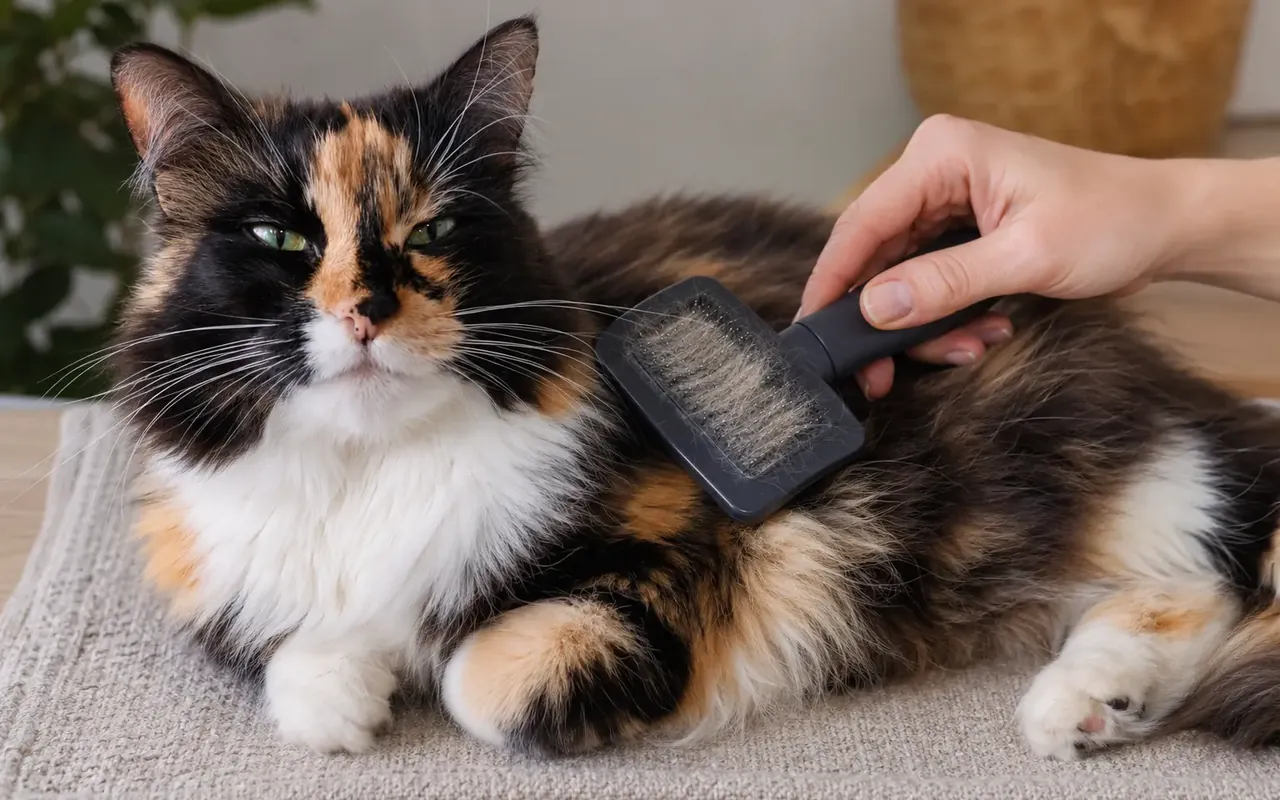 Topic illustration selected for this guide. Some learning images may be AI-assisted.
Why does my cat pee outside the litter box only at night — the quick answer
✓ Arrange veterinary assessment for a new pattern
✓ Add an easy-access box and night light
✓ Treat straining with little or no urine as an emergency
The timing is useful evidence, but it does not prove a behavioral cause. Darkness, a closed door, another cat guarding the route, stairs or nighttime pain may change access. Urinary inflammation and other medical problems can also appear as house-soiling.
Start with urinary safety
Repeated box visits, straining, crying, licking, blood, vomiting or producing little to no urine require urgent veterinary help. A blockage can be life-threatening, particularly in male cats.
Recreate the nighttime route
At the time accidents occur, check doors, stairs, lighting, noise and whether another pet occupies the route. A low-entry box close to the sleeping area may reveal an access problem.
Improve the litter setup
Use large uncovered boxes with familiar unscented litter, scoop daily and place options in separate quiet locations. One box per cat plus one extra is a practical starting point.
Clean and document
Use a material-compatible urine cleaner and prevent repeat access while the cause is addressed. Photograph locations and keep a diary of timing, urine amount, food, water and interactions for the veterinarian.
What to check first
Recreate the route at the time accidents happen. Check closed doors, stairs, lighting, another cat’s position, entry height and the amount and location of urine.
What to do next
Arrange a veterinary assessment and add a large low-entry box near the nighttime area with familiar unscented litter and soft route lighting. Repeated attempts, crying, blood or little to no urine is an emergency, particularly in a male cat.
Your quick checklist
Your progress is saved on this device.
Three simple things you can do
You do not have to change everything today. Pick one step that feels realistic, try it and see how your cat responds.
- 1Contact a veterinarian about a new pattern.
- 2Add a low-entry box and night light close to the sleeping area.
- 3Observe routes and subtle blocking between cats.
Common mistakes
×Punishing the cat.
×Assuming timing proves a behavioral cause.
×Waiting when the cat strains with little urine.
Questions cat people ask
Can darkness make a cat avoid the litter box?+
Reduced vision, stairs, closed doors or conflict may make the route harder at night, especially for older cats.
Is peeing outside the box an emergency?+
Straining, repeated attempts, crying or producing little to no urine requires urgent veterinary care.
Still looking for the right answer?
Search the full EverYes Cats encyclopedia with your own words — a symptom, food, behaviour, breed or everyday question.
Checked, dated and transparent
- Prepared by
- EverYes Cats editorial team
- Last updated
- 14 August 2026
- Source checked
- 14 August 2026
- Primary reference
- Cornell Feline Health Center ↗
We begin with the named reference, rewrite the information in plain language and add practical cat-parent steps. Urgent health statements are checked against veterinary sources. This guide has not been individually reviewed by a veterinarian unless explicitly stated. It provides education, not diagnosis or treatment.
Spotted something unclear or outdated? Tell us so we can review it.
Your answer helps us improve the cat encyclopedia.
A senior cat missing the litter box needs a veterinary check and an easier setup. Pain, urgency, constipation, cognitive change and difficult access can all contribute.