How to make a hotel room safer for a travelling cat
Before opening the carrier in a hotel room, inspect every door, window, gap, appliance and hiding space. Create one controlled base area and prevent housekeeping entry.
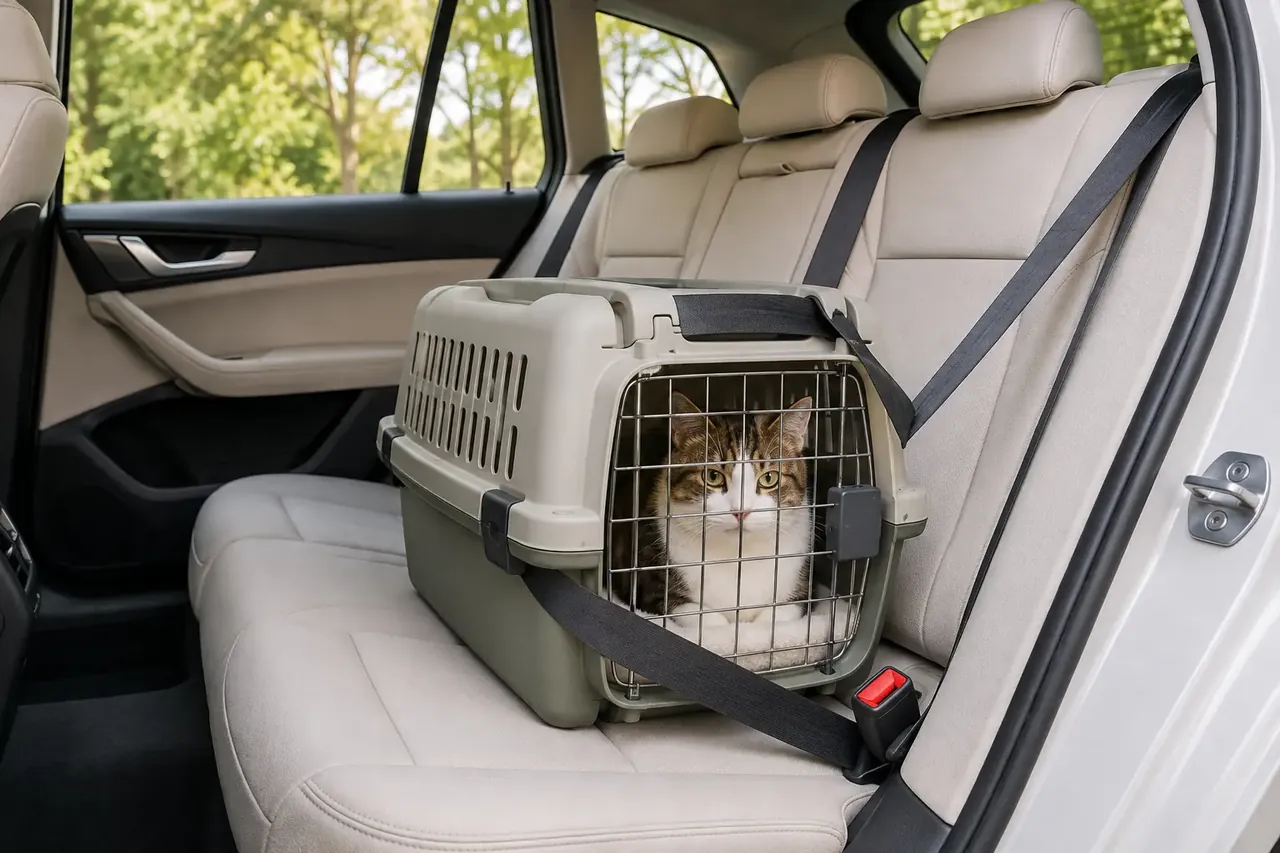 Topic illustration selected for this guide. Some learning images may be AI-assisted.
How to make a hotel room safer for a travelling cat — the quick answer
✓ A careful room inspection must happen before the carrier opens
✓ Close the bathroom and entry, block unsafe gaps, set up litter and water, then open the carrier only inside.
✓ Escape, suspected ingestion, breathing trouble or severe distress requires immediate local help.
A careful room inspection must happen before the carrier opens. Beds, cabinets, vents, doors and cleaning products can create hiding or escape risks.
The short answer
A careful room inspection must happen before the carrier opens. Beds, cabinets, vents, doors and cleaning products can create hiding or escape risks.
What to observe first
Compare the moment with your cat’s usual pattern. Note timing, frequency, body language, appetite, litter-box use, mobility and any recent household change.
Why the setting matters
Beds, cabinets, vents, doors and cleaning products can create hiding or escape risks. One isolated detail rarely explains behaviour or health on its own, so look at the whole cat and the immediate environment.
What you can do
Close the bathroom and entry, block unsafe gaps, set up litter and water, then open the carrier only inside.
A gentle way to test it
Make one small safe adjustment and give the cat time and choice. Avoid punishment, forced handling and several changes at once, because they make the response harder to understand.
When to contact a veterinarian
Escape, suspected ingestion, breathing trouble or severe distress requires immediate local help.
Prepare useful information
Write down when it began and how often it occurs. A short video, clear photo, food record or litter record can help a veterinary professional assess a pattern that may not appear during the appointment.
Run a floor-to-ceiling room check
Confirm windows and balcony doors lock, block dangerous gaps behind furniture, close toilet lids and remove cords, chemicals, plants and small objects. Check inside reclining furniture and under cabinets before release.
DEEPER GUIDE1 more detailed sectionsOpen +
Protect the door and routine
Use the room's privacy sign and a written door warning where allowed, and keep the cat secured during any staff entry. Set up familiar food, water, litter, bedding and hiding before opening the carrier. Update identification before travel.
Your quick checklist
Your progress is saved on this device.
Three simple things you can do
You do not have to change everything today. Pick one step that feels realistic, try it and see how your cat responds.
- 1Inspect gaps, windows, furniture and cords before opening the carrier.
- 2Set up litter, water, hiding and a door warning first.
- 3Keep identification current and the carrier accessible.
Common mistakes
×Opening the room door with the cat loose.
×Leaving a balcony unsecured.
×Allowing housekeeping entry unexpectedly.
Questions cat people ask
How do I make a hotel room safe for a cat?+
Inspect first, block hazards, secure exits and create one calm resource area before release.
Should a cat stay alone in a hotel room?+
Only if hotel rules allow it and the cat is settled; use a door notice and coordinate staff access.
Still looking for the right answer?
Search the full EverYes Cats encyclopedia with your own words — a symptom, food, behaviour, breed or everyday question.
Checked, dated and transparent
- Prepared by
- EverYes Cats editorial team
- Last updated
- 13 August 2026
- Source checked
- 13 August 2026
- Primary reference
- Cats Protection ↗
We begin with the named reference, rewrite the information in plain language and add practical cat-parent steps. Urgent health statements are checked against veterinary sources. This guide has not been individually reviewed by a veterinarian unless explicitly stated. It provides education, not diagnosis or treatment.
Spotted something unclear or outdated? Tell us so we can review it.
Your answer helps us improve the cat encyclopedia.
A cat should stand, turn and lie naturally without being thrown around in excess space. A calm, practical guide to what it means and what to do next.