The truth about a cat's 'floating' collarbones
A cat's small clavicles are embedded in muscle rather than forming a rigid bony connection between shoulder and chest. This mobile shoulder arrangement contributes to stride length and flexibility, but it does not let every cat fit through any opening its head enters.
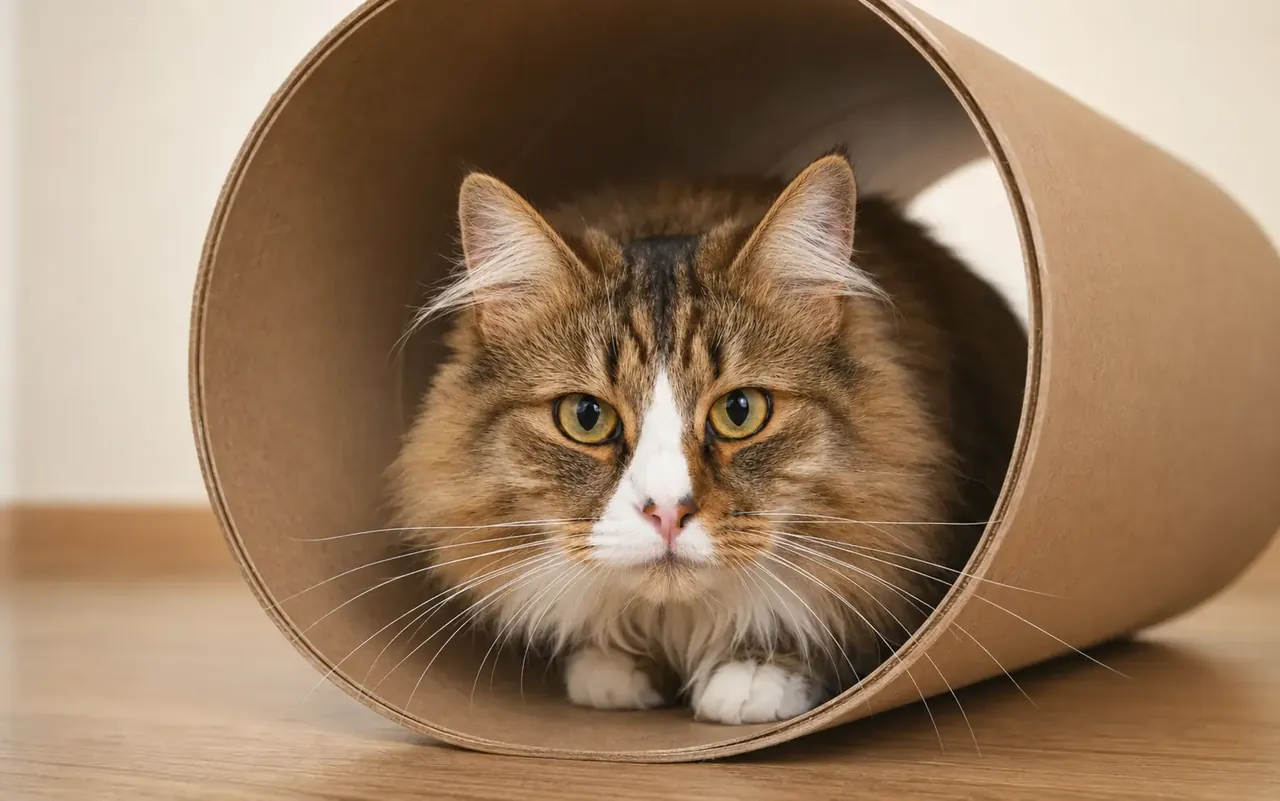
 Topic illustration selected for this guide. Some learning images may be AI-assisted.
The truth about a cat's 'floating' collarbones — the quick answer
✓ Reduced clavicles do not rigidly connect the shoulder blade to the chest as in people.
✓ Judge openings by the whole body, not just the head or whiskers.
✓ Shoulder pain or inability to bear weight needs examination.
Reduced clavicles do not rigidly connect the shoulder blade to the chest as in people. Free shoulder movement lengthens the stride and helps the body pass through narrow gaps. This guide keeps the fascinating detail while separating observation, evidence and internet exaggeration.
What floating collarbones means
The clavicles are present, but they do not brace the shoulder girdle against the breastbone as human collarbones do. Muscles suspend and stabilise the front of the body, allowing the shoulder blades to move along the chest wall.
Read the whole cat
Mobile shoulders help lengthen the stride, absorb landing forces and let the front limbs reposition during climbing and stalking. The spine, ribs, soft tissues and individual body condition still limit how the body moves through space.
What to do at home
Judge tunnels, cat doors and hiding openings by the cat's entire body, not the skull or whiskers alone. Choose rigid openings that cannot collapse, trap the chest or catch a collar, and supervise unfamiliar enrichment.
What this does not prove
Cats are flexible, not liquid. A frightened cat can force into a dangerous gap and become stuck, while an overweight, pregnant, broad-chested or injured cat may need much more clearance than expected.
When to contact a veterinarian
Shoulder pain, an uneven stride, swelling, reluctance to bear weight, reduced jumping or a limb held abnormally needs examination. After entrapment or a hard fall, breathing difficulty or collapse is an emergency.
Your quick checklist
Loading saved progress…
Three simple things you can do
You do not have to change everything today. Pick one step that feels realistic, try it and see how your cat responds.
- 1Observe your cat’s individual baseline.
- 2Make one gentle change at a time.
- 3Ask a qualified professional when health or safety is involved.
Common mistakes
×Waiting for a dramatic symptom instead of noticing smaller changes from the cat’s normal routine.
×Changing several things at once, making it difficult to learn what actually helped.
×Treating general guidance as a substitute for advice from a veterinarian who knows the individual cat.
Questions cat people ask
Does every cat follow the same rule?+
No. Age, health, history, temperament and environment all change what works for an individual.
When should I seek professional help?+
Seek veterinary advice for sudden, persistent or concerning changes and urgent help for breathing difficulty, collapse, seizures, poisoning or urinary obstruction signs.
Still looking for the right answer?
Search the full EverYes Cats encyclopedia with your own words — a symptom, food, behaviour, breed or everyday question.
Checked, dated and transparent
- Prepared by
- EverYes Cats editorial team
- Last updated
- Source checked
- Primary reference
- Merck Veterinary Manual ↗
We begin with the named reference, rewrite the information in plain language and add practical cat-parent steps. Urgent health statements are checked against veterinary sources. This guide has not been individually reviewed by a veterinarian unless explicitly stated. It provides education, not diagnosis or treatment.
How we choose and use sources →
Spotted something unclear or outdated? Tell us so we can review it.
Loading your saved choice…
Cats have a very limited ability to detect sweetness because a key part of the usual mammalian sweet-taste receptor does not function in domestic cats. Interest in a sweet food is more likely driven by fat, protein, smell or texture.
 02
 04
 05
 06