How to stop a cat climbing curtains
Curtain climbing is usually an access and enrichment problem, not spite. Prevent falls and provide a safer legal route upward.
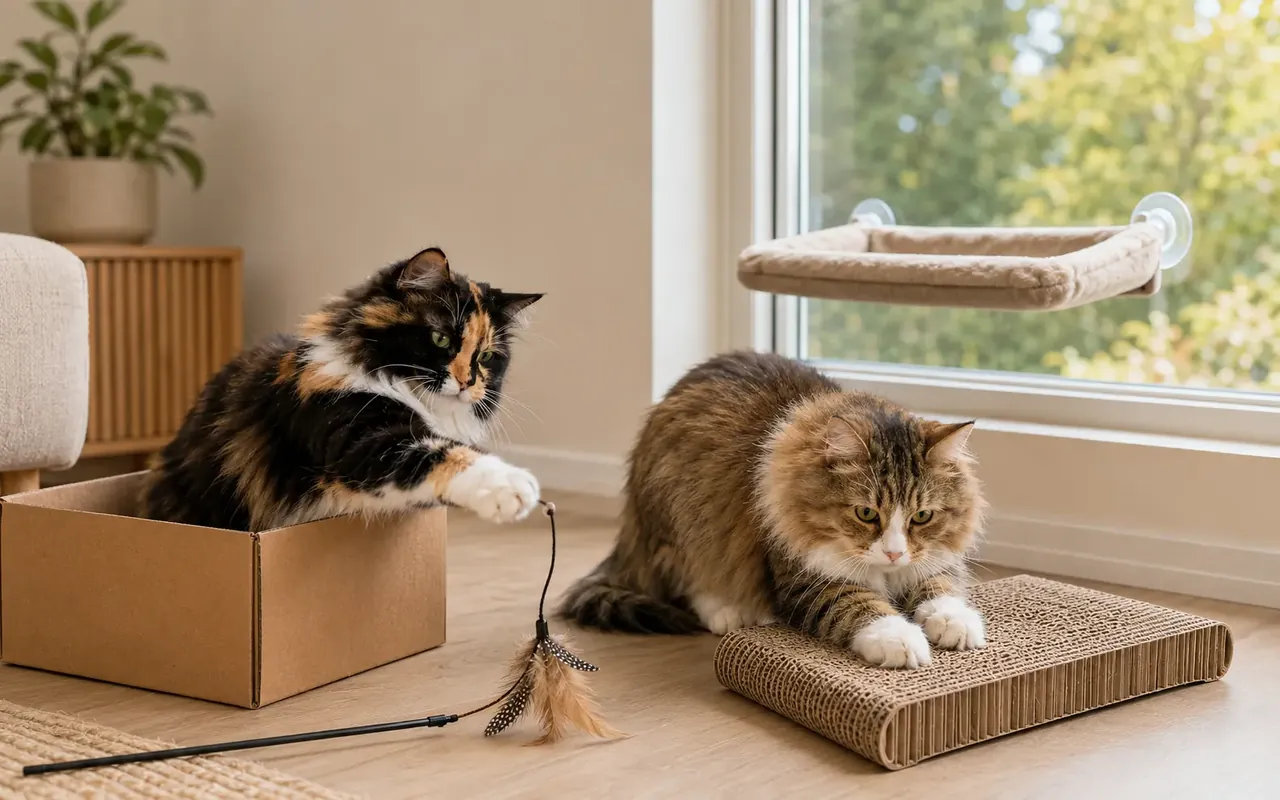 Topic illustration selected for this guide. Some learning images may be AI-assisted.
How to stop a cat climbing curtains — the quick answer
✓ Curtains offer grip, height and movement, so prevention needs a better legal route
✓ Secure cords, restrict access temporarily and place an appealing stable climber nearby with reward-based use.
✓ Falls, torn claws or suspected fabric ingestion needs veterinary advice.
Curtains offer grip, height and movement, so prevention needs a better legal route. Young cats may climb before they have learned safer ways to reach elevation. This guide separates the useful observation from guesswork and gives you one safe next step.
The clear answer
Curtains offer grip, height and movement, so prevention needs a better legal route. Young cats may climb before they have learned safer ways to reach elevation.
What to observe in your own cat
Curtains offer grip, height and movement, so prevention needs a better legal route. Observe the real situation without recreating or exaggerating it. Note the setting, the cat's posture and how quickly ordinary behaviour returns.
Why two cats may look different
Age, health, body shape, early experience, confidence and the immediate environment all affect what owners see. A common pattern can still deserve attention when it is new or different for this individual cat.
Make the home support the answer
Make the activity easy enough for the cat to succeed, use stable materials and preserve a clear exit. Supervise new equipment and remove string, damaged parts or food residue after use.
A practical next step
Secure cords, restrict access temporarily and place an appealing stable climber nearby with reward-based use. Keep the change small and easy to reverse, then compare the same facts again rather than relying on memory.
What not to do
Do not punish, frighten, force handling or remove every familiar option at once. Avoid using a general explanation to dismiss a sudden change in health or behaviour.
Warning signs and veterinary help
Falls, torn claws or suspected fabric ingestion needs veterinary advice.
Source and limits
This educational guide is informed by International Cat Care. It can help you observe and prepare useful information, but it cannot examine your cat, diagnose a condition or replace individual veterinary advice.
DEEPER GUIDE2 more detailed sectionsOpen +
What to check first
Check curtain rails, cords, nearby furniture and when climbing occurs. Kittens may be especially driven by movement and height.
What to do next
Tie curtains safely out of reach, secure or replace unstable fittings, add a sturdy tall cat tree and schedule climbing and chase play. A fall, breathing problem from entanglement, limping or suspected swallowed fabric needs prompt veterinary care.
Your quick checklist
Your progress is saved on this device.
Three simple things you can do
You do not have to change everything today. Pick one step that feels realistic, try it and see how your cat responds.
- 1Secure curtain cords and remove unstable climbable fabric during training.
- 2Place a tall sturdy cat tree near the motivating view.
- 3Reward the legal climbing route before the cat reaches the curtain.
Common mistakes
×Pulling the cat down by the body or tail.
×Using spray bottles or startling traps.
×Providing only a short scratching post as an alternative.
Questions cat people ask
Why does my cat climb the curtains?+
Height, movement, texture, play and access to a window can make curtains highly rewarding, especially for kittens.
Will a kitten grow out of curtain climbing?+
Activity often changes with age, but a rehearsed habit can persist. Prevent access and make a safer tall route easier and more rewarding.
Still looking for the right answer?
Search the full EverYes Cats encyclopedia with your own words — a symptom, food, behaviour, breed or everyday question.
Checked, dated and transparent
- Prepared by
- EverYes Cats editorial team
- Last updated
- 14 August 2026
- Source checked
- 14 August 2026
- Primary reference
- International Cat Care ↗
We begin with the named reference, rewrite the information in plain language and add practical cat-parent steps. Urgent health statements are checked against veterinary sources. This guide has not been individually reviewed by a veterinarian unless explicitly stated. It provides education, not diagnosis or treatment.
Spotted something unclear or outdated? Tell us so we can review it.
Your answer helps us improve the cat encyclopedia.
A familiar box offers known scent, firm edges and protection, while a new bed may smell unfamiliar. Learn what to observe, what to try safely and when to seek help.