How to space wall shelves for a cat
Cat shelves need short achievable gaps, generous landing surfaces and a route down as well as up. Spacing should suit the individual cat, not an ideal athlete.
 Topic illustration selected for this guide. Some learning images may be AI-assisted.
How to space wall shelves for a cat — the quick answer
✓ Short reachable transitions and wide landing zones are safer than dramatic jumps
✓ Mock up routes at low height, use non-slip surfaces and include more than one way down.
✓ Never encourage a cat to jump through pain or repeated hesitation.
Short reachable transitions and wide landing zones are safer than dramatic jumps. Age, size, grip and confidence change the distance each cat can manage. This guide separates the useful observation from guesswork and gives you one safe next step.
Plan the route before drilling
Safe shelf spacing depends on the individual cat's size, age, grip and confidence—not a dramatic maximum jump.
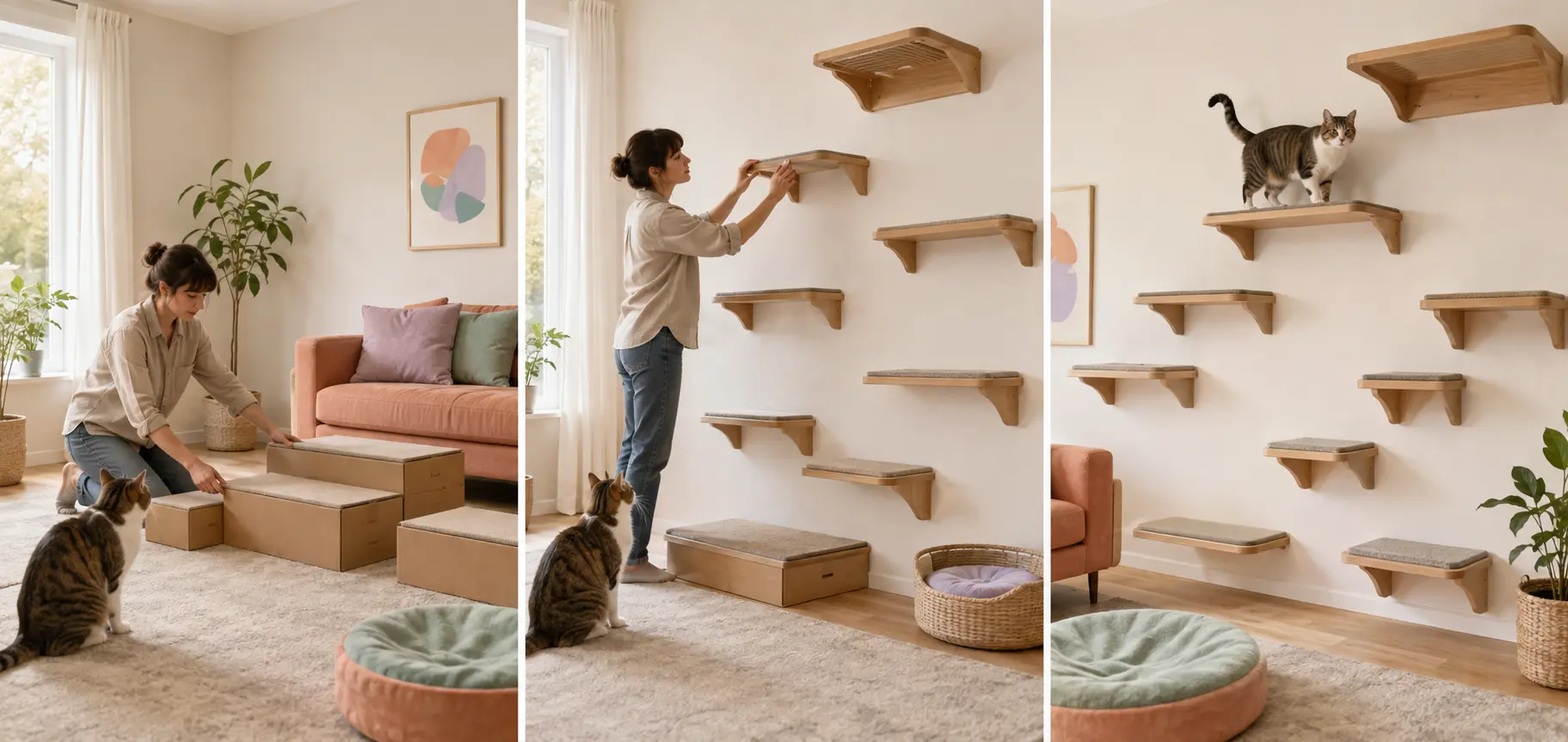
- 1Mock it up at floor level
Test short transitions with broad stable platforms and let your cat explore voluntarily before choosing wall positions.
- 2Secure every landing
Use wide non-slip shelves fixed into suitable structure, and keep the cat away until every attachment is complete.
- 3Create more than one way down
Stagger reachable landings and include an alternate descent route so the cat is never trapped at the highest point.
The clear answer
Short reachable transitions and wide landing zones are safer than dramatic jumps. Age, size, grip and confidence change the distance each cat can manage.
What to observe in your own cat
Short reachable transitions and wide landing zones are safer than dramatic jumps. Observe the real situation without recreating or exaggerating it. Note the setting, the cat's posture and how quickly ordinary behaviour returns.
Why two cats may look different
Age, health, body shape, early experience, confidence and the immediate environment all affect what owners see. A common pattern can still deserve attention when it is new or different for this individual cat.
Make the home support the answer
Make the activity easy enough for the cat to succeed, use stable materials and preserve a clear exit. Supervise new equipment and remove string, damaged parts or food residue after use.
A practical next step
Mock up routes at low height, use non-slip surfaces and include more than one way down. Keep the change small and easy to reverse, then compare the same facts again rather than relying on memory.
What not to do
Do not punish, frighten, force handling or remove every familiar option at once. Avoid using a general explanation to dismiss a sudden change in health or behaviour.
Warning signs and veterinary help
Never encourage a cat to jump through pain or repeated hesitation.
Source and limits
This educational guide is informed by AAHA/AAFP Feline Life Stage Guidelines. It can help you observe and prepare useful information, but it cannot examine your cat, diagnose a condition or replace individual veterinary advice.
DEEPER GUIDE2 more detailed sectionsOpen +
What to check first
Assess age, body size, joint comfort, vision and confidence. Watch natural jumps before deciding height or distance.
What to do next
Begin with low broad platforms, add non-slip surfaces and create alternate steps so the cat never has to reverse from a dead end. New missed jumps, hesitation, stiffness or falls needs veterinary assessment before increasing difficulty.
Your quick checklist
Your progress is saved on this device.
Three simple things you can do
You do not have to change everything today. Pick one step that feels realistic, try it and see how your cat responds.
- 1Use short reachable gaps with wide non-slip landings.
- 2Include an easy route down rather than requiring a jump to the floor.
- 3Adjust spacing for age, size and mobility.
Common mistakes
×Copying athletic-cat measurements for every cat.
×Using narrow smooth shelves.
×Creating a route with only one entrance and exit.
Questions cat people ask
How far apart should cat wall shelves be?+
There is no universal measurement. The cat should step or make an easy controlled jump with secure take-off and landing, often using closer spacing vertically than expected.
How wide should a cat shelf be?+
Wide enough for the individual to turn and rest without overhang, with extra space for seniors, large cats and shared routes.
Still looking for the right answer?
Search the full EverYes Cats encyclopedia with your own words — a symptom, food, behaviour, breed or everyday question.
Checked, dated and transparent
- Prepared by
- EverYes Cats editorial team
- Last updated
- 14 August 2026
- Source checked
- 14 August 2026
- Primary reference
- AAHA/AAFP Feline Life Stage Guidelines ↗
We begin with the named reference, rewrite the information in plain language and add practical cat-parent steps. Urgent health statements are checked against veterinary sources. This guide has not been individually reviewed by a veterinarian unless explicitly stated. It provides education, not diagnosis or treatment.
Spotted something unclear or outdated? Tell us so we can review it.
Your answer helps us improve the cat encyclopedia.
An open-plan room feels safer when a cat can cross it using edges, height, cover and more than one route. Break exposed space into connected zones instead of placing every resource around the walls at random.