Which wildcat is the domestic cat’s ancestor?
Domestic cats descend primarily from the African wildcat lineage, Felis lybica. Genetics connects today's pet cats with wildcat populations from North Africa and the Near East, while later movement with people shaped their global history.
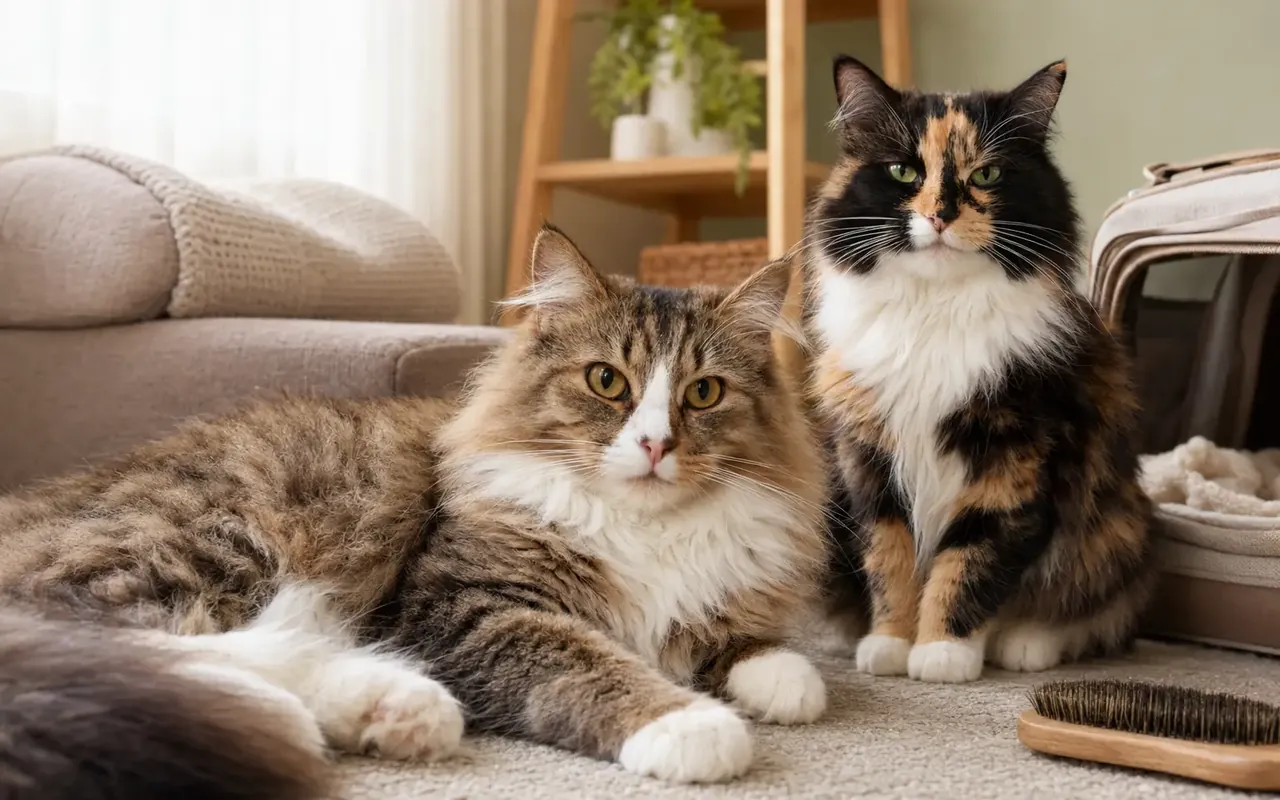 Topic illustration selected for this guide. Some learning images may be AI-assisted.
Which wildcat is the domestic cat’s ancestor — the quick answer
✓ Domestic cats trace most of their ancestry to the Near Eastern/African wildcat lineage
✓ Meet the modern cat’s hunting needs with safe play rather than access to wildlife.
✓ Do not treat a domestic cat as a wild animal that needs to fend for itself.
Domestic cats trace most of their ancestry to the Near Eastern/African wildcat lineage. Living near early farming settlements created opportunities for mutual benefit through rodent control. This guide separates the useful observation from guesswork and gives you one safe next step.
Name the ancestor carefully
The best-supported ancestor is the African wildcat, commonly written Felis lybica, including populations historically described as the Near Eastern wildcat. Older sources may use Felis silvestris lybica. Taxonomic names have changed, so the important point is the lineage rather than treating every label as a different animal.
Separate ancestry from one simple origin story
Genetic and archaeological evidence links domestic cats with African wildcats, but researchers continue to refine where particular populations entered domestic life and how they spread. Evidence from North Africa, the Near East and later human trade should be described as an evolving history, not a single precisely dated event.
Understand the farming-settlement connection
Stored grain attracted rodents around early settlements, and wildcats able to tolerate people could exploit that prey. People benefited from rodent control. This commensal pathway explains a gradual association without claiming that a person deliberately created the first domestic cat in one generation.
Do not confuse a pet cat with a wildcat
Shared ancestry does not make a household cat a wild animal that should fend for itself. Domestication, social experience and individual learning matter. Pet cats still need food, preventive care, safe shelter, identification and protection from traffic, disease, predators and wildlife conflict.
Use ancestry to meet modern needs
Hunting sequences, scent marking, scratching, climbing and territorial awareness remain important behaviours. Provide wand play with a catch, food-search activities, scratching surfaces, hiding and vertical choices. These safe outlets are more useful than romanticising unrestricted hunting outdoors.
Keep conservation in the picture
Domestic cats and wildcats can interbreed where their ranges overlap, complicating wildcat conservation. Free-roaming domestic cats can also hunt wildlife. Secure outdoor enclosures, supervised access and well-designed indoor enrichment can protect the cat and local animals without denying normal behaviour.
Your quick checklist
Loading saved progress…
Three simple things you can do
You do not have to change everything today. Pick one step that feels realistic, try it and see how your cat responds.
- 1Use ancestry to explain hunting and scent behaviour without calling pets wild.
- 2Provide safe outlets through play, scratching and exploration.
- 3Remember that individual cats differ despite shared ancestry.
Common mistakes
×Calling modern pet cats miniature lions.
×Assuming one ancestor explains every behaviour.
×Using natural behaviour as a reason to allow preventable harm.
Questions cat people ask
What animal did domestic cats come from?+
Domestic cats descend primarily from the African and Near Eastern wildcat lineage, often identified as Felis silvestris lybica.
Are domestic cats a separate species?+
Taxonomy varies by authority; they may be listed as Felis catus or as a domestic subspecies. Either way, domestication changed a wildcat lineage through long association with people.
Still looking for the right answer?
Search the full EverYes Cats encyclopedia with your own words — a symptom, food, behaviour, breed or everyday question.
Checked, dated and transparent
- Prepared by
- EverYes Cats editorial team
- Last updated
- Source checked
- Primary reference
- Scientific research: The Near Eastern Origin of Cat Domestication ↗
We begin with the named reference, rewrite the information in plain language and add practical cat-parent steps. Urgent health statements are checked against veterinary sources. This guide has not been individually reviewed by a veterinarian unless explicitly stated. It provides education, not diagnosis or treatment.
How we choose and use sources →
Spotted something unclear or outdated? Tell us so we can review it.
Loading your saved choice…
Most recognised cat breeds are relatively recent populations shaped mainly since organised shows and written standards expanded in the nineteenth and twentieth centuries. A traditional-looking cat is not automatically an unchanged ancient breed.