How long should you play with a cat?
Most cats benefit from several short, satisfying play sessions rather than one exhausting workout. Start with five to ten minutes, then follow your cat's engagement, fitness and recovery.
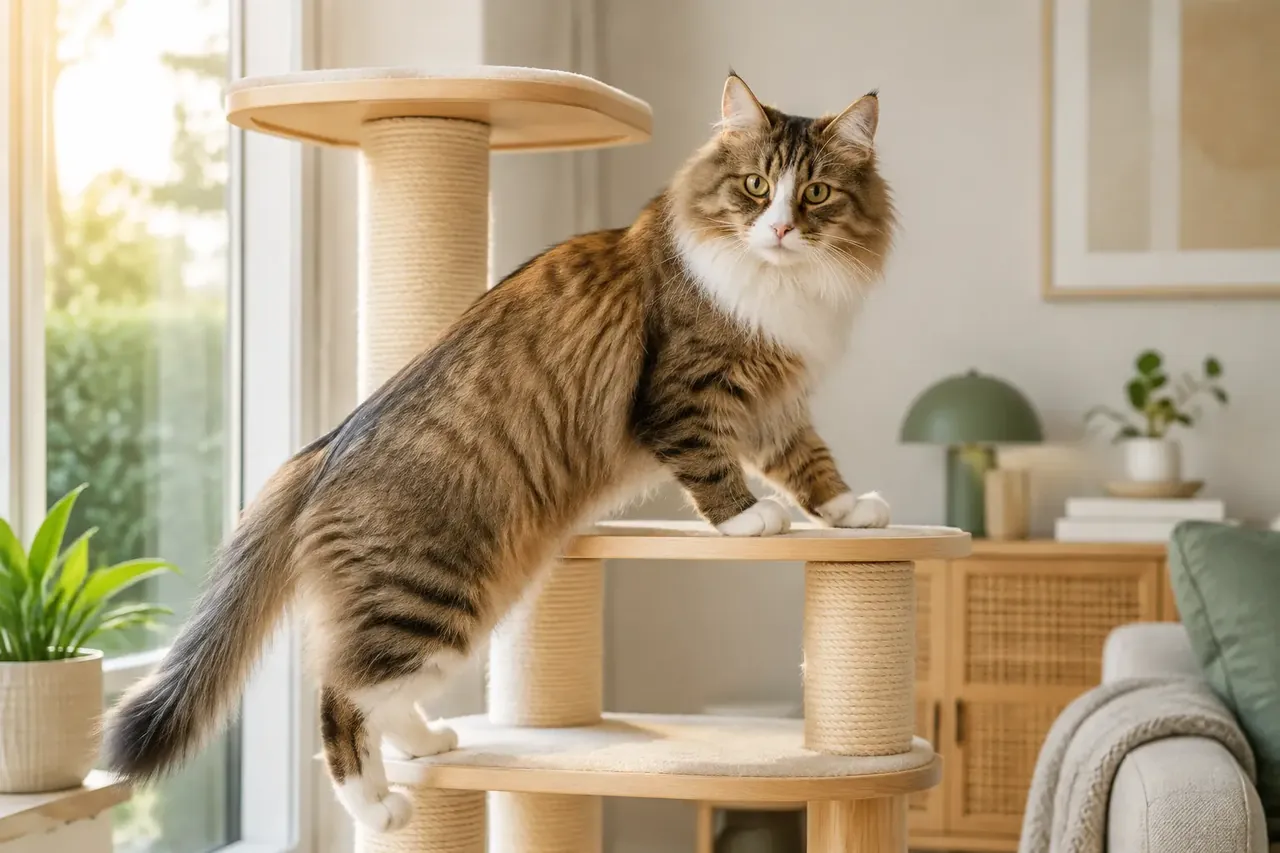 Topic illustration selected for this guide. Some learning images may be AI-assisted.
How long should you play with a cat — the quick answer
✓ Several brief satisfying sessions often suit cats better than one exhausting session
✓ Begin with five to ten minutes, watch engagement and stop after a successful catch while interest remains.
✓ Panting, weakness, coughing or slow recovery means stop and seek veterinary guidance.
Several brief satisfying sessions often suit cats better than one exhausting session. Age, fitness, health and play style matter more than a single minute target.
The short answer
Several brief satisfying sessions often suit cats better than one exhausting session. Age, fitness, health and play style matter more than a single minute target.
What to observe first
Compare the moment with your cat’s usual pattern. Note timing, frequency, body language, appetite, litter-box use, mobility and any recent household change.
Why the setting matters
Age, fitness, health and play style matter more than a single minute target. One isolated detail rarely explains behaviour or health on its own, so look at the whole cat and the immediate environment.
What you can do
Begin with five to ten minutes, watch engagement and stop after a successful catch while interest remains.
A gentle way to test it
Make one small safe adjustment and give the cat time and choice. Avoid punishment, forced handling and several changes at once, because they make the response harder to understand.
When to contact a veterinarian
Panting, weakness, coughing or slow recovery means stop and seek veterinary guidance.
Prepare useful information
Write down when it began and how often it occurs. A short video, clear photo, food record or litter record can help a veterinary professional assess a pattern that may not appear during the appointment.
Let quality decide the length
Move a wand toy away like prey, add hiding and pauses, and allow several catches. Watching and stalking count as participation. Finish while interest remains with a final catch and a small measured food reward rather than chasing the cat until they disengage.
DEEPER GUIDE1 more detailed sectionsOpen +
Adapt play to age and health
Kittens may enjoy frequent brief bursts; seniors and cats with limited mobility may prefer slow floor-level movement from a warm bed. Stop for panting, coughing, weakness, limping or unusually slow recovery and ask a veterinarian about any repeated change.
Your quick checklist
Your progress is saved on this device.
Three simple things you can do
You do not have to change everything today. Pick one step that feels realistic, try it and see how your cat responds.
- 1Begin with 5–10 minutes and let the cat's engagement set the limit.
- 2Use stalking, pauses and a successful catch rather than nonstop movement.
- 3Offer several short sessions at naturally active times.
Common mistakes
×Continuing until the cat pants or becomes frustrated.
×Judging success only by running.
×Using hands as prey.
Questions cat people ask
How long should I play with my cat?+
Many cats prefer several sessions of roughly 5–15 minutes, but age, health and play style matter more than a fixed timer.
How do I know play is finished?+
Interest fades, movements slow or the cat settles after a catch. Persistent open-mouth breathing is not a normal goal and needs immediate rest and possible veterinary advice.
Still looking for the right answer?
Search the full EverYes Cats encyclopedia with your own words — a symptom, food, behaviour, breed or everyday question.
Checked, dated and transparent
- Prepared by
- EverYes Cats editorial team
- Last updated
- 13 August 2026
- Source checked
- 13 August 2026
- Primary reference
- AAHA/AAFP Feline Life Stage Guidelines ↗
We begin with the named reference, rewrite the information in plain language and add practical cat-parent steps. Urgent health statements are checked against veterinary sources. This guide has not been individually reviewed by a veterinarian unless explicitly stated. It provides education, not diagnosis or treatment.
Spotted something unclear or outdated? Tell us so we can review it.
Your answer helps us improve the cat encyclopedia.
Shoes combine strong familiar scent with a small container where objects can be stored. Learn what to observe, what to try safely and when to seek help.