How often should cat toys be rotated?
Rotate a small selection of safe cat toys every few days while leaving favourite comfort toys available. Novelty works best when the play style changes too, not only the object.
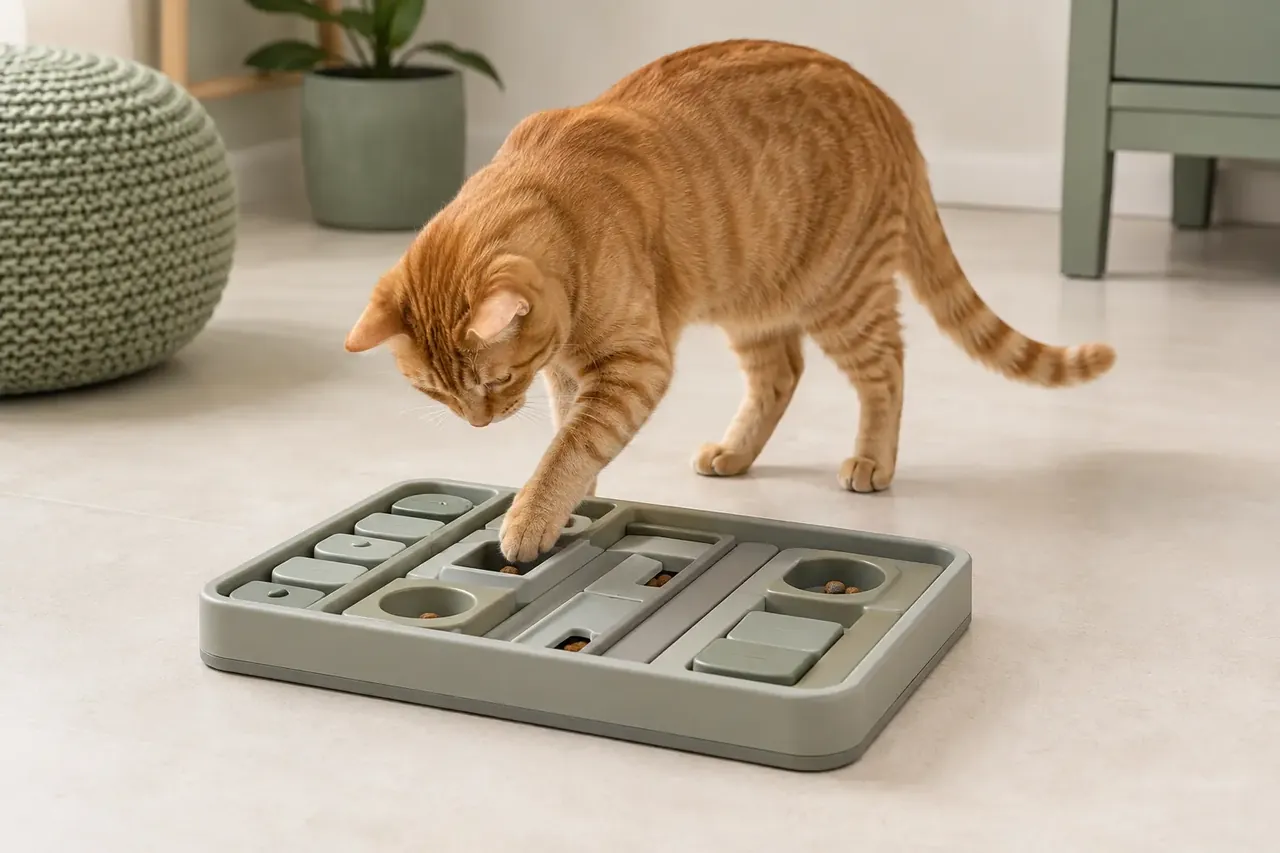 Topic illustration selected for this guide. Some learning images may be AI-assisted.
How often should cat toys be rotated — the quick answer
✓ A small changing selection can renew interest without making the environment unpredictable
✓ Keep three or four safe toys out, store the rest and reintroduce them in varied combinations.
✓ Remove frayed strings, loose parts, damaged batteries and any toy the cat tries to swallow.
A small changing selection can renew interest without making the environment unpredictable. Favourite comfort toys may stay available while active toys rotate every few days.
The short answer
A small changing selection can renew interest without making the environment unpredictable. Favourite comfort toys may stay available while active toys rotate every few days.
What to observe first
Compare the moment with your cat’s usual pattern. Note timing, frequency, body language, appetite, litter-box use, mobility and any recent household change.
Why the setting matters
Favourite comfort toys may stay available while active toys rotate every few days. One isolated detail rarely explains behaviour or health on its own, so look at the whole cat and the immediate environment.
What you can do
Keep three or four safe toys out, store the rest and reintroduce them in varied combinations.
A gentle way to test it
Make one small safe adjustment and give the cat time and choice. Avoid punishment, forced handling and several changes at once, because they make the response harder to understand.
When to contact a veterinarian
Remove frayed strings, loose parts, damaged batteries and any toy the cat tries to swallow.
Prepare useful information
Write down when it began and how often it occurs. A short video, clear photo, food record or litter record can help a veterinary professional assess a pattern that may not appear during the appointment.
Build three simple toy groups
Create small groups that each include something to chase, bat, carry and investigate. Leave three or four safe toys out, store the others and swap a group when interest fades. Wash or wipe toys according to their materials and keep scented favourites when they provide comfort.
DEEPER GUIDE1 more detailed sectionsOpen +
Inspect before every return
Check seams, batteries, elastic, feathers, bells and strings each time a toy comes out of storage. Discard anything frayed or small enough to swallow. Wand toys and loose string should be used only with supervision and put away immediately after the session.
Your quick checklist
Your progress is saved on this device.
Three simple things you can do
You do not have to change everything today. Pick one step that feels realistic, try it and see how your cat responds.
- 1Keep a small varied set available and rotate weekly.
- 2Retain familiar favorites while changing one or two items.
- 3Inspect every toy for loose parts before reuse.
Common mistakes
×Putting every toy out permanently.
×Rotating away the only preferred toy.
×Leaving string toys unattended.
Questions cat people ask
How often should cat toys be rotated?+
A weekly rotation is a useful starting point, but interest matters more than a rigid schedule.
Why does my cat ignore new toys?+
The texture, movement, scent or timing may not suit that individual cat.
Still looking for the right answer?
Search the full EverYes Cats encyclopedia with your own words — a symptom, food, behaviour, breed or everyday question.
Checked, dated and transparent
- Prepared by
- EverYes Cats editorial team
- Last updated
- 13 August 2026
- Source checked
- 13 August 2026
- Primary reference
- International Cat Care ↗
We begin with the named reference, rewrite the information in plain language and add practical cat-parent steps. Urgent health statements are checked against veterinary sources. This guide has not been individually reviewed by a veterinarian unless explicitly stated. It provides education, not diagnosis or treatment.
Spotted something unclear or outdated? Tell us so we can review it.
Your answer helps us improve the cat encyclopedia.
Cats often lose interest when a wand toy becomes predictable, moves toward them or never allows a catch. Short prey-like sessions with hiding, pauses and success usually work better than faster waving.