A cat-safe home cleaning routine
Clean safely around cats by reading labels, ventilating well, keeping cats away from wet products and storing chemicals behind secure doors.
 Topic illustration selected for this guide. Some learning images may be AI-assisted.
A cat-safe home cleaning routine — the quick answer
✓ Cats contact floors and surfaces with paws, then ingest residues while grooming.
✓ Follow labels, ventilate, keep cats away until surfaces are dry and store every product securely.
✓ Drooling, vomiting, breathing change, burns or known exposure requires immediate veterinary or poison-service advice.
Cleaning products vary widely, and natural, scented or essential-oil-based does not automatically mean cat-safe.
Separate, clean, dry and store
Cats contact cleaned surfaces with their paws and later groom them, so access and residue matter as much as the product.
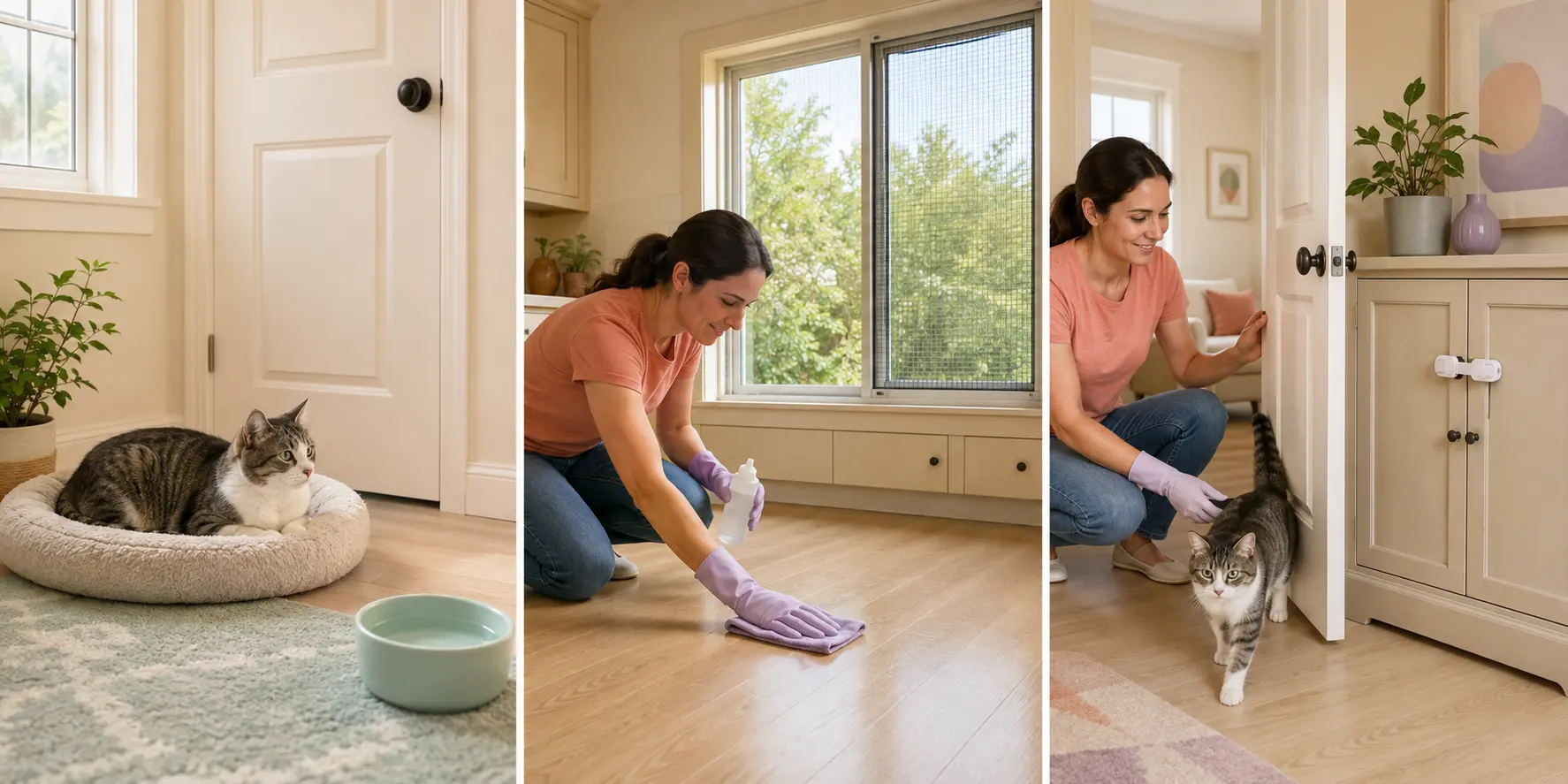
- 1Move your cat first
Set up a comfortable separate room with water and rest before opening or using concentrated cleaning products.
- 2Follow the product label
Use only as directed, ventilate safely and never mix products or spray them near your cat, food, water or litter.
- 3Wait until completely dry
Rinse when directed, keep your cat away until surfaces are dry and lock every bottle inside a closed cabinet.
The short answer
Cleaning products vary widely, and natural, scented or essential-oil-based does not automatically mean cat-safe.
Why it may happen
Cats contact floors and surfaces with paws, then ingest residues while grooming.
Read the whole situation
One behaviour rarely has one guaranteed meaning. Compare it with your cat’s age, health, posture, appetite, litter habits, environment and usual pattern before drawing a conclusion.
What to do now
Follow labels, ventilate, keep cats away until surfaces are dry and store every product securely.
What not to do
Avoid punishment, forced handling and sudden large changes. They can add fear while hiding the information that would help you understand the original cause.
When to contact a veterinarian
Drooling, vomiting, breathing change, burns or known exposure requires immediate veterinary or poison-service advice.
Keep a useful record
Write down when it started, how often it happens and what immediately precedes and follows it. Photos, weights or short videos can make a veterinary or behaviour consultation more productive.
What to check first
Cats can contact residue through paws and then groom it. Strong scents, aerosols, concentrated disinfectants and mixed products create risks even when the cat does not drink them.
DEEPER GUIDE1 more detailed sectionsOpen +
What to do next
Move food, water, toys and litter before cleaning, use the minimum labelled amount, rinse where directed and allow surfaces to dry fully before access. Never mix bleach with ammonia or acids. Drooling, vomiting, coughing, breathing difficulty, tremors or suspected chemical exposure requires immediate veterinary or poison-service advice.
Your quick checklist
Your progress is saved on this device.
Three simple things you can do
You do not have to change everything today. Pick one step that feels realistic, try it and see how your cat responds.
- 1Keep cats out while products are used and until surfaces are dry and ventilated.
- 2Store concentrates and buckets behind closed doors.
- 3Use label-directed dilution and rinse food-contact surfaces.
Common mistakes
×Mixing cleaning products.
×Using essential oils as a natural alternative.
×Leaving toilet or mop water accessible.
Questions cat people ask
Which cleaning products are safe around cats?+
Safety depends on ingredient, concentration and exposure. Follow labels, ventilate and prevent paw, skin and mouth contact.
What if my cat walks on a wet cleaned floor?+
Prevent grooming, check the label and contact a veterinarian or poison service for product-specific advice.
Still looking for the right answer?
Search the full EverYes Cats encyclopedia with your own words — a symptom, food, behaviour, breed or everyday question.
Checked, dated and transparent
- Prepared by
- EverYes Cats editorial team
- Last updated
- 14 August 2026
- Source checked
- 14 August 2026
- Primary reference
- Cornell Feline Health Center ↗
We begin with the named reference, rewrite the information in plain language and add practical cat-parent steps. Urgent health statements are checked against veterinary sources. This guide has not been individually reviewed by a veterinarian unless explicitly stated. It provides education, not diagnosis or treatment.
Spotted something unclear or outdated? Tell us so we can review it.
Your answer helps us improve the cat encyclopedia.
Cleaning products vary, and exposure should be assessed from the exact label rather than treated with a home remedy. A practical guide to what matters, what to do and when to seek help.