Why Does My Cat Paw at the Mouth After a Treat?
Pawing at the mouth after a treat may reflect a stuck fragment, irritation or existing oral pain. Remove further treats, check breathing and seek assessment when the behaviour repeats or other mouth signs appear.
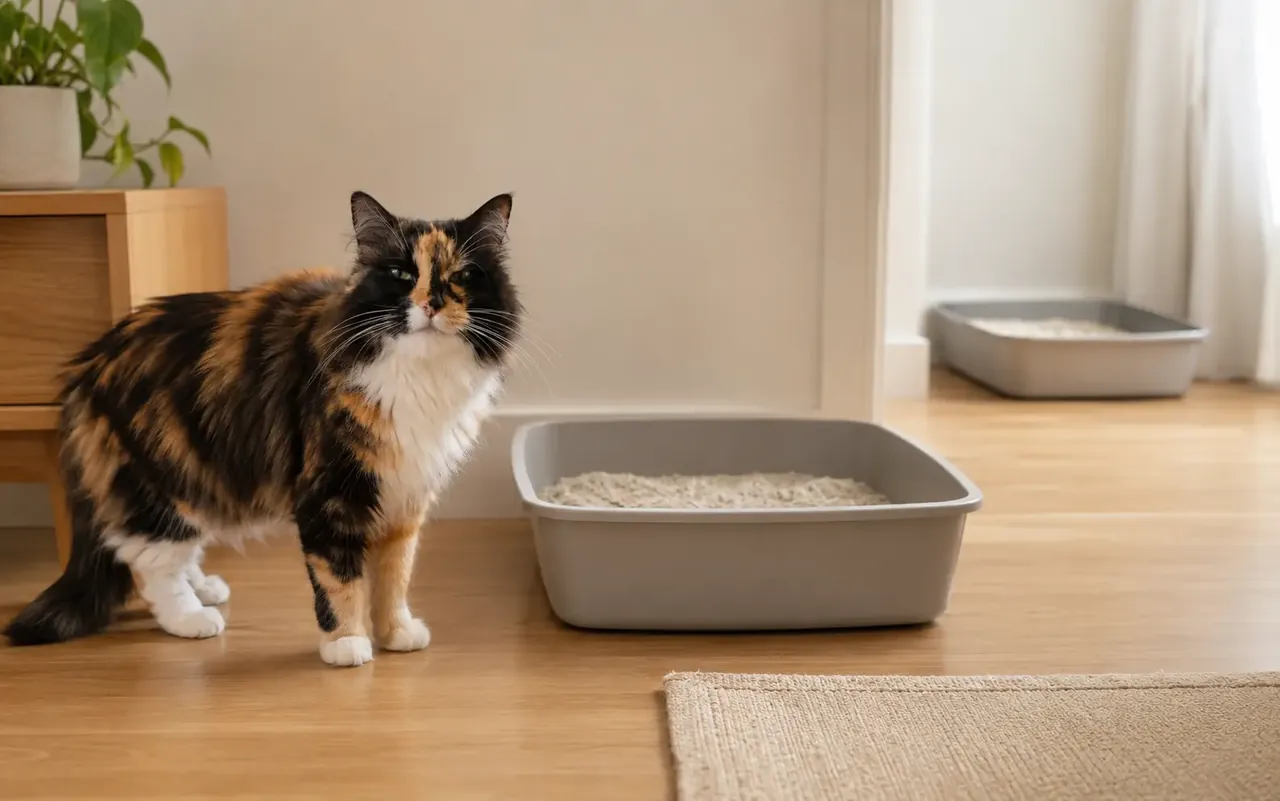
 Topic illustration selected for this guide. Some learning images may be AI-assisted.
Why Does My Cat Paw at the Mouth After a Treat — the quick answer
✓ Food may be stuck, the texture may irritate, or an existing dental or mouth problem may hurt during chewing.
✓ Remove the treat and arrange a mouth examination rather than reaching deep into the mouth.
✓ Choking, breathing difficulty or blue or pale gums is an emergency.
Food may be stuck, the texture may irritate, or an existing dental or mouth problem may hurt during chewing. Start by comparing the moment with your cat's usual pattern.
Check breathing before investigating
If the cat cannot breathe normally, has blue, grey or very pale gums, collapses or is in severe distress, contact emergency veterinary care immediately. Do not sweep fingers blindly through the mouth or pour in water or oil. A conscious frightened cat can bite, and pushing an object deeper can worsen an obstruction.
Observe what happens after the treat
Remove the remaining treats and note gagging, repeated swallowing, coughing, drooling, blood, vomiting, head shaking and whether the cat can close the mouth normally. Save the package and an identical treat for size and ingredient information. Record whether the episode followed one shape or texture and whether similar behaviour occurs with ordinary meals.
Do not assume the treat is the whole cause
A hard, sharp or sticky piece may irritate the mouth, but pawing can also reveal dental disease, tooth resorption, a fracture, oral inflammation, nausea or foreign material. Repeated one-sided chewing, bad breath, food dropping or face sensitivity strengthens the need for a veterinary oral assessment. The behaviour alone cannot locate or diagnose a painful tooth.
Inspect only when it is safe and easy
If the cat is calm and breathing normally, look only at what is immediately visible without forcing the jaws open. Do not reach deep, pull string, probe under the tongue or use tools. String from the mouth must never be pulled because it may be anchored internally. Call a veterinarian promptly for suspected string or another lodged object.
Choose follow-up by the complete pattern
A single brief episode with immediate normal behaviour can be reported and monitored according to veterinary advice, but repetition deserves examination. Seek prompt care for persistent pawing, drooling, bleeding, swelling, pain, vomiting, difficulty swallowing or reduced eating. Bring the timeline, video if safely captured and packaging rather than retrying the treat to reproduce the event.
Your quick checklist
Loading saved progress…
Three simple things you can do
You do not have to change everything today. Pick one step that feels realistic, try it and see how your cat responds.
- 1Observe your cat’s individual baseline.
- 2Make one gentle change at a time.
- 3Ask a qualified professional when health or safety is involved.
Common mistakes
×Waiting for a dramatic symptom instead of noticing smaller changes from the cat’s normal routine.
×Changing several things at once, making it difficult to learn what actually helped.
×Treating general guidance as a substitute for advice from a veterinarian who knows the individual cat.
Questions cat people ask
Does every cat follow the same rule?+
No. Age, health, history, temperament and environment all change what works for an individual.
When should I seek professional help?+
Seek veterinary advice for sudden, persistent or concerning changes and urgent help for breathing difficulty, collapse, seizures, poisoning or urinary obstruction signs.
Still looking for the right answer?
Search the full EverYes Cats encyclopedia with your own words — a symptom, food, behaviour, breed or everyday question.
Checked, dated and transparent
- Prepared by
- EverYes Cats editorial team
- Last updated
- Source checked
- Primary reference
- Cornell Feline Health Center: Feline Dental Disease ↗
We begin with the named reference, rewrite the information in plain language and add practical cat-parent steps. Urgent health statements are checked against veterinary sources. This guide has not been individually reviewed by a veterinarian unless explicitly stated. It provides education, not diagnosis or treatment.
How we choose and use sources →
Spotted something unclear or outdated? Tell us so we can review it.
Loading your saved choice…
Dropping food can reflect mouth pain, missing teeth, food shape or difficulty coordinating chewing. Learn what to check, what to change safely and when professional help matters.
 02
 03
 04
 05