Why Does My Cat's Fur Suddenly Feel Greasy?
A suddenly greasy coat can mean grooming has decreased or the skin has changed. Check appetite, movement, mouth comfort, weight and skin, then arrange veterinary assessment instead of repeatedly bathing the symptom.
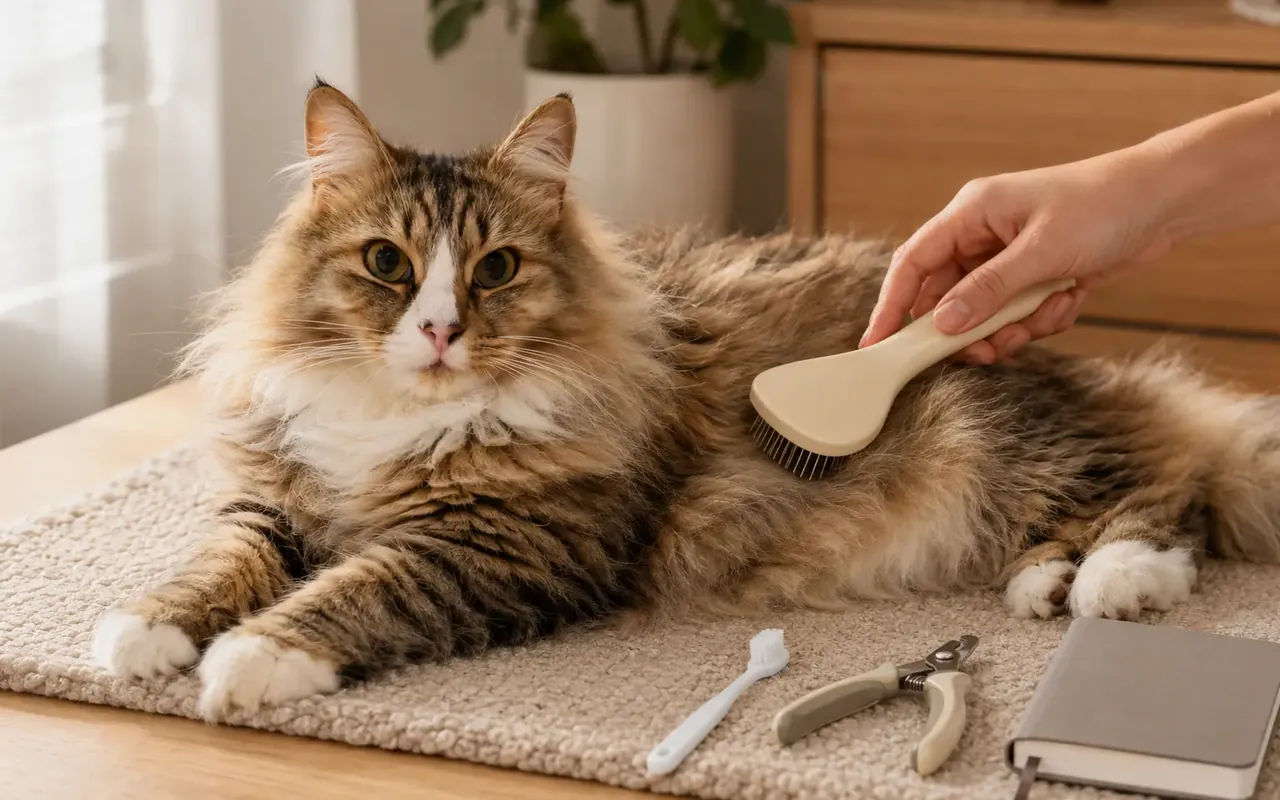
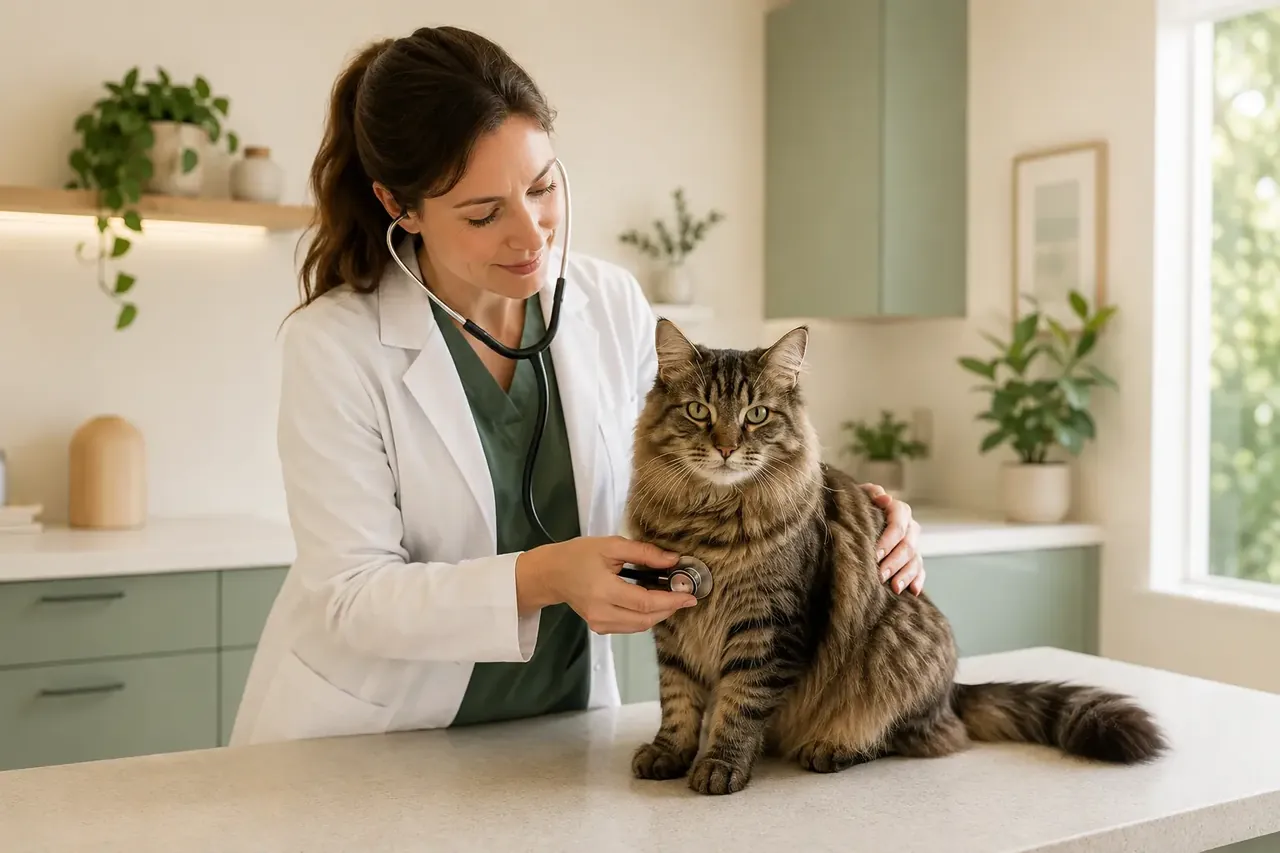 Topic illustration selected for this guide. Some learning images may be AI-assisted.
Why Does My Cat's Fur Suddenly Feel Greasy — the quick answer
✓ A greasy coat can appear when grooming decreases or skin oil and health change.
✓ Arrange a veterinary check and use only gentle cat-safe grooming meanwhile.
✓ Weakness, food refusal, pain or rapid coat deterioration needs prompt care.
A greasy coat can appear when grooming decreases or skin oil and health change. Start by comparing the moment with your cat's usual pattern.
Map where and when the coat changed
Note whether grease is localised near the tail, along the back or spread across the body, and whether it appeared suddenly or gradually. Compare smell, dandruff, mats, redness, bumps, hair loss and tenderness. Photograph the same area in similar light and record recent grooming products, parasite prevention, diet, medication and household changes.
Watch the cat's own grooming
Reduced grooming can leave fur oily, clumped or untidy. Observe whether the cat can reach the back and hindquarters, bends comfortably and still performs normal washing after meals and rest. Obesity, arthritis, injury, dental pain and general illness can reduce grooming. A greasy coat is therefore sometimes a clue to discomfort elsewhere rather than a cosmetic skin problem.
Pair the coat with whole-cat changes
Track appetite, thirst, urine, stool, weight, activity, jumping, hiding and social behaviour. Weight loss despite a strong appetite, reduced eating, vomiting, increased thirst, weakness or poor mobility changes the urgency. Cats can hide illness, and coat deterioration may be one of the first visible differences. Do not assume age or laziness explains a new loss of grooming.
Check skin without over-cleaning
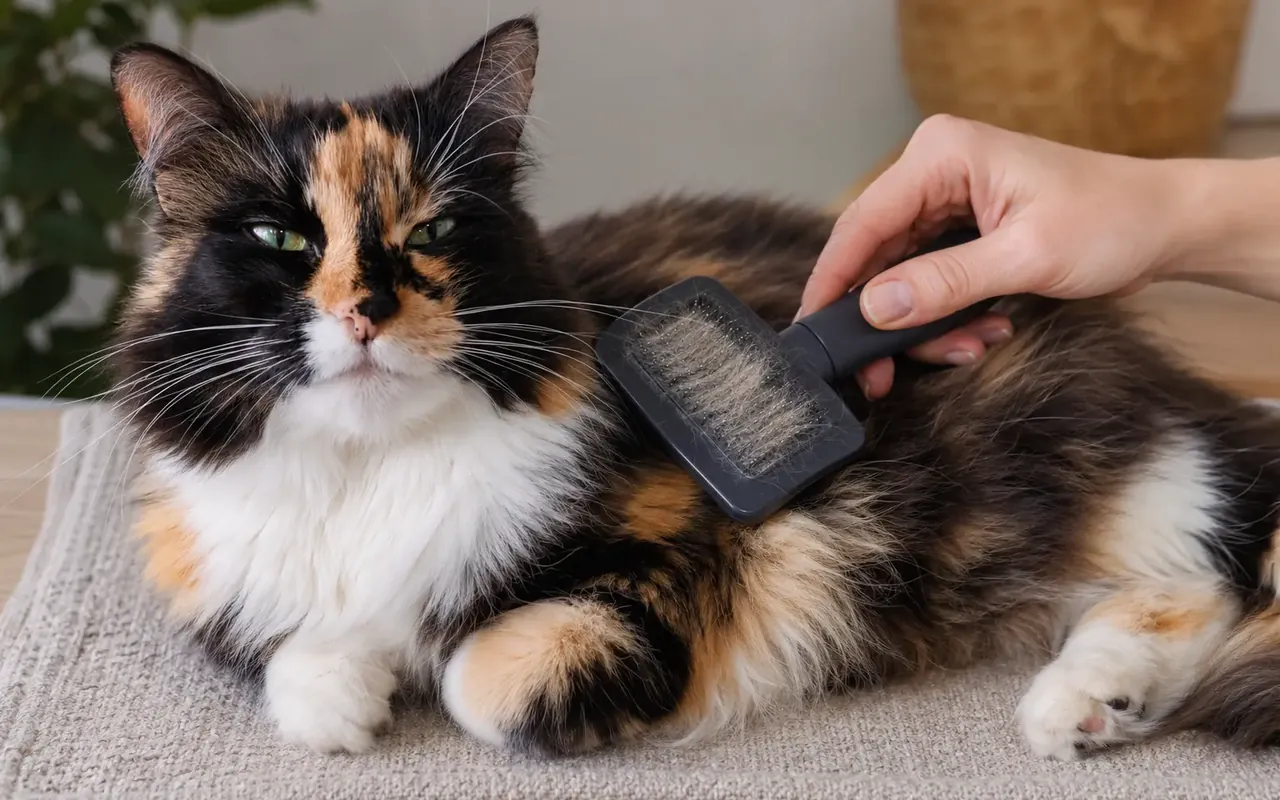
Part the fur gently only where the cat permits and look for fleas or flea dirt, scabs, wounds, redness, odour and discharge. Do not scrape, squeeze or apply essential oils, human shampoo, powder or a dog flea product. Repeated bathing can remove useful evidence and irritate skin. Use only gentle cat-safe grooming while awaiting individual advice.
Consider location-specific clues
Grease concentrated at the top of the tail can accompany overactive tail glands, while a widespread poor coat may follow reduced grooming or systemic illness. Itch, licking and biting suggest another pattern. Appearance alone cannot distinguish parasites, infection, allergy, gland changes, pain or hormonal disease, so an online photo is not a reliable diagnosis.
Arrange a veterinary check
Book an assessment when the change is new, persistent, worsening or accompanied by odour, dandruff, sores, hair loss, pain, reduced grooming or behaviour change. Bring photographs, a medication list and a weight history. The veterinarian may examine the mouth, joints, skin and general health before deciding whether skin tests, blood work or another investigation is useful.
Escalate when the cat is unwell
Seek prompt care for food refusal, repeated vomiting, marked lethargy, weakness, rapid weight loss, painful skin, spreading wounds or a major change in drinking or urination. Breathing difficulty, collapse, severe pain or inability to stand requires emergency care. Treat the coat change as information about the cat, not a problem to hide with fragrance or frequent washing.
Your quick checklist
Loading saved progress…
Three simple things you can do
You do not have to change everything today. Pick one step that feels realistic, try it and see how your cat responds.
- 1Observe your cat’s individual baseline.
- 2Make one gentle change at a time.
- 3Ask a qualified professional when health or safety is involved.
Common mistakes
×Waiting for a dramatic symptom instead of noticing smaller changes from the cat’s normal routine.
×Changing several things at once, making it difficult to learn what actually helped.
×Treating general guidance as a substitute for advice from a veterinarian who knows the individual cat.
Questions cat people ask
Does every cat follow the same rule?+
No. Age, health, history, temperament and environment all change what works for an individual.
When should I seek professional help?+
Seek veterinary advice for sudden, persistent or concerning changes and urgent help for breathing difficulty, collapse, seizures, poisoning or urinary obstruction signs.
Still looking for the right answer?
Search the full EverYes Cats encyclopedia with your own words — a symptom, food, behaviour, breed or everyday question.
Checked, dated and transparent
- Prepared by
- EverYes Cats editorial team
- Last updated
- Source checked
- Primary reference
- Cornell Feline Health Center: Choosing and Caring for Your Cat ↗
We begin with the named reference, rewrite the information in plain language and add practical cat-parent steps. Urgent health statements are checked against veterinary sources. This guide has not been individually reviewed by a veterinarian unless explicitly stated. It provides education, not diagnosis or treatment.
How we choose and use sources →
Spotted something unclear or outdated? Tell us so we can review it.
Loading your saved choice…
Ears may feel warm after sleep because of bedding, room temperature and normal blood flow. Touch alone cannot diagnose fever; judge the cat's overall behaviour and use veterinary measurement when illness is suspected.
 02
 03
 05
 06