What are the black specks on my cat’s chin?
Black pepper-like specks on a cat's chin can be comedones from feline acne, but dirt, flea debris, infection and other skin disease can look similar. Do not squeeze or scrub them; photograph the area, clean bowls and seek veterinary advice if it persists or becomes inflamed.
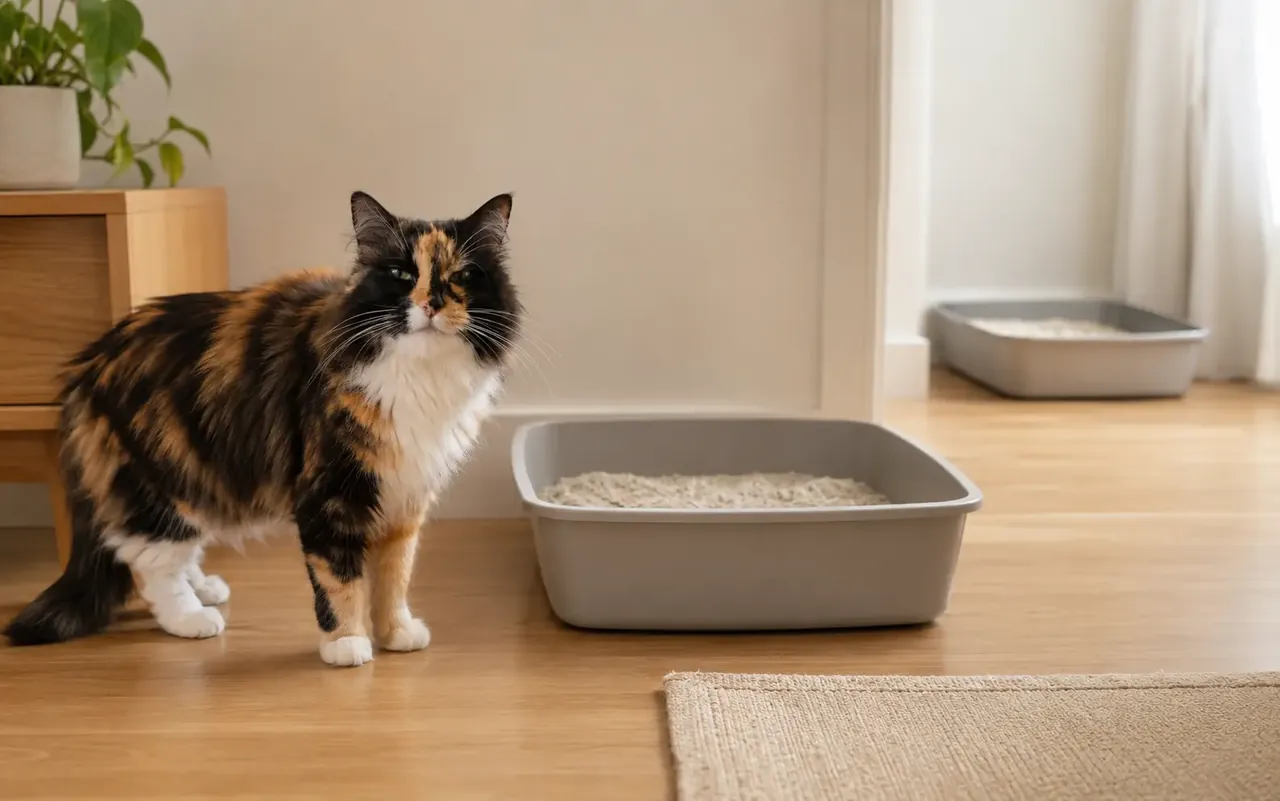 Topic illustration selected for this guide. Some learning images may be AI-assisted.
What are the black specks on my cat’s chin — the quick answer
✓ Feline acne is one possibility, but dirt, parasites and other skin disease can look similar
✓ Use clean wide bowls and let a veterinarian confirm the cause before applying products.
✓ Swelling, pain, pus, bleeding or spreading skin change needs veterinary care.
Feline acne is one possibility, but dirt, parasites and other skin disease can look similar. Comedones may appear as pepper-like material around hair follicles. This guide separates the useful observation from guesswork and gives you one safe next step.
Describe what you actually see
In good light, note whether material is attached at hair follicles, loose on the fur or sitting on red skin. Record hair loss, swelling, crusts, odour, moisture, pain and whether the lower lip is involved. A clear close photograph before cleaning can help a veterinary professional.
Understand feline acne without self-diagnosing
Feline acne is a keratinisation disorder that can form black comedones around the chin and lips. Mild cases may look like dirt; inflamed follicles can become painful or secondarily infected. Appearance alone cannot exclude parasites, allergy, contact irritation or another skin condition.
Improve bowl hygiene safely
Wash food and water bowls daily and rinse away detergent fully. Smooth stainless-steel or intact ceramic bowls are easier to inspect and clean than scratched porous material. This is a low-risk hygiene step, not proof that bowl material caused the problem or a substitute for treatment.
Do not squeeze, scrape or disinfect
Picking comedones can damage follicles and drive inflammation deeper. Avoid alcohol, peroxide, essential oils, human acne products, medicated wipes and leftover antibiotics. Even products used on people may irritate feline skin or be swallowed during grooming.
Prevent repeated rubbing and contamination
Keep the chin dry after wet meals when the cat accepts gentle wiping, wash bedding that contacts the face and clean food residue from favourite feeding surfaces. Do not force chin handling or scrub against hair growth; stop when the cat pulls away.
Arrange care for persistence or inflammation
A veterinarian should assess swelling, pus, bleeding, pain, bad odour, open sores, spreading lesions or repeated recurrence. Prompt care is warranted when facial swelling affects eating or breathing, the cat stops eating, or the skin change follows chemical exposure or a bite.
Your quick checklist
Loading saved progress…
Three simple things you can do
You do not have to change everything today. Pick one step that feels realistic, try it and see how your cat responds.
- 1Photograph the chin in good light and check for redness, swelling or discomfort.
- 2Wash food and water dishes daily and consider smooth stainless steel or ceramic.
- 3Ask a veterinarian before using any medicated cleaner.
Common mistakes
×Squeezing blackheads.
×Scrubbing with alcohol, peroxide or human acne products.
×Assuming every dark speck is dirt.
Questions cat people ask
What are the black specks under my cat's chin?+
Feline acne commonly causes comedones that look like black crumbs, but infection, parasites and other skin disease can appear similar.
When should cat chin acne see a vet?+
Seek care for swelling, pain, bleeding, pus, hair loss, spreading lesions or a problem that persists despite gentle hygiene.
Still looking for the right answer?
Search the full EverYes Cats encyclopedia with your own words — a symptom, food, behaviour, breed or everyday question.
Checked, dated and transparent
- Prepared by
- EverYes Cats editorial team
- Last updated
- Source checked
- Primary reference
- Merck Veterinary Manual: Pyoderma in Dogs and Cats ↗
We begin with the named reference, rewrite the information in plain language and add practical cat-parent steps. Urgent health statements are checked against veterinary sources. This guide has not been individually reviewed by a veterinarian unless explicitly stated. It provides education, not diagnosis or treatment.
How we choose and use sources →
Spotted something unclear or outdated? Tell us so we can review it.
Loading your saved choice…
Small paw, whisker, eyelid or tail twitches during relaxed sleep are often normal REM-sleep movements. Record a new pattern and seek veterinary help when movements are prolonged, violent, continue while awake or occur with stiffness, drooling, loss of awareness or confusion.
 01
 02
 03