Window screens that actually keep cats safe
Ordinary insect screens may loosen, tear or pop outward when climbed or pushed.
 Topic illustration selected for this guide. Some learning images may be AI-assisted.
Window screens that actually keep cats safe — the quick answer
✓ Fit pet-resistant secure screens or purpose-built barriers and inspect frames, locks and mesh regularly.
✓ Test every edge from inside without placing weight on the screen and keep furniture away from weak openings.
✓ A fall, breathing difficulty, pain, bleeding or inability to walk is an emergency.
Ordinary insect screens may loosen, tear or pop outward when climbed or pushed. This guide explains how to reduce the risk, prepare the household, respond safely and recognize when the cat needs urgent professional care.
Why this deserves a plan
An ordinary insect screen can tear, loosen or pop out when a cat climbs, leans or lunges at movement outside. Cats do not reliably judge the danger of an open window, and even a fall that appears minor can cause internal injury.
Make the safe choice the easy choice
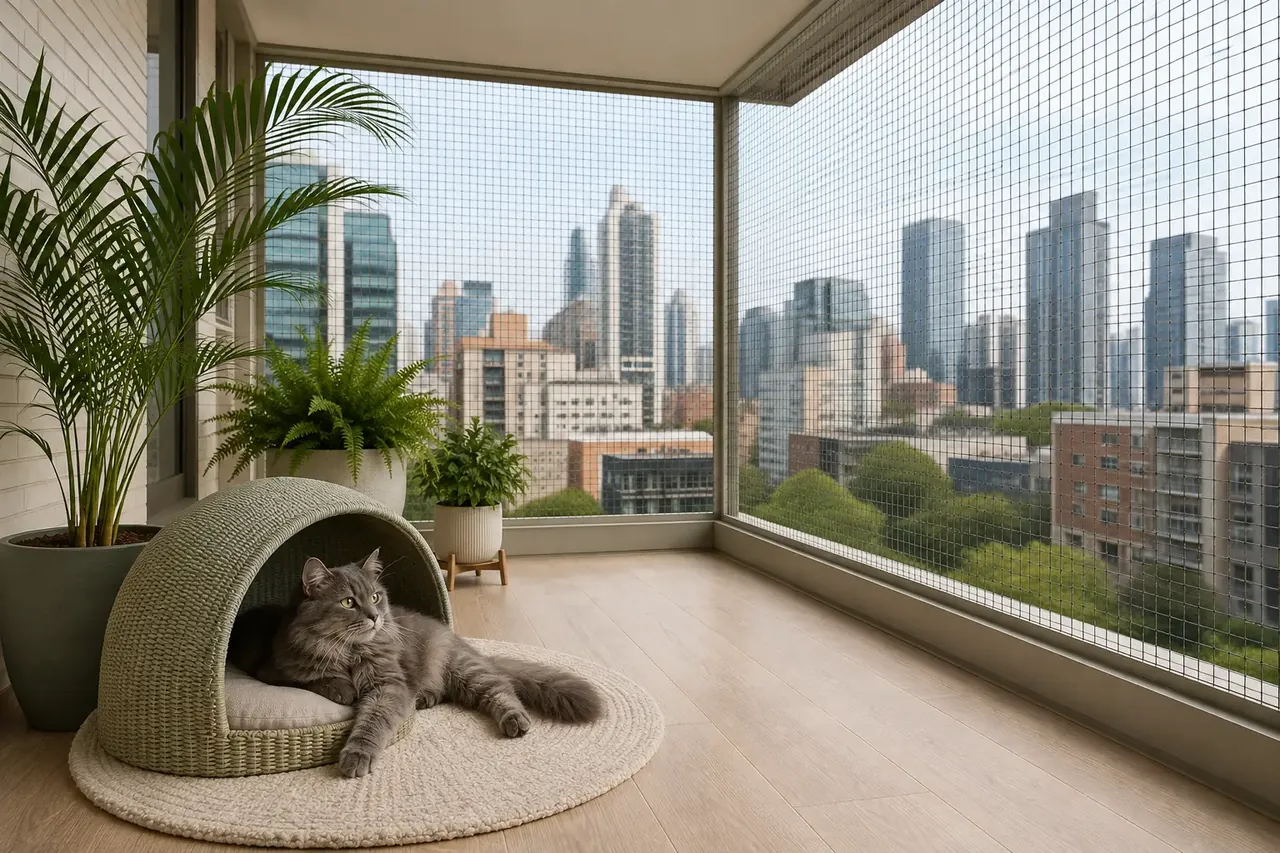
Use a screen or mesh specifically rated and securely fixed for pet pressure; an ordinary insect screen may pop out when climbed or leaned on. Check the frame, corners, latches and the gap around every opening before allowing access.
A practical step-by-step routine
With the cat in another room, inspect the mesh, frame, fixings, locks and every edge. Test gently from inside without leaning body weight on the screen, confirm the opening cannot widen, move launch furniture away and repeat the check after cleaning, storms or building work.
What not to do
Do not rely on height, supervision from across the room, a child-safety screen or the belief that cats always land safely. Never test a weak screen while the cat is present or leave a tilt window with a gap that can trap the head or body.
Know the urgent threshold
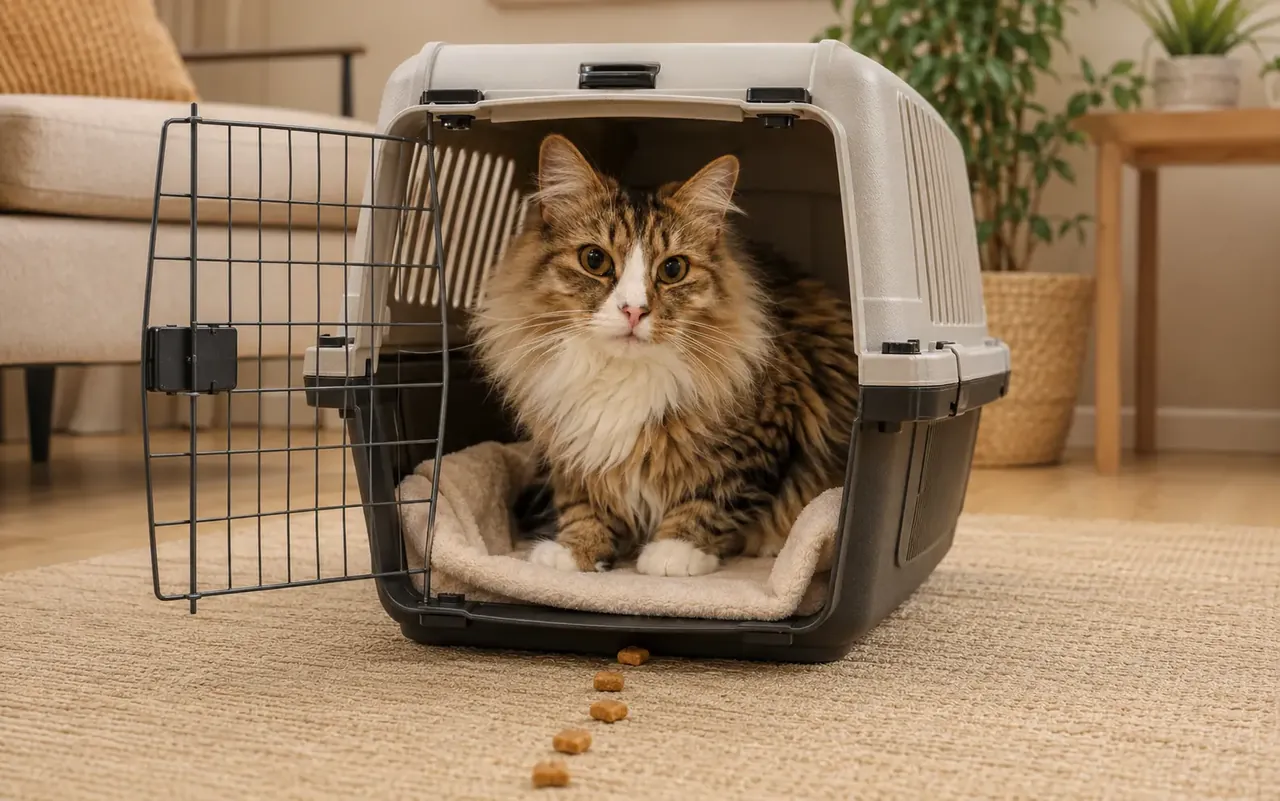
A cat that falls from a window or balcony needs immediate veterinary assessment even when it stands or walks afterward. Breathing difficulty, bleeding, pain, collapse, weakness or inability to use a limb is an emergency; transport the cat in a secure carrier with minimal handling.
See the room from cat height
Look for furniture that creates a launch point, loose mesh, damaged spline, tilt-window gaps and another animal or bird that could trigger a sudden charge. Test the installation without the cat present and keep a safe closed-window option available.
Use layers, not one perfect barrier
Combine a secure screen with opening restrictors, stable frames, supervised introduction and furniture placement that reduces impact. Recheck after storms, cleaning, building work and seasonal reopening because fittings can loosen over time.
Common mistake: relying on the cat's past behavior
A cat that ignored an open window yesterday may lunge tomorrow when startled or when prey appears. Never rely on calm history, height awareness or the belief that cats always land safely; secure the physical opening every time.
DEEPER GUIDE1 more detailed sectionsOpen +
The bottom line
The central risk is simple: ordinary insect screens may loosen, tear or pop outward when climbed or pushed. The practical response is to test every edge from inside without placing weight on the screen and keep furniture away from weak openings. Build layers that still work when people are rushed and cats are frightened. When exposure or injury may have occurred, seek professional advice early instead of waiting for certainty.
Your quick checklist
Loading saved progress…
Three simple things you can do
You do not have to change everything today. Pick one step that feels realistic, try it and see how your cat responds.
- 1Observe your cat’s individual baseline.
- 2Make one gentle change at a time.
- 3Ask a qualified professional when health or safety is involved.
Common mistakes
×Waiting for a dramatic symptom instead of noticing smaller changes from the cat’s normal routine.
×Changing several things at once, making it difficult to learn what actually helped.
×Treating general guidance as a substitute for advice from a veterinarian who knows the individual cat.
Questions cat people ask
Does every cat follow the same rule?+
No. Age, health, history, temperament and environment all change what works for an individual.
When should I seek professional help?+
Seek veterinary advice for sudden, persistent or concerning changes and urgent help for breathing difficulty, collapse, seizures, poisoning or urinary obstruction signs.
Still looking for the right answer?
Search the full EverYes Cats encyclopedia with your own words — a symptom, food, behaviour, breed or everyday question.
Checked, dated and transparent
- Prepared by
- EverYes Cats editorial team
- Last updated
- Source checked
- Primary reference
- Cornell Feline Health Center: Common Cat Hazards ↗
We begin with the named reference, rewrite the information in plain language and add practical cat-parent steps. Urgent health statements are checked against veterinary sources. This guide has not been individually reviewed by a veterinarian unless explicitly stated. It provides education, not diagnosis or treatment.
How we choose and use sources →
Spotted something unclear or outdated? Tell us so we can review it.
Loading your saved choice…
Chewing a live cable can cause mouth burns, electric shock, breathing problems or fire.
 01
 02
 03
 04
 05